

Ten EU States Push for Weaker Carbon Rules as Seven Others Warn Against Watering Down ETS
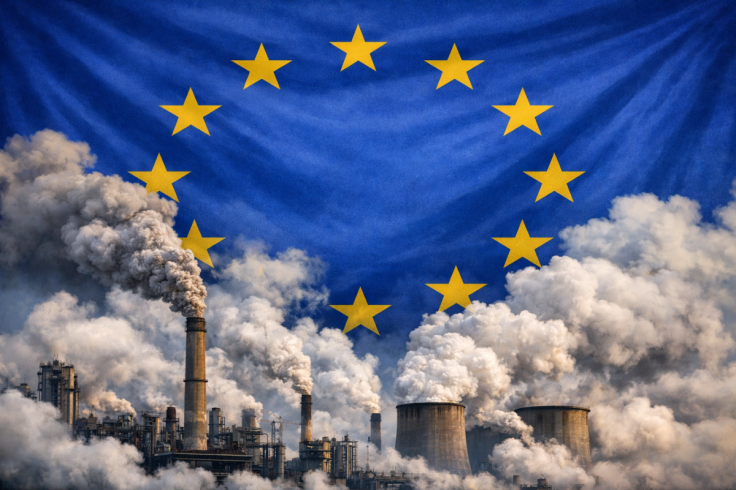
Brussels has been plunged into a fresh row over Europe's flagship climate policy after the European Commission proposed loosening the rules of its carbon market. The move comes after ten member states pushed for weaker rules and seven others warned against them.
The European Commission tabled its proposal on Friday to revise the EU Emissions Trading System, giving heavy industries a longer, cheaper path to cutting emissions. The plan lands just weeks after deadly wildfires tore through Spain and Western Europe recorded its hottest June on record.
What the Commission Has Proposed
Under the revised rules, industries such as steel and cement would keep free pollution permits until 2038, four years later than originally planned.
The annual cap reduction would drop to 3.7 per cent from 2031 and 1.7 per cent from 2036. The current rate is 4.3 per cent.
For the first time, the scheme would extend to municipal waste and private jets. Flights within 5,000km of a central point in Europe would also be brought into the system.
Italy-Led Bloc Pushes for Weaker Rules
Ten EU member states, led by Italy, had argued that the emissions trading system was pushing up energy costs and damaging Europe's competitiveness against foreign rivals. The Commission's proposal reflects these concerns.
Companies would still need to show plans to invest in clean production in Europe to qualify for free allowances. Eighty per cent would be handed out upfront and the remainder released once spending is confirmed.
EU climate commissioner Wopke Hoekstra defended the changes, telling reporters in Brussels that some companies had chosen to move operations abroad rather than invest in cleaner production at home. 'This can no longer stand,' he said.
As lethal wildfires abound and record-shattering heat takes tens of thousands of lives on the world's fastest heating continent, the EU plans to row back on emissions cuts
— Bill McGuire (@ProfBillMcGuire) July 17, 2026
Capitalism will never stop sucking the world dry until either we are dead or it ishttps://t.co/n3RkoUKK8j
Seven Countries Push Back
Seven states, including Spain, the Netherlands and the Nordic countries, warned last week that weakening the system 'risks undue pressure' on the bloc's efforts to cut emissions.
German Green MEP Michael Bloss went further, accusing the Commission of handing industry 'a licence to pollute for even longer and at a lower cost'. He argued the changes would penalise businesses that had already invested in cleaner production.
Camille Maury, a senior policy officer at WWF's European policy office, said the system worked because a shrinking cap, a meaningful carbon price and green transition funding reinforced one another. She compared the proposal to removing blocks from a Jenga tower, warning it 'destabilises the whole structure'.
WWF has calculated that slowing the annual cap reduction would allow an additional two billion tonnes of CO2 to be emitted, raising questions over whether the EU can still hit its legally binding target of a 90 per cent emissions cut by 2040.
Industry Says It Does Not Go Far Enough
Even with the concessions, business groups were not satisfied. BusinessEurope director general Markus Beyrer said new conditions attached to free allowances would add 'bureaucratic complexity', while the role of international carbon credits remained 'unsatisfactory'.
Hoekstra rejected claims the plan undermines climate law, telling reporters the figures were 'completely climate-law proof' and that the added investment incentives were designed to keep production in Europe. 'If we just have the industry ship out, everyone loses,' he said.
More than a decade after the Paris Agreement, greenhouse gas emissions continue to rise, accelerating climate change.
— UN Environment Programme (@UNEP) July 15, 2026
Humanity still has time to act #NowForClimate and curb these emissions.
Here's how you can take action: https://t.co/ifqDdDsUQ7 pic.twitter.com/Cg5mXUfIUi
What the Year-Long Negotiation Will Decide
The proposal now goes to the EU's 27 member states and the European Parliament for negotiation, a process that can take up to a year, according to the International Carbon Action Partnership. Peter Liese, the German MEP who will lead the Parliament's negotiations, welcomed the draft, saying investment within the EU was 'our goal'.
The emissions trading system is the EU's single biggest lever for cutting greenhouse gases. It has been credited with a 47 per cent fall in emissions among Europe's biggest polluters since 2005.
Any softening of its rules has knock-on effects well beyond Brussels. It shapes how quickly heavy industry decarbonises, how much airlines and shipping firms pay to pollute, and whether the bloc stays on track for its legally binding 2040 climate target.
© Copyright IBTimes 2026. All rights reserved.