

Mercedes-Benz Workers Protest Plan to Make Them Work 260 More Hours a Year for Free
Thousands of workers demonstrate against increased working hours without additional pay as Mercedes-Benz seeks cost reductions
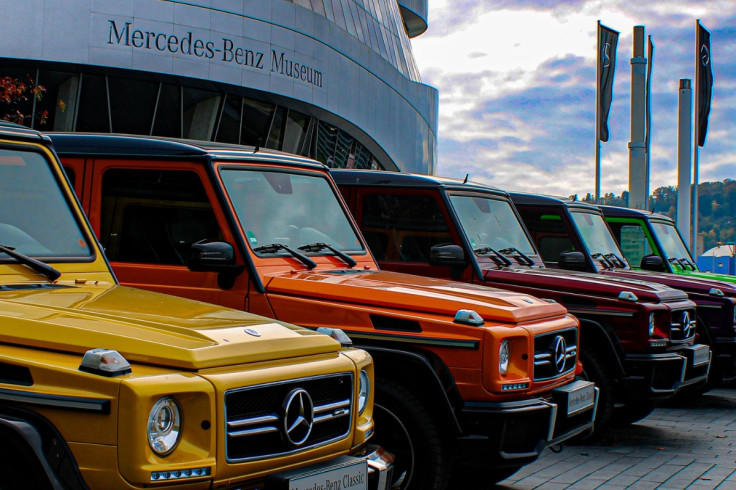
Thousands of Mercedes-Benz workers have staged demonstrations outside factories across Germany after the carmaker proposed increasing the standard working week from 35 hours to 40 hours without additional pay as part of the company's latest cost-cutting programme.
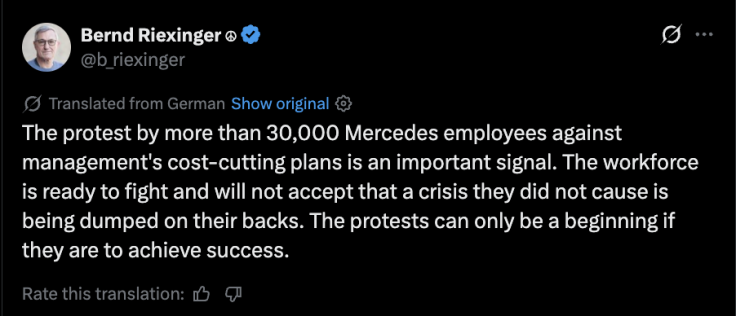
The proposal would increase the standard working year by around 260 hours without any increase in pay. Germany's IG Metall trade union said more than 33,000 workers joined demonstrations across Germany on Friday, while Mercedes-Benz said almost 16,000 people took part across six production sites.
Mercedes-Benz said the proposals were aimed at reducing costs after the company's profits halved last year. Union leaders, however, accused the carmaker of asking employees to bear the burden of business challenges while shareholders continued to receive dividends.
Workers Rally Over Proposed 40-Hour Week
Demonstrations took place at Mercedes-Benz sites including Sindelfingen, Untertürkheim, Bremen, Berlin and Hamburg. IG Metall described the rallies as the start of a campaign against job cuts and reductions to employee benefits across Germany's automotive industry.
Workers protested against proposals to increase the standard working week from 35 to 40 hours without extra pay, postpone a special payment worth 18.4 per cent of one month's salary until 2027 and relocate some administrative and manufacturing functions outside Germany.
IG Metall chair Christiane Benner told demonstrators in Düsseldorf that employees should not be expected to sacrifice rights guaranteed under existing agreements while shareholders continued to receive dividends. IG Metall Baden-Württemberg district leader Barbara Resch added that the 35-hour working week remained a successful model and said Mercedes employees had already made concessions under previous agreements, arguing management should now meet its own commitments.
Miles de trabajadores se manifiestan frente a fábricas de Mercedes-Benz en Alemania
— DW Español (@dw_espanol) July 4, 2026
El sector automovilístico alemán afronta una fuerte competencia china, aranceles estadounidenses y una débil demanda en mercados clave, lo que llevó a una serie de despidos y medidas de… pic.twitter.com/sL2Cx9Gq8J
The company said the proposals remain under discussion with employee representatives and stressed that no final decisions have been made.
Mercedes works council chairman Ergun Lümali said the proposals had unsettled employees, who were already facing discussions over unpaid working hours, reductions to agreed benefits and the possible relocation of jobs and company functions.
Company Says Cuts Are Needed
In a message to employees, Mercedes-Benz chief executive Ola Källenius and other senior executives said labour costs in Germany were no longer internationally competitive and that hourly costs needed to fall across research, administration, sales and production.
The company told Reuters that increasing working hours without additional pay was among several measures being considered as part of its cost-saving programme. It also confirmed plans to postpone this year's special employee payment until 2027 and said it was examining whether some products and administrative functions could be moved abroad.
A Mercedes-Benz spokeswoman said the company understood employees' concerns and would continue consulting staff representatives as proposals were discussed.
Union Warns More Protests Are Coming
Friday's demonstrations come as Germany's automotive industry grapples with slowing demand, particularly in China, higher production costs and US import tariffs.
IG Metall said Friday's demonstrations marked the beginning of a series of protests across the sector, warning manufacturers against relying on job cuts and factory relocations instead of long-term investment.
The union said around 50,000 automotive jobs were cut across Germany last year. It warned more protests were likely in the coming months if carmakers continued pursuing savings through job cuts and changes to employment agreements instead of investing in long-term industrial growth.
The company has said discussions with employee representatives remain ongoing and that the proposals are still subject to consultation before any final decisions are taken.
© Copyright IBTimes 2026. All rights reserved.