

Elon Musk Predicts Tesla's Optimus Robot Will Perform Household Chores and Put Dishes Away Within 12 to 18 Months
Tesla says the humanoid robot is being trained through demonstrations, self-play and data from the company's vehicle fleet, though dexterity and safety challenges remain.
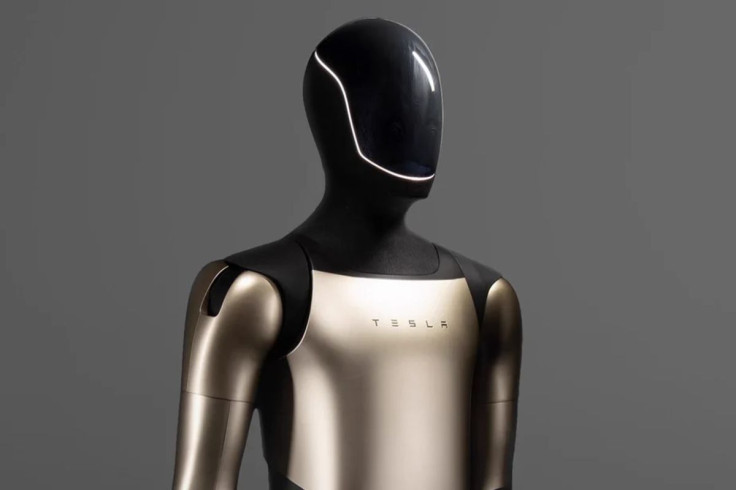
Elon Musk has announced that Tesla's Optimus robot is expected to handle household chores within 12 to 18 months in another major step towards bringing humanoid robots into everyday life.
The bipedal robot is expected to perform specific household tasks, including taking out the trash and putting dishes away in cabinets, within the projected timeframe. However, Musk acknowledged that washing, drying and returning dirty dishes to storage would present a much greater technical challenge.
The prospect could mean a future where people no longer have to worry about some of the most tedious household chores as humanoid robots take on more responsibilities around the house.
It also reflects Tesla's broader ambitions for Optimus, which Musk has repeatedly presented as a tool designed to perform tasks that would otherwise require human effort.
Like Raising a Toddler
While the idea of a robot handling household chores sounds straightforward, teaching it to perform these tasks is another challenge.
The Tesla CEO likened training Optimus to raising a toddler, which involves watching people do specific tasks and practising them itself. In addition, the robot also learns from data collected by the company's fleet of high-tech vehicles.
'You can see this when you have a toddler, and they initially are sort of wobbly, and they don't know how to do things, and eventually, they learn to wipe their own ass, which is a big milestone,' Musk said during the company's earnings call last month, as quoted by Business Insider.
'They learn to read and do all sorts of things, and they learn this by playing. And we actually need Optimus to play at scale in order to have it be really good at tasks in the real world,' he added.
To speed up the learning process, Tesla has set up a so-called 'Optimus Academy' where prototypes perform tasks together to create training data for future versions of the humanoid robot.
Musk explained that Tesla would need to produce around 10,000 to 20,000 Optimus robots and have them practise tasks through self-play to generate enough training data.
Earlier Demonstrations
During a robotics conference in Austin, Texas, earlier this month, Tesla showcased some of Optimus' capabilities.
The next-generation humanoid robot handed out snack packets to attendees, demonstrating its ability to handle small objects that require dexterity. A human was remotely controlling the robot during the demonstration.
Musk initially positioned Optimus to take on complex work in industrial setting, especially repetitive and hazardous tasks that people would prefer to avoid. The aim is to reduce the strain on workers and take over jobs that need to be done around the clock.
An earlier demonstration also showed the robot folding a shirt, hinting at its broader ability to handle laundry. However, Tesla said it had observed that the robot's hands still needed work as some tasks required greater dexterity to handle objects of different shapes and sizes.
The company is also working to improve Optimus' software so it can learn to adjust when something unexpectedly moves or a task goes wrong. Safety and its ability to hold up through repeated use are other concerns.
According to Musk, production of Optimus has already begun and deliveries are expected to start by the end of next year.
© Copyright IBTimes 2026. All rights reserved.