

'That's Probably Going To Cause Some Delays': Southwest Pilot Reacts to FAA's New Thanksgiving Runway Rule
A Southwest Airlines pilot warns that the FAA's new Thanksgiving runway rule could cause delays despite the agency's assurances
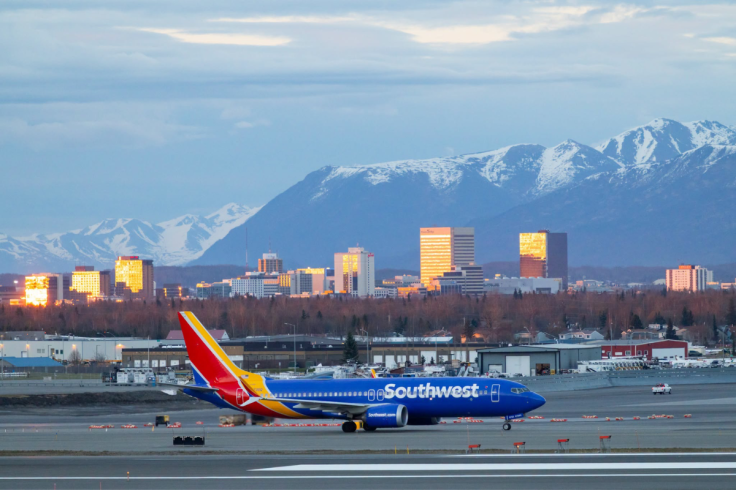
More than 417,000 flights are expected over the nine-day Thanksgiving travel period, which the Federal Aviation Administration (FAA) says will be the busiest for air traffic in 16 years. But a new runway safety requirement has prompted one Southwest Airlines pilot to warn of possible delays, even as the FAA says the change 'will not impact airport operations'.
The nationwide directive took effect on Tuesday, 24 November. It limits when air traffic controllers can use a departure procedure known as 'line up and wait', which allows an aircraft to enter a runway and wait for clearance to take off.
Southwest Pilot Raises Concerns Over FAA Runway Rule
The possibility of disruption emerged during a radio exchange between an air traffic controller and a Southwest Airlines pilot in Albuquerque, New Mexico, on Monday, 23 November.
According to audio cited by CNN, the controller explained that the procedure would require a separate supervisory position to be staffed. The person overseeing operations could no longer carry out other duties at the same time.
'That's probably going to cause some delays,' the Southwest Airlines pilot responded.
The procedure allows departing aircraft to move on to a runway and remain there until controllers give them permission to take off. It is intended to help manage departures efficiently, particularly when airports are busy.
Under the revised requirements, controllers cannot use the procedure unless a dedicated operations supervisor or controller-in-charge is available and the other applicable safety conditions are met.
Aircraft can still depart when the procedure is unavailable. The issue is whether managing departures without it could slow aircraft movements at airports where staffing is insufficient to meet the new requirement.
The exchange in Albuquerque reflects one pilot's assessment. It is not an official forecast of delays from Southwest Airlines, and the audio does not establish how many flights, if any, will be affected.
FAA Makes Supervisory Staffing Requirement Mandatory
The FAA notice, numbered N JO 7210.979, was digitally signed on 8 October. The document does not explain why the agency chose to implement the change during Thanksgiving week.
The notice strengthens existing guidance by making dedicated watch supervision compulsory. The FAA said the aim was to improve runway safety by ensuring personnel responsible for oversight were not distracted by additional operational tasks.
It does not identify a specific safety incident as the reason for the change.
The directive comes amid longstanding staffing challenges within US air traffic control. CNN reported that operational and supervisory responsibilities have often been combined to address those difficulties.
The National Air Traffic Controllers Association, which represents controllers, reaffirmed its commitment to safe and professional operations in a statement reported by CNN.
In its holiday forecast, released on Tuesday, the FAA projected that 24 November would be the busiest day of the Thanksgiving travel period, with more than 52,000 flights expected.
The agency also warned that adverse weather could disrupt flights in several parts of the country. Its forecast included thunderstorms in Florida and along the Gulf Coast, and rain and wind in the Northeast on Thanksgiving Day.
Passengers have been advised to allow extra time for their journeys to airports and check with their airlines for the latest flight information.
Neither the FAA notice nor the reported radio exchange establishes how many departures might be affected by the supervisory requirement.
The FAA says airport operations will not be affected, while the pilot's comment points to a possible concern at airports where staffing is limited. The extent of any additional delays for Thanksgiving travellers remains uncertain.
© Copyright IBTimes 2026. All rights reserved.