

Trump Allies Push Plan to Bar Pregnant Women Entering US After Birthright Citizenship Ruling
New proposal targets birth tourism following Supreme Court's citizenship ruling
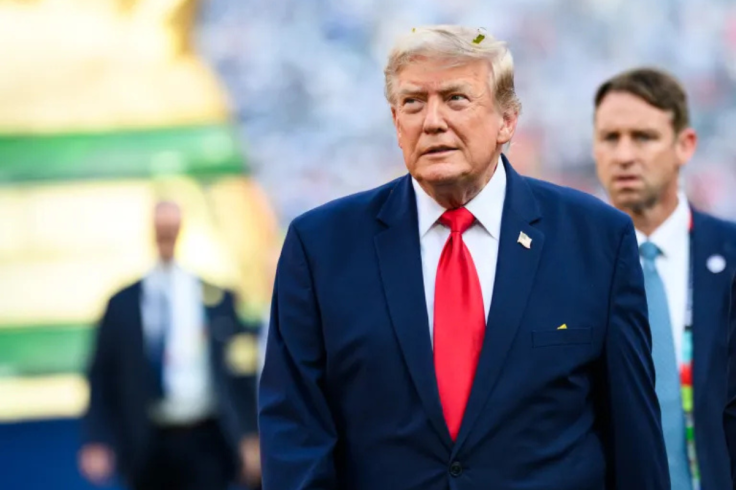
Trump allies are advancing a plan to bar pregnant women from entering the United States after the Supreme Court upheld birthright citizenship on 30 June 2026, shifting the political fight from who qualifies for citizenship to who is allowed across the border in the first place.
The proposal, now circulating among administration figures and congressional Republicans, would restrict entry for certain pregnant foreign nationals, with supporters framing it as a response to so-called birth tourism.
The move came within hours of the court's 6–3 ruling affirming that the Fourteenth Amendment guarantees citizenship to anyone born on US soil. Chief Justice John Roberts, joined by Justices Amy Coney Barrett and Brett Kavanaugh alongside the court's liberal bloc, wrote that the principle cannot be undone by executive action.
Advocacy groups swiftly welcomed the decision. Kica Matos, president of the National Immigration Law Center, called it 'an important victory for our democracy,' while warning it also showed 'how fragile even our most foundational constitutional guarantees have become.'
Plan Emerges To Restrict Pregnant Travellers After Supreme Court Decision
The legislative centrepiece of this push is the Anchors Away Act, introduced on 30 June 2026 by Tennessee Republican Representative Andy Ogles.
The bill seeks to amend the Immigration and Nationality Act by making certain pregnant nonimmigrant women inadmissible if their primary purpose is deemed to be securing US citizenship for a child through birth on American soil.
Yet the wording stretches further than that headline aim. As drafted, it would apply to pregnant women seeking temporary visas who are not married to US citizens, potentially affecting tourists, students and business travellers regardless of intent.

A woman travelling for work, a family emergency, or something as ordinary as a conference could, in theory, be turned away.
That breadth has raised alarm among legal and policy experts. Katie O'Connor of the National Women's Law Center told Axios that the idea of government access to pregnancy data is 'a really dangerous proposition.'
It is not just the denial of entry that troubles critics, but the mechanism behind it. How, exactly, would officials determine pregnancy at a border checkpoint?
There is no federal protocol. No clear safeguard against error. And no obvious appeal process if a judgement is wrong.
Stephen Miller, a senior Trump adviser, signalled the administration's direction on the day of the ruling, said that the US must 'think very carefully about who you let into your country, even on a temporary basis.' The subtext was clear enough. If citizenship cannot be restricted after birth, attention turns to the moment before it.
Birth Tourism Debate Fuels Trump Allies Push Plan
Supporters of the proposal argue it targets a real, if limited, practice. Birth tourism, where foreign nationals travel to the US specifically to give birth, has been documented for years.
The US Centers for Disease Control and Prevention estimated that around 9,000 of the 3.5 million babies born in 2024 were to foreign residents. Broader estimates vary, ranging from roughly 20,000 to over 33,000 such births annually, still less than one per cent of total US births.
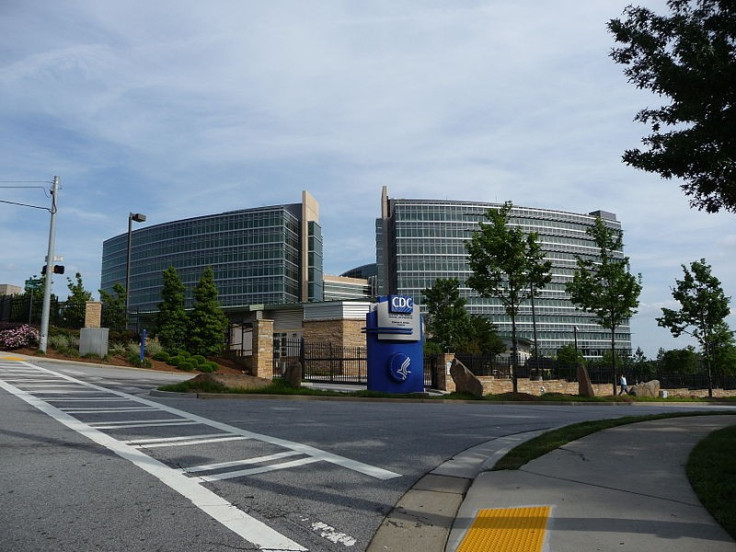
The Department of Justice has already indicated it will prioritise prosecutions of organised birth tourism schemes, particularly those involving visa fraud. There is an established commercial network behind some of these cases, with agencies offering high-end maternity packages and, in some instances, coaching clients to misrepresent travel intentions.
That part is not in dispute. Fraud is illegal, and enforcement tools already exist.
What is in dispute is whether those tools justify a blanket approach. Even among conservatives, there is some acknowledgement of legal complexity.
Justice Brett Kavanaugh noted in a concurring opinion that while executive action cannot override birthright citizenship, Congress could legislate within constitutional bounds. That line has been seized upon by backers of the Anchors Away Act, who see it as a green light, or at least not a red one.
At the state level, similar thinking is already taking shape. Texas Governor Greg Abbott has ordered state agencies to investigate birth tourism operations, warning that Texas 'will not tolerate the exploitation of our immigration laws.'
His directive focuses on providers rather than individuals, including potential penalties such as licence revocations. It is narrower than the federal proposal, but it shows how quickly policy can move when political will is there.
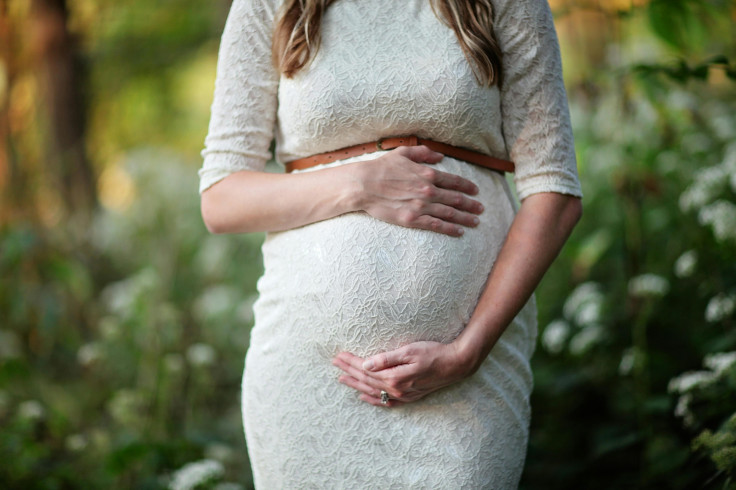
Online, the reaction has been predictably split and, at times, blunt. Some users on X describe the proposal as a necessary fix to an exploited loophole. Others call it discriminatory and impractical, questioning how officials would enforce it without invasive checks.
One widely shared comment asked whether airlines would be expected to act as gatekeepers before passengers even reach US soil. It sounds far-fetched, until you realise similar pre-screening already exists in other contexts.
The practical questions keep stacking up. Would a visible pregnancy be enough to deny boarding, or would medical documentation be required? Who decides, and on what standard of proof? And what happens when someone is wrongly flagged? These are not minor administrative details. They are the entire policy.
House Speaker Mike Johnson has indicated he is considering bringing the bill to a vote, giving it a level of traction that many proposals never reach. Still, it remains just that, a proposal. Trump himself has not formally endorsed a blanket ban, even as his administration tightens its focus on birth tourism enforcement.
Nothing is confirmed yet so everything should be taken with a grain of salt, but the direction of travel is unmistakable. The debate over citizenship has not ended with the Supreme Court ruling.
It has simply moved to the airport gate, where the question is no longer who becomes American, but who is allowed the chance.
© Copyright IBTimes 2026. All rights reserved.