

Green Card Bond Proposal Explained: Who Would Pay $100,000, When You Get It Back and Who Gets Shut Out
The plan lands as new rules let officers deny green cards over Medicaid and SNAP use
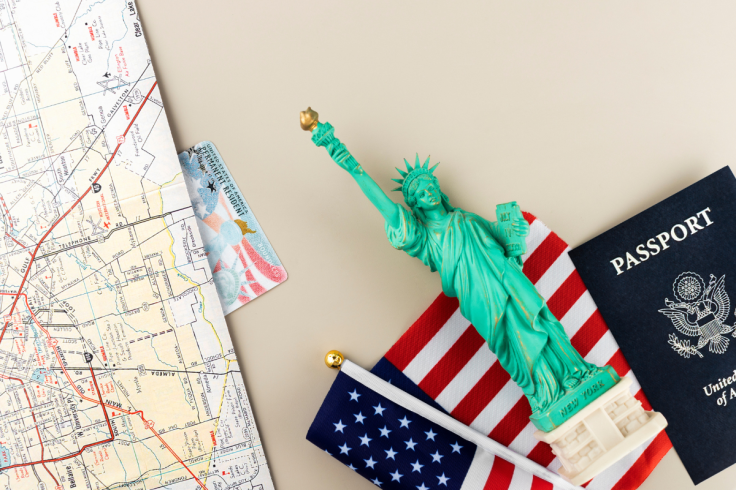
The US State Department is weighing a $100,000 (£74,200) refundable bond for some green card applicants abroad, money their American relatives could front and only recover once the immigrant becomes a citizen years down the line.
State Department spokesperson Tommy Pigott confirmed on Thursday that officials are evaluating a six-figure bond to ensure immigrants 'contribute to our society more than they take from it'. The Wall Street Journal first reported the discussions.
Who Would Actually Write the Cheque
The bond would target certain immigrant visa applicants processing through US consulates abroad, who become lawful permanent residents on arrival. Family members already living in the US could post the money on an applicant's behalf, the Journal reported, citing people familiar with the plans.
That detail shifts the burden. Most family-sponsored green cards go to spouses, parents, and children of US citizens, so the households raising $100,000 would often be ordinary working families rather than wealthy investors writing cheques from abroad.
The final amount could vary case by case, and officials may pilot the scheme in a handful of countries first. Applicants already pay a $235 (£175) immigrant fee charged by US Citizenship and Immigration Services (USCIS) once a visa is approved.
When the Money Comes Back
The bond would be refundable, but not quickly. Applicants would recover the payment only after naturalising as US citizens, a process that takes at least five years after a green card is issued, according to the Journal. Until then, Washington holds the cash, effectively an interest-free loan from immigrant households to the federal government.
Pigott said the bond would give applicants who can pay their own way another route to prove self-sufficiency and qualify for a visa.
The $15,000 Scheme It Builds On
The proposal scales up an existing programme. Since August 2025, visitor visa applicants from countries flagged for overstay risks, beginning with Malawi and Zambia, have posted bonds of $5,000 to $15,000 (£3,700 to £11,100) that are forfeited if they overstay. The State Department says the system now covers roughly 50 countries and that 97% of around 1,000 bonded travellers left the US on time. Paying a bond does not guarantee a visa.
Who Gets Shut Out
The confirmation came the same day the Department of Homeland Security (DHS) finalised a rule handing officers wider discretion to deny green cards to applicants who have used Medicaid, the Supplemental Nutrition Assistance Program (SNAP), or housing aid. The revived 'public charge' standard takes effect on 18 September and treats benefit use as a warning sign of future dependence.
DHS projects the change could cut public benefit spending by roughly $13 billion (£9.7 billion) a year, largely because immigrant families withdraw from programmes they legally qualify for. The department acknowledged lower enrolment could ripple through hospitals, grocers, and landlords. USCIS spokesperson Zach Kahler said the agency is 'protecting American taxpayers from subsidizing aliens who may become dependent on public benefits'.
Taken together, the measures redraw who can realistically immigrate to the US. Applicants of modest means face a six-figure hurdle, benefit use becomes a liability, and sponsoring relatives, from working families to the hundreds of thousands of Indian nationals stuck in employment backlogs, must now ask whether qualifying matters when affording it is the real test.
© Copyright IBTimes 2026. All rights reserved.