

Trump Secures Over $17 Billion in Asia Deals During Philippines Visit Across Aviation, Defence and Energy
The White House estimates the $12 billion aircraft order from Philippine Airlines will support 47,000 American jobs
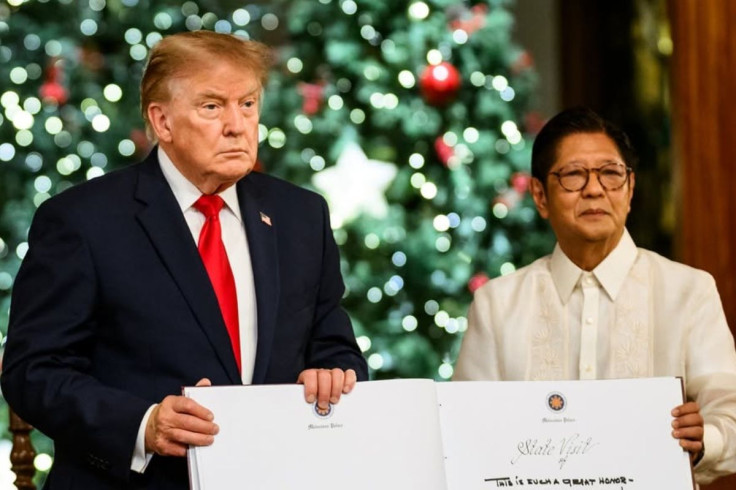
US President Donald Trump announced more than $17 billion (£12.9 billion) in Asia deals during a two-day visit to the Philippines that concluded on 18 November 2026. The White House said the deals included a $12 billion (£9.1 billion) aircraft agreement involving Philippine Airlines, Boeing and GE Aerospace.
Philippine President Ferdinand Marcos Jr hosted Trump in Manila for a state visit that coincided with the Association of Southeast Asian Nations summit. The announcements ranged from signed supply contracts to a proposed Philippine defence loan and an Indonesian energy project still under negotiation.
A Philippine Airlines Order Anchors Trump's Asia Deals
Philippine Airlines agreed to buy 15 Boeing 787-10 aircraft, with options for five more, powered by GE Aerospace engines. The airline first announced the plans in July and formalised the agreements on 10 November. The White House estimates that the $12 billion sale will support 47,000 American jobs.
Marcos and Trump also agreed to increase Philippine imports of American energy and farm products. Their aim, in the White House's words, is to 'eliminate the U.S. trade deficit with the Philippines'.
At the summit, Trump announced that trade talks with Thailand were largely complete. If signed, the agreement would eliminate tariffs on 99% of goods and remove other barriers to selling American products in Thailand, from vehicles and medical devices to ethanol and poultry.
Separately, Thailand intends to spend up to $123 million (£93.6 million) on US artillery rocket systems. The White House estimates that the sale would support 400 American jobs if it goes ahead.
Asia Deals Link a Montana Coal Mine to Malaysia
Under a three-year agreement worth $100 million (£76.1 million), Navajo Transitional Energy Company will supply coal from its southern Montana mine to TNB Fuel Services. The buyer procures fuel for Tenaga Nasional Berhad, Malaysia's national power utility.
In Indonesia, US firm Latitude Energy and Danantara, the country's sovereign wealth fund, announced negotiations over a $2 billion (£1.5 billion) coal project. The partners want to bring in American technology to improve how Indonesia uses its coal resources.
Manila and Washington also agreed to explore a pact on civilian nuclear technology. The White House sees a potential role for American nuclear companies in expanding the Philippines' electricity supply if the two governments reach an agreement.
What the Asia Deals Could Fund for the Philippine Military
Under the US Foreign Military Financing programme, Washington and Manila will pursue a loan package worth more than $2 billion (£1.5 billion). The Philippines would borrow the money to buy defence and security equipment from American suppliers. The White House expects those orders to support more than 7,000 US jobs.
The US will direct $400 million (£304.3 million) in military financing towards extending the Philippine military's reach in the South China Sea. Priorities include drones, long-range weapons, command systems and critical infrastructure.
The Philippine Department of National Defense announced a $37 million (£28.1 million) contract with an American firm for technology to support military missions. It also pledged to work with US providers on a $63 million (£47.9 million) project to modernise its cloud infrastructure.
Subic Grain will build a $40 million (£30.4 million) fuel storage depot at Subic Bay for US military and commercial operations. Manila also plans to modernise Basco Airport to improve access for both countries in the northernmost Philippine islands.
© Copyright IBTimes 2026. All rights reserved.