

Venezuelan Mum Breastfed Children to Survive Eleven Days in Earthquake Rubble
A mother's extraordinary act of breastfeeding under rubble highlights resilience amid Venezuela's earthquake crisis.
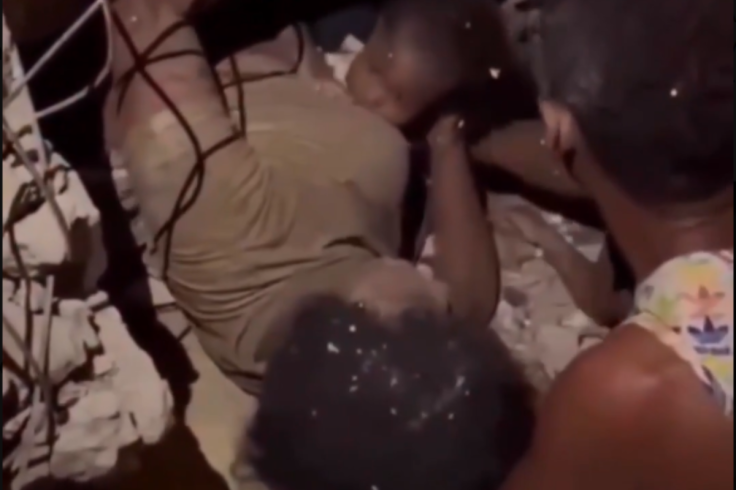
In one of the most extraordinary survival stories to emerge from the devastating Venezuelan earthquakes, a mother kept her three children alive for eleven days beneath the collapsed OPP building by breastfeeding them until rescuers arrived. Her ordeal has been described as 'a miracle'.
The rescue took place during the final hours of Sunday, when civilian and military rescue teams detected weak calls for help coming from the OPP 26 residential tower in the Caribe sector of Caraballeda, La Guaira. The 12-storey building had collapsed during the twin earthquakes that struck Venezuela on 24 June. Beneath tons of concrete, rescue workers found a mother and her three children, including a baby.
Maternal Resilience in the Chaos
The mother reportedly sustained her children by breastfeeding them throughout the entire 11-day ordeal. Footage of the rescue, widely shared online, showed the moment the family was brought to safety. Their location was identified through persistent efforts by local volunteers and international search-and-rescue teams.
The rescue has been hailed as a symbol of maternal resilience, offering a rare glimmer of hope amid widespread despair. Some have described the mother as a 'heroine', with one social media user writing: 'There are women who deserve a monument'.
International aid teams have helped carry out Venezuela’s "miracle rescues" after the twin earthquakes struck, but are now preparing to leave.
— Al Jazeera English (@AJEnglish) July 6, 2026
Thousands are still searching for relatives in the rubble as frustration grows over the government’s response. pic.twitter.com/t2zJgPkcRs
Another Miracle Beneath the Rubble
The breastfeeding rescue is not the only story of maternal courage to emerge from the ruins. Dayana Patiño was pulled from the rubble alongside her 18‑day‑old son Juan David after being trapped for more than 12 hours.
Speaking to the BBC, Patiño said her baby gave her motivation to 'be awake and alert' during the terrifying hours underground. 'As long as he was alive, I was going to be alive. Every now and then I was touching his nose for proof that he was still breathing,' she explained.
Footage of that rescue, also widely shared online, showed the moment Patiño and her son were brought to safety. Her husband Gerson described the rescue as 'a miracle', telling the BBC: 'I thought they were dead. And when I saw my son I felt like I was born again. I couldn't believe it. I felt the life come back to me.'
A Crisis Beyond the Miracles
For every miracle rescue, however, there are thousands of families still waiting for news. The scale of the disaster continues to grow as officials work to assess the full impact.
- 2,295 confirmed deaths as of 1 July, according to National Assembly President Jorge Rodríguez.
- 11,200 injured, with hospitals overwhelmed in Caracas and La Guaira.
- 58,870 structures damaged or destroyed, based on satellite analysis by Oregon State University researchers.
- 6.8 million people in need of relief, including shelter, water, sanitation and healthcare, according to the UN's International Organization for Migration.
- 680,000 children affected, per UNICEF.
- US$6.7 billion in direct physical damage, estimated by the UN Development Programme, equivalent to roughly six per cent of Venezuela's GDP.
Gianluca Rampolla, the UN's humanitarian coordinator in Venezuela, warned the death toll 'will unavoidably and sadly keep on growing as the search-and-rescue operation continues, and as we are able to detail further assessment of the impacts of the quakes.'
International Aid and Frustration
Rescues like these have been described as 'miracles' since the earthquakes struck, with international teams credited for pulling survivors from the rubble days after the initial collapse. But they are now preparing to leave the country, with the critical survival window closing.
Thousands of people remain in the rubble searching for relatives, with frustration growing over the pace of the official response. With official channels stretched thin, residents in the hardest-hit areas have been digging through rubble themselves, often with little more than their bare hands.
The breastfeeding rescue in La Guaira is a testament to maternal sacrifice and a symbol of endurance in the face of overwhelming tragedy. It demonstrates how individual acts of courage can inspire collective determination, even as the country grapples with one of the most severe humanitarian emergencies in its modern history.
© Copyright IBTimes 2026. All rights reserved.