Trump Calls Housing Bill 'a Big Yawn' as His Refusal to Sign Leaves First-Time Buyers Hanging
56% of Americans can't absorb $200 housing hike as Trump stalls landmark bill

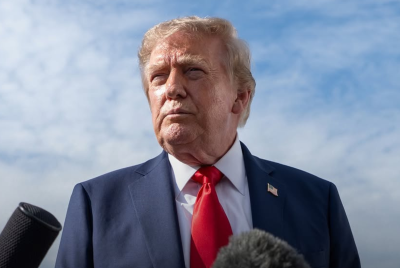
President Donald Trump told reporters at the White House on Monday that the largest bipartisan housing bill in over three decades is 'so unimportant' and 'a big yawn', confirming he will not sign until Congress passes a voting reform his own party admits cannot pass.
The remark landed on the same day a new poll from the Housing Narrative Lab and Voss Research found 56% of Americans cannot absorb a $200 (£151) monthly increase in housing costs. Another 78% said they support building more low- and middle-income housing.
For first-time buyers, the timing is brutal. The 21st Century Road to Housing Act would bar large institutional investors that own 350 or more single-family homes from buying more, open federal pilots for small-dollar mortgages, and boost manufactured housing supply. Every week it sits unsigned, those changes wait.
President Sits on a 30-Year Housing Breakthrough
The bill cleared the Senate 85-5 on 22 June and the House 358-32 the next day, the largest bipartisan housing package since 1990. Senate Banking Chairman Tim Scott and Ranking Member Elizabeth Warren shepherded it through, with House Financial Services Chairman French Hill and Ranking Member Maxine Waters leading on the other side.
Trump abruptly cancelled the signing ceremony last week. Speaker Mike Johnson said he would deliver the bill to the White House on Monday, starting a 10-day window for Trump to sign, veto, or let it become law.
'It's a yawn,' Trump said. 'Compared to the SAVE America Act, just about everything is a big yawn.'
The Safeguard American Voter Eligibility (SAVE) Act would require proof of citizenship to register and photo ID at the polls. It needs 60 votes in the Senate, where Republicans hold 53. Majority Leader John Thune has said the math does not work, and Senator John Cornyn, a SAVE Act co-sponsor, told colleagues last week the bill 'doesn't have the votes'.
A Poll That Lands the Same Day Trump Shrugs
The Housing Narrative Lab and Voss Research released the poll Monday morning, hours before Trump's comments. Executive director Marisol Bello said the housing strain 'crosses all demographic lines', with respondents flagging rising costs for groceries, utilities, housing, and healthcare.
A CNN poll from May found 77% of Americans, including a majority of Republicans, believe Trump's policies have raised the cost of living in their communities. His economy approval stands at 30%, a second-term low.
Harvard's Joint Center for Housing Studies reported in March that 22.7 million US renter households, roughly 49% of all renters, are now cost-burdened. Of those, 12.1 million spend more than half of monthly income on rent and utilities.
What the Bill Would Actually Do for Buyers
One key section, titled 'Homes Are For People, Not Corporations', limits Wall Street competition for starter homes. Other provisions open federal pilots for mortgages under $100,000 (£75,500) that banks rarely write, and ease rules around manufactured housing.
Senators Bernie Moreno of Ohio and Raphael Warnock of Georgia drafted the investor provision after Warnock raised concerns about private equity buying starter homes in metro Atlanta.
A Contradiction the President Already Said Out Loud
Trump's stall is not entirely surprising. At a 29 January Cabinet meeting, the president said he wanted to 'drive housing prices up for people that own their homes', adding the administration would not 'destroy the value of their homes so that somebody that didn't work very hard can buy a home'.
That position sits next to the bill on his desk. Trump publicly backed the institutional-investor crackdown in this year's State of the Union. He now says the package is 'a yawn'.
The clock is running. Without a signature, the bill becomes law in 10 days unless the president issues a veto.
© Copyright IBTimes 2026. All rights reserved.
- Recommended For You