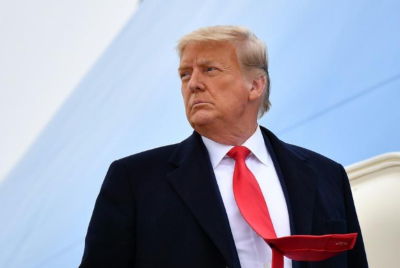
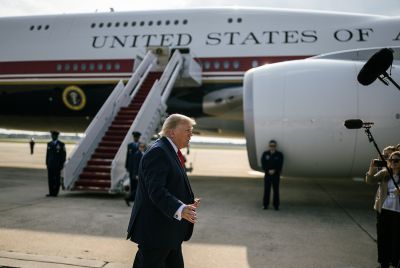
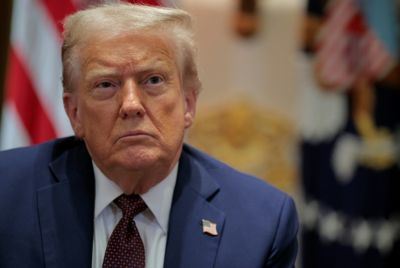
Donald Trump Faces Health Cover-Up Claims As White House Allegedly Withholds Walter Reed Exam Results
Behind a routine hospital visit, Donald Trump's undisclosed test results have reopened the uncomfortable argument over how much of a president's body the public is entitled to see.
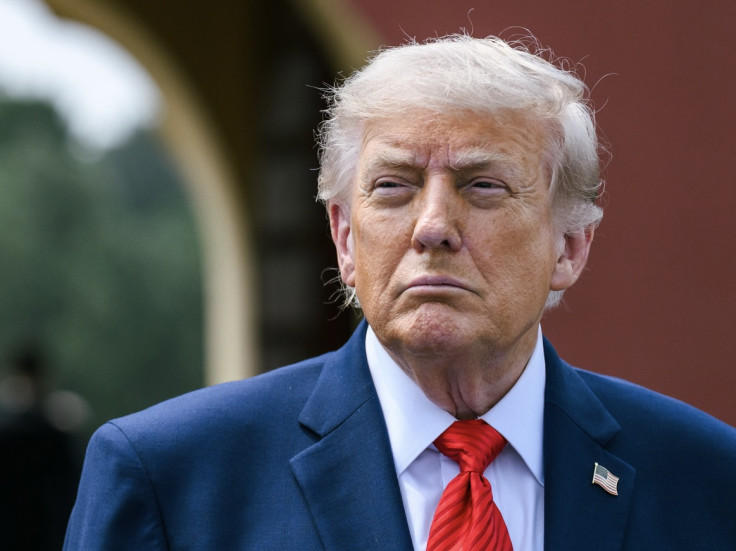
Donald Trump is facing fresh allegations of a 'health cover‑up' in Washington after the White House declined to release results from his latest medical exam at Walter Reed National Military Medical Center on Tuesday, despite Donald Trump insisting on social media that he is in 'perfect health.'
For context, the renewed scrutiny follows a visit that, on paper, looked routine. The US president, who is 79 and the oldest person ever inaugurated as US leader, spent more than three hours at the Walter Reed facility in Bethesda for what aides described as preventive medical and dental check‑ups. It was his fourth publicly disclosed exam since returning to office for a second term, timed as he tries to project stamina ahead of midterm elections.
Donald Trump said an annual medical check-up had gone "perfectly" Tuesday, as the health of the oldest US president ever to take the oath faces growing scrutiny with the approach of his 80th birthday https://t.co/Qh61rCTfDe pic.twitter.com/1rX9T2T2e4
— AFP News Agency (@AFP) May 26, 2026
Health Cover-Up Claims Shadow Donald Trump's Walter Reed Visit
The news came after a long‑standing pattern in which administrations publish at least selected details from presidential physicals. In Donald Trump's case, previous visits have produced brief written summaries from his doctors and occasional headline‑grabbing boasts that he had 'aced' cognitive tests. This time, however, there is no formal report, no numbers, not even a one‑page letter.
Trump Claimed 'Everything Checked Out PERFECTLY' at His Latest Physical Exam, but He Still Hasn't Released Results https://t.co/YUXO6GJwoo
— People (@people) May 29, 2026
What the public has instead is the president's own verdict. In a post after leaving Walter Reed, Trump told followers he had just finished his '6 month physical' and that 'Everything checked out PERFECTLY.' The White House has so far treated that as sufficient, offering no additional medical documentation to support the claim.
US President Donald Trump said a routine medical check-up on Tuesday had gone "perfectly," as his health faces growing scrutiny ahead of his 80th birthday.
— KUWAIT TIMES (@kuwaittimesnews) May 26, 2026
"Everything checked out PERFECTLY," Trump said on his Truth Social network as he drove back to the White House from Walter… pic.twitter.com/K7rqRz9BM2
Officials have expressed confidence in his condition. In a statement, White House spokesperson Davis Ingle said: 'President Trump is the sharpest and most accessible President in American history who is working nonstop to solve problems and deliver on his promises, and he remains in excellent health.' That assertion sits in stark contrast to the lack of measurable data being released.
Trump getting checked at Walter Reed every couple of months signals an ongoing issue.
— JΛKΣ (@USMCLiberal) May 27, 2026
The fact that they keep testing him for signs of dementia and cognitive decline (MoCA) is also telling.
Trump’s doctors can only report what he allows them to report. They can’t be trusted. pic.twitter.com/TNdCB9tEBY
Critics argue that the decision not to publish even a basic summary deprives voters of information they are entitled to expect about a leader whose decisions reach into every corner of American life. Some opponents have framed the silence as a deliberate attempt to conceal his true state of health and have openly used the language of a 'cover‑up,' pointing to his age and the visible pressures of office.
As Trump propagandists rage at journalists for covering his physical decline, a writer who focuses on the president’s weaknesses explains why covering up his frailty is backfiring spectacularly for him. https://t.co/0PuLJsuiRa
— The New Republic (@newrepublic) May 27, 2026
There is, though, no confirmed evidence of a specific undisclosed illness. The content of the Walter Reed file has not been made public, and nothing beyond the president's own account and the generic White House statement is on record. Nothing is confirmed yet, so all suggestions about hidden diagnoses or undisclosed treatment should be taken with a grain of salt.
They have a lot to hide
— Simpleton & Smartypants 🌊 🌊 🌊 (@SimpletonSmart1) May 28, 2026
White House has yet to release health results from Trump’s doctor after latest checkup https://t.co/KbGuJZlnhD
Donald Trump, Ageing Presidents And A Shrinking Zone Of Privacy
In case you missed it, concerns about Donald Trump's fitness are not new. A Washington Post/ABC News/Ipsos poll in April found that fewer than half of US adults believed he has the mental sharpness or physical health to serve effectively. That anxiety has been amplified by a recent run of ageing leaders. Trump is due to turn 80 next month, while his immediate predecessor, Joe Biden, was 82 when he left office after bowing out of the 2024 race amid unease over his age.
White House breaks from precedent by not releasing Trump’s medical report
— Graham Rowley (@anguillaman2) May 29, 2026
Hmmmm. Poor health = No Report. https://t.co/39ZnJECFFc
Medical experts who are not involved in Trump's care have been cautious. Former White House physician Dr Jeffrey Kuhlman, who served under Presidents Barack Obama, George W Bush and Bill Clinton, said concern over the president's physical health is 'probably at an all‑time high' and that advanced age is the central issue.
White House breaks from precedent by not releasing Trump’s medical reporthttps://t.co/bpcItd6vz8 pic.twitter.com/3KEGeUQwcx
— Harris Meyer (@Meyer_HM) May 29, 2026
He explained that for someone of Trump's years, a full physical would typically include extensive heart checks, screening for common cancers and cognitive assessment, alongside basics such as weight and blood pressure.
The White House has not disclosed whether any of that testing took place this week. That lack of detail stands out because Donald Trump's health record is already complicated. Last year, he was diagnosed with chronic venous insufficiency, a condition linked to pooled blood in the veins and swelling in the lower legs.
Photographs have shown his feet, ankles and calves visibly enlarged, which officials have attributed to the condition and described as 'mild swelling.'
His previous publicly released exam, a follow‑up last October, produced only a short note declaring he was in 'exceptional health', with few underlying results attached. That kind of sparse reporting has fed a lingering scepticism that is now surfacing again.
Trump was in the hospital again for medical issues. In another news, the White House claims that his bruised hands are from shaking too many hands. What fuckery is this? Who gets bruised hands from shaking hands. He is about to die, they say all is good. This is fuckery! pic.twitter.com/zRPRQcYZUv
— Common Sense 🇺🇸💙 (@commons96055467) May 27, 2026
At the same time, some in the medical community warn against attempts to diagnose from afar. More than 30 neurologists, psychiatrists and other specialists recently issued a statement, acknowledging they had never examined Trump, but arguing he was mentally unfit to serve and pointing to what they called 'objectively observable signs of serious medical concern.'
White House has yet to release health results from Trump’s doctor after latest checkup
— MedicalQuack (@MedicalQuack) May 29, 2026
Still trying to figure out how they spin it...we know..https://t.co/pXImFaM6Ht
If the White House can't spin it, they may not release anything..we already have the BS Trump version..the spin…
Ingle dismissed such interventions, saying: 'Any so‑called medical professionals engaging in armchair diagnosis or false speculation for political purposes are clearly breaking the Hippocratic Oath they've sworn to.'
Yikes! Both of Donald Trump's hands are very discolored today and one of his hands appears to be bruised as well.
— Lucas Sanders 👊🏽🔥🇺🇸 (@LucasSa56947288) May 6, 2026
Is he getting close to death? 🤞🏽
(Anna Moneymaker/Getty) pic.twitter.com/703Rl7LIiR
Public Right To Know Versus Donald Trump's Medical Privacy
The clash over transparency runs into a hard legal fact. There is no law requiring US presidents to release their medical records. Each administration decides how much to share and when, with reports filtered through the White House and ultimately approved by the president himself.
The White House is still refusing to release the results of Trump’s latest physical.
— Headquarters (@HQNewsNow) May 29, 2026
It was conducted 3 days ago. pic.twitter.com/B8sUywLnS6
Bioethicist Sara Rosenthal of the University of Kentucky, who studies presidential health, notes that this structure means the public will often see only a curated snapshot of a leader's condition. She has argued that people should 'expect very little disclosure about the true health status of any president unless they're in perfect health,' and has suggested an independent medical body to review and report on the health of the president and those in the line of succession. Her proposal has no formal standing, but it reflects a growing discomfort with the current system.
US President Donald Trump has been diagnosed with a "chronic condition that undermines the flow of blood from his heart."
— Sprinter Press Agency (@SprinterPress) July 19, 2025
The White House says this is why his ankles looked severely swollen lately, and some people speculate this is also why the bruises on his hands were covered… pic.twitter.com/aPXJ4XbrcR
Supporters of fuller disclosure say the health of a commander‑in‑chief cannot be treated like that of a private citizen. S Jay Olshansky, a researcher at the University of Illinois‑Chicago who has studied presidential longevity, believes full, unredacted records should be released, warning that existing White House summaries 'may be subject to editorial discretion' and concluding: 'Nothing should be hidden.'
White House's silence on Trump's health disturbs ex-GOP analyst: 'Hiding something' - Raw Story https://t.co/t14NUUb3Qs
— Carmen (@Carmen078215654) May 28, 2026
Donald Trump, for his part, continues to present himself as vigorous, often joking about his love of fast food and light exercise while insisting he feels as good as he did five decades ago. He has also acknowledged taking extra care on aircraft steps to avoid footage of a stumble.
Trump is banged up pic.twitter.com/Te4FLxWBoz
— Aaron Rupar (@atrupar) May 27, 2026
For now, the bare facts remain blunt. The president spent hours at Walter Reed. He claims everything 'checked out perfectly'. The White House has yet to back that up with hard data, leaving an information gap that his allies call a non‑issue and his critics call a cover‑up.
Simple. Donald Trump isn't telling us the truth.
— The Mirror (@GLeibniz1716) May 29, 2026
Especially his mental health is a big problem!
And what exactly did they investigate? Only the healthy parts of Trump's body?@CNN @politicohttps://t.co/bCDhvlqABN
IBTimes UK has reached out to Donald Trump's reps for comments.
© Copyright IBTimes 2026. All rights reserved.
- Recommended For You