Trump's Iran War Rattles Republicans, Fearing It May Already Have Cost Them The Midterms
A fragile ceasefire offers little comfort as party leaders brace for voter backlash
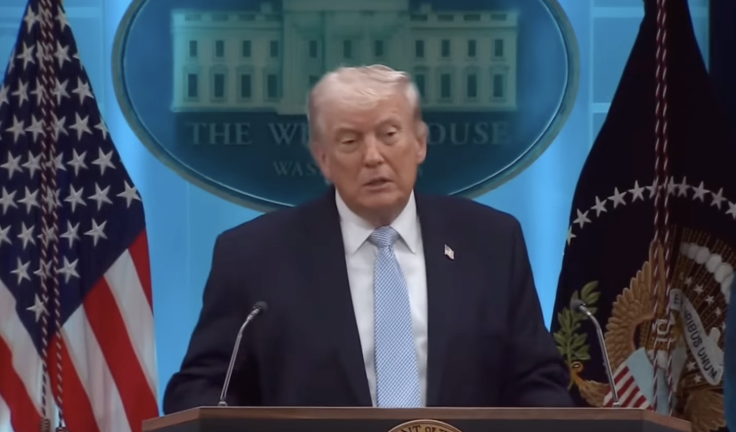
Republicans are grappling with a growing sense of unease as the political cost of Donald Trump's Iran conflict begins to show. Even with a temporary ceasefire in place, there is a quiet but persistent worry among party leaders that the damage may already be done.
Behind closed doors, some lawmakers admit the two-week pause in fighting has done little to steady nerves back home. For many, the concern is that the war has pulled attention away from domestic issues that once worked in their favour.
Timing now sits at the centre of the anxiety. With the midterms edging closer, Republicans are asking whether any diplomatic reset can come quickly enough to shift public sentiment.
Ceasefire Fails to Quiet Political Anxiety
The White House's announcement of a short-term ceasefire was intended to project control and restraint. Instead, it has exposed deeper strains within the Republican Party.
According to Politico, several GOP strategists and lawmakers believe the move may be a little too late to undo the political damage already felt across key battleground districts. Voters, they say, have formed their views and opinions after weeks of rising tension and uncertainty.
A source close to the White House, who requested anonymity, said the Iran war has almost solidified the reality that the Republicans will lose in the midterm elections in November in both the Congress and Senate seats. Experts also cited that concerns are worsened by the underperformance of Republicans, fuelling fears that voters are increasingly open to change.
Arizona's longtime GOP strategist Barrett Marson echoed that view, saying time is simply not on Trump's side as November elections approaches.
Some Republicans privately describe the ceasefire as a pause rather than a solution. To them, it signals a reactive approach, not a clear long-term plan.
A Shift From Strength to Uncertainty
For years, Republicans have campaigned on strong national security credentials, and the Iran conflict was initially framed in that light. But as the situation dragged on, the tone began to change.
Concerns about rising costs, global instability and the risk of a wider war have moved to the forefront of public discussion. Voters who once prioritised security are now asking harder questions about the consequences.
As reported by The New York Times, a noticeable silence over Trump's stance on the Iran war has emerged within Congress, where some Republicans are trying to distance themselves from the administration's approach. That silence risks weakening a unified message at a critical moment, even as it helps them avoid being drawn into messy internal tensions.
Democrats Seize the Moment
While Republicans wrestle with their strategy, Democrats have moved quickly to take advantage of the uncertainty. They have framed the Iran conflict as reckless and politically driven.
Some Democrats have even floated extreme measures, including discussions around the 25th Amendment, to question Trump's leadership during the crisis, The Guardian reported. Though largely symbolic, the rhetoric has added to doubts among voters.
On Tuesday afternoon, more than 20 Democratic members of Congress took to social media platform X, calling for Trump's cabinet to invoke the 25th amendment of the US constitution to remove a sitting president, arguing that the 79 year old leader is unfit for office. Beyond policy decisions linked to the Iran conflict, some Democrats also questioned Trump's mental health, calling him 'unhinged lunatic' and 'gone insane.'
Members of Congress calling for invocation of the 25th Amendment, a thread 🧵:
— Julian Andreone (@JulianAndreone) April 7, 2026
The result is a political environment where Republicans find themselves defending not only policy, but judgement.
Relief Mixed with Rising Fear
There is cautious relief within Republican ranks that the ceasefire has, for now, halted further escalation. But it comes with a deeper concern that the political fallout may not be so easily reversed.
Some campaign advisers believe voters tend to remember the height of a crisis more than its resolution. Images of conflict, uncertainty and risk can linger, long after any diplomatic progress.
Others point to shifts in polling across suburban districts, where moderate voters appear increasingly uneasy. These areas could prove decisive in November.
A Race Against Political Memory
Republicans now face a difficult path. They must persuade voters that stability has been restored while also defending the decisions that led to the crisis.
The challenge is not only about policy, but perception. Even if tensions ease, the question remains whether voters are willing to move on as quickly as politicians would like.
For many within the party, the fear is simple and hard to ignore. The Iran conflict may not just be a foreign policy test. It could shape the outcome of the upcoming midterm elections.
© Copyright IBTimes 2026. All rights reserved.
- Recommended For You