Trump Derangement Syndrome: James Carville Slams 'Idiotic' Conflict and Rising Gas Prices Amid Iran War
James Carville's latest broadside at Donald Trump mixed fury over Iran, contempt for presidential 'buffoons' and a warning that rising gas prices will hit voters first.

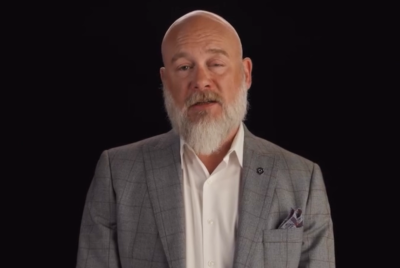
James Carville used a viral monologue on his weekly Politics War Room platform, reported by OK! Magazine on March 8, to attack President Donald Trump over the conflict with Iran and the gas price pressure he said Americans were already feeling. In the broadside, Carville embraced the insult 'Trump Derangement Syndrome,' hurled a string of obscenities at Trump and argued that hostility towards the president was not only understandable but morally necessary.
🚨YIKES 🙄🚨
— Ashley (TeamTrump47) (@TeamTrump47) March 6, 2026
Stephen A. Smith looked stunned as James Carville openly admitted he has full-blown Trump Derangement Syndrome — and said he has zero interest in fixing it. In fact, he said he hopes it only gets worse: “I just want to get WORSE!”
pic.twitter.com/03hNazYXVp
For context, Carville is no passing cable guest looking for a hot clip. The 81-year-old strategist became a national political force as Bill Clinton's lead strategist in 1992 and is still treated, for better or worse, as one of the Democratic Party's bluntest surviving voices.
That history matters because his latest remarks did not come from nowhere. They landed as another instalment in a much longer argument he has been making about Trump, the Democrats and the cost of being too polite in an ugly political moment.
Trump Derangement Syndrome Reclaimed
Carville's gambit was to seize a phrase usually thrown at Trump critics and wear it like a medal. He said he wanted to 'hate the mother------ so much that we can't see straight,' then kept going, insisting he did not want to recover from that feeling but deepen it. It was not careful language. It was meant to scorch.
He referred to Trump as a 'fat f---' and a 'sorry sack of s---,' and claimed the president 'doesn't like America' and wants the country to lose. Those are plainly Carville's views, not established facts, and the article presents them as part of an expletive laden tirade rather than a new piece of reporting.
Still, the force of the outburst was the point. Carville was not trying to sound judicious. He was trying to make the language of restraint look faintly ridiculous.
Political strategist James Carville had a full meltdown while ranting about President Trump.
— ᶠᵃⁿ Karoline Leavitt (@KLeavitNews) March 7, 2026
“I’ve got TDS. I hate the guy — and you know what? I don’t want to get rid of it. I don’t want to get better. I want it to get worse.”
Yikes. pic.twitter.com/pi6cfyh0xP
That is why he also turned on media figures he sees as too eager to appear even handed. He singled out Stephen A. Smith and Chris Cuomo, mocking what he called the 'integrity reflex' of pundits who pride themselves on being fair or objective towards Trump.
Then came the line that gave the rant its shape. 'I can only be fair,' he said, before dismissing that posture as 'Bulls---.'
Trump, Iran and the Cost of the Fight
Carville's anger was not confined to Trump's style or personality. He trained it on the administration's posture towards Iran, calling it an 'idiotic war' and openly questioning the logic of military intervention against a country of 92 million people.
In one of the monologue's more pointed passages, he urged prayers for people 'paying more for gas' because of a war that, in his telling, had not been properly explained to the public.
There was a grimness to that section that cut through the theatrics. Carville said Trump had never told Americans why the United States was there, then folded in a plea for service members with a rough sort of sincerity that sat awkwardly beside the profanity.
That tension is familiar in Carville's public voice. He can sound like a veteran operative, a bar-room moralist and an ageing party disciplinarian in the same breath.
He did not stop at foreign policy. Carville accused Trump of staffing federal agencies with 'incompetent f buffoons,' then swivelled towards the Democratic Party's next electoral test. His advice for the 2026 midterms was stripped to one word, 'Repeal,' aimed squarely at Trump's spending laws.
That recommendation fits a wider line he has been pushing for some time. The report notes that, despite his ferocious anti-Trump posture, Carville has repeatedly warned Democrats to step back from 'woke' identity politics and other far left cultural fights he sees as electoral dead weight.
🚨 James Carville claims the only way Americans will ever see the Epstein files is by voting Democrat.
— Ashley (TeamTrump47) (@TeamTrump47) March 9, 2026
“If you want to know what’s in the Epstein files, vote Democratic. You’ll never see them if Republicans control the House and the White House.”
pic.twitter.com/uIDRcybsSJ
Instead, he has urged what he calls 'daring maneuvers,' letting Republicans wrestle with their own divisions while Democrats concentrate on affordability and what he describes as 'seismic economic scale' policies.
There is an old political oddity humming beneath this. Carville, one of the most combustible Democratic strategists of his generation, is married to Republican consultant Mary Matalin, and their cross-aisle marriage has been a fixture of books and television for decades.
© Copyright IBTimes 2026. All rights reserved.
- MOST POPULAR IN Trending