

Ukraine Says Russia Returned Soldiers' Bodies With Hidden Explosives, Forcing New Safety Checks
'We have found grenades': Ukrainian investigators say hidden explosives inside repatriated soldiers' bodies have turned every identification into a potential bomb threat.
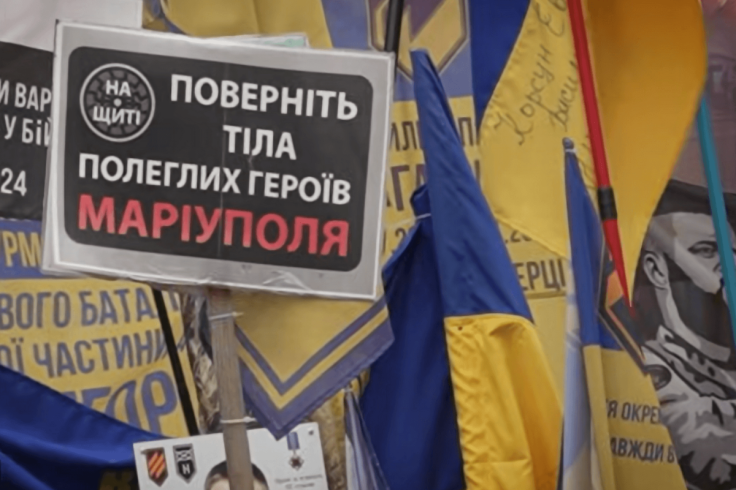
Ukraine says Russia returned soldiers' bodies with hidden explosives, a chilling allegation that has forced forensic investigators to treat every repatriated body as a potential bomb threat before attempting to identify the dead.
According to Ukrainian officials, investigators have repeatedly found explosive objects, including grenades, concealed among the remains of fallen soldiers. The discoveries have transformed what is already one of the country's most emotionally demanding tasks into one carrying immediate risks for the people working to return loved ones to their families.
For grieving relatives, it also means longer waits before funerals can take place. Before a body can be identified through DNA, fingerprints or other forensic methods, specialists must first ensure it poses no danger to those handling it.
Explosive devices have been repeatedly found concealed inside the bodies of killed Ukrainian soldiers returned by Russia under repatriation agreements, according to a Ukrainian police official.https://t.co/VdNNhi2F0F
— TVP World (@TVPWorld_com) July 1, 2026
Investigators Discover Hidden Explosives
The warning comes from Taras Tarasenko, deputy head of the investigative department at the Kirovohrad Region Police Department, whose team helps examine repatriated bodies arriving at one of Ukraine's key identification centres.
Speaking to Ukrinform, Tarasenko said every set of remains is now checked for dangerous objects before forensic work begins.
'First of all, we check whether there are any items that may pose a danger. Such cases have occurred more than once,' he said.
He added, 'We have found explosive objects, grenades and other things, so we work as carefully as possible.'
Those remarks suggest investigators no longer view the discoveries as isolated incidents. Instead, every repatriation is approached with heightened caution.
⚡ Ukrainian forensic teams and police are frequently discovering hidden explosives rigged inside the bodies of repatriated soldiers. https://t.co/9a0OKlXDYG
— UNITED24 Media (@United24media) June 30, 2026
Safety Checks Delay The Identification Process
The Kirovohrad region is home to the Centre for the Search for Missing Persons in Special Circumstances and the Identification of Unidentified Bodies of Servicemen, one of Ukraine's main facilities for identifying the dead.
Hundreds of bodies are delivered there each day, according to Ukrainian authorities. A team of just 32 specialists works around the clock to document remains, collect forensic evidence and establish identities before families can finally lay their loved ones to rest.
While the additional inspections are designed to protect forensic teams, they inevitably slow an operation already under immense pressure. For families waiting for confirmation that a missing relative has been found, every delay extends an already painful period of uncertainty.
A Growing List Of Serious Allegations
The latest claims add to a series of Russian military allegations documented by Ukrainian authorities since the full-scale invasion began.
Officials have previously alleged that some of Russia's own fallen soldiers were returned wearing Ukrainian military uniforms, an accusation Ukraine says may have been intended to avoid compensation payments to the families of Russian troops. Russia has not publicly responded to those claims.
Other returned bodies have allegedly shown signs of torture or arrived with internal organs missing.
Among the most widely reported cases is that of Ukrainian journalist Viktoriia Roshchyna, who disappeared after being captured in the occupied Zaporizhzhia region in 2023.
Ukrainian investigators later reported severe bruising, abrasions, broken bones and injuries consistent with electric shocks. Following the return of her body, officials also said her brain, eyes and trachea were missing during the post-mortem examination.
Those allegations remain part of wider Ukraine war crimes allegations that continue to be investigated by Ukrainian authorities and international bodies.
Evidence From Izium Still Shapes Investigations
The latest discoveries also echo evidence uncovered after Ukrainian forces recaptured Izium in the Kharkiv region in 2022.
Investigators exhumed 436 bodies from a woodland burial site outside the city. Ukrainian authorities said at least 30 victims showed signs of torture, including tied hands, ropes around their necks, broken limbs and burn injuries. Several male victims were also reported to have suffered genital mutilation.
The findings became one of the most significant early investigations into alleged wartime abuses and continue to inform efforts to document possible violations of international humanitarian law.
If independently verified, deliberately concealing explosive devices in human remains could raise further questions under the laws of armed conflict because of the danger posed to humanitarian and forensic personnel handling the dead.
Why The Allegations Matter
Away from the battlefield, Ukrainian forensic investigators are carrying out another vital mission, identifying the dead with dignity while preserving evidence that could prove crucial in future legal proceedings.
The alleged discovery of booby-trapped soldiers' bodies has fundamentally changed that work. Every repatriation now begins with a search for hidden dangers before investigators can focus on identifying the person in front of them.
For families, the goal remains the same: bringing their loved ones home. For the specialists tasked with making that happen, Ukrainian officials say the job has become even more dangerous, with every returned body requiring the caution normally reserved for an active crime scene.
© Copyright IBTimes 2026. All rights reserved.