Putin's Battlefield Blunder: 'Fake Assault' BACKFIRES as Russian Troops Surrender en Masse
Putin's alleged propaganda ploy reportedly collapses as 64 Russian soldiers are captured in Zaporizhzhia, while Ukraine's surrender campaign turns battlefield drones into unlikely lifelines.

A mission allegedly designed to make Russia look like it was advancing has reportedly ended with 64 Russian soldiers captured by Ukrainian forces, turning a supposed propaganda victory into a battlefield humiliation.
The incident reportedly unfolded in Zaporizhzhia Oblast on 20 July 2026. According to accounts surrounding the operation, Russian troops were sent behind Ukrainian lines to infiltrate settlements, plant Russian flags and create drone footage that could portray Moscow's forces as seizing new ground.
Instead, Ukrainian forces reportedly detected the groups and launched a clearing operation, turning the alleged Putin propaganda trap against the very forces meant to promote Russian progress.
The Alleged Flag-Planting Mission
The most striking claim is that the soldiers were allegedly not sent forward primarily to capture and hold territory.
According to accounts attributed to captured Russian soldiers, their mission was to infiltrate villages without engaging Ukrainian forces, plant Russian flags and allow drones to film them.
The alleged goal was to create images suggesting Russian forces had advanced further than they actually had.
The claim has not been independently verified, but if accurate, it reveals how closely battlefield operations and Russian military propaganda can become intertwined.
In this case, the plan reportedly backfired spectacularly.
64 Russian Soldiers Captured
Ukrainian forces reportedly launched a clearing operation against Russian infiltration groups across five settlements in the direction of Hulyaipole.
The Ukrainian unit involved was the 225th Separate Assault Regiment, an experienced formation that has fought on several major fronts since Russia's full-scale invasion.
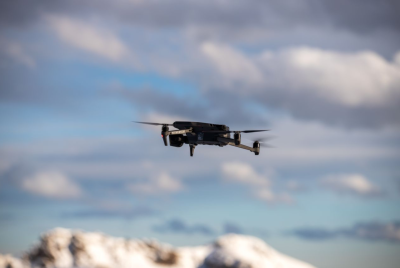
One captured Russian soldier reportedly described spotting a Mavic reconnaissance drone before enduring around 12 hours of attacks by FPV drones. He also claimed a Baba Yaga heavy drone dropped two munitions on their position, leaving soldiers trapped beneath rubble before Ukrainian troops reached them.
By the end of the operation, 64 Russian soldiers had reportedly been taken prisoner.
That number is significant, but it is important to distinguish between capture and voluntary surrender. The available account does not establish that all 64 soldiers willingly laid down their weapons at once. They were reportedly captured during the clearing operation.
That is separate from Ukraine's wider effort to persuade Russian soldiers to surrender voluntarily.
Ukraine's 'I Want to Live' Programme
That effort is centred on Ukraine's 'I Want to Live' programme, which encourages Russian troops to abandon the fight and surrender.
Its instructions are deliberately simple: make contact in advance, drop your weapon, keep your hands visible and follow the designated route.
The programme has also reportedly incorporated drones, giving Russian soldiers seeking to surrender a potential route towards Ukrainian positions.
It is an unusual form of psychological warfare. A drone that once represented an incoming attack can, in some cases, become a guide towards safety.
That message could be particularly powerful for soldiers trapped on the front line, especially if they believe surrender offers a better chance of survival than continuing to fight.
'They Didn't Beat Us'
The treatment of captured Russian soldiers has become another part of the information battle.
In footage referenced in the account, captured soldiers reportedly said they had not been beaten or abused after being taken prisoner.
One soldier reportedly told his family that he was alive and well.
Those words could carry considerable weight among Russian troops. If soldiers believe surrender does not automatically mean death or mistreatment, the psychological barrier to laying down their weapons may become weaker.
Ukraine says it follows the Third Geneva Convention in its treatment of prisoners of war, which requires humane treatment and sets standards covering food, accommodation, hygiene and medical care.
The Propaganda Trap
The alleged operation matters because battlefield imagery can influence far more than public opinion.
Claims of territorial gains can shape perceptions in Russia, Ukraine and the West, potentially affecting debates over military support and future negotiations.
The Institute for the Study of War has repeatedly assessed Russian claims of battlefield gains against available evidence, highlighting instances where Moscow's announcements have appeared to outpace confirmed changes on the ground.
That makes the alleged flag-planting mission particularly striking.
If the account is accurate, Russian soldiers were reportedly sent forward to create images of progress. Instead, the operation produced a very different picture: 64 Russian troops reportedly captured during a failed mission.
The supposed propaganda victory became a battlefield setback.
A Setback, Not a Collapse
The incident does not prove that the Russian military is collapsing, nor does it establish that Putin personally ordered the alleged mission. Still, it exposes the high stakes of the Kremlin's battle for morale and perception.
A mission reportedly intended to manufacture the appearance of Russian progress instead ended with dozens of soldiers in Ukrainian custody. At the same time, Kyiv's 'I Want to Live' programme seeks to turn surrender into a viable alternative to fighting.
The real danger for Moscow is not one failed operation, but the possibility that every captured soldier and every surrendering voice chips away at the image of an unstoppable war machine, turning a story meant to project strength into one that exposes weakness.
© Copyright IBTimes 2026. All rights reserved.
- Recommended For You