Ukraine's Strike on Iranian Vessel Risks Merging Two Separate Wars, Analysts Warn
Analysts warn of merging conflicts as Ukraine targets Iranian vessel

Ukraine's strike on an Iranian vessel in the Caspian Sea has killed a sailor and left analysts warning that two wars, fought until now a continent apart, are beginning to collide into a single, dangerous theatre.
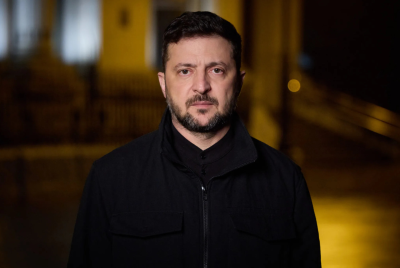
The attack has drawn a furious response from Tehran and forced Kyiv onto the diplomatic back foot, even as Ukraine's president, Volodymyr Zelenskyy, insists the strike was purely defensive.
Ukraine Says It Targeted Military Cargo
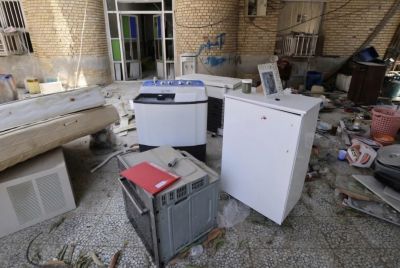
Ukraine struck the vessel on Saturday 25 July, with Kyiv saying it had targeted a Russian warship and ships used to move Iranian-linked military cargo destined for Moscow's war effort. Iran, however, said the vessel was a commercial ship and that the strike killed one sailor and injured several others, according to its Ministry of Foreign Affairs.
Ukraine's acting foreign minister, Andrii Sybiha, said that Kyiv's actions were 'aimed solely at defending our country from Russian aggression and never intended to target civilian vessels or people'.
Zelenskyy has attacked an Iranian commercial vessel, killing a sailor. A blatant UN Charter violation done at Israel's behest to drag Europe into its war.
— Seyed Abbas Araghchi (@araghchi) July 26, 2026
In calls with EU High Rep Kallas and FM Lavrov, made clear that what the freeloader in Kyiv did CANNOT GO UNANSWERED.
Iran Vows Strike Cannot Go Unanswered
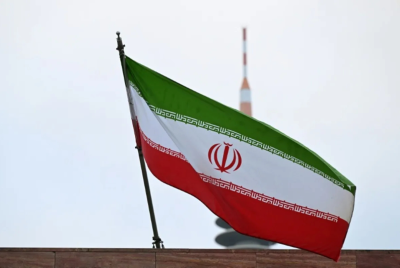
Iran's foreign minister, Abbas Araghchi, warned that the attack 'cannot go unanswered' and accused Israel of provoking the strike in a bid to 'drag Europe into its war', according to Al Jazeera. Israel has not publicly responded to the accusation.
Iran International, which has closely tracked the Caspian arms corridor, reported that Ukraine has struck the route before, hitting a Russian warship and two sanctioned cargo vessels earlier this year alone, part of what Kyiv describes as a campaign against Iranian military shipments to Russia.
Zelenskyy Says Iran Already Attacked Ukraine
Asked about the risk of Iranian retaliation, Zelenskyy told Sky News that Tehran had effectively been attacking Ukraine for years by arming Russia. 'What do you expect, if Iran transferred new technologies to Russia from the first year of the war ... they issued licences. What did they do? Did they attack us? I think so,' he said.
Zelenskyy has also pointed to what he calls growing coordination between Moscow and Tehran, writing on X that 'since the beginning of July, we have recorded active Russian satellite surveillance of the Gulf states and US military facilities located there', adding that 'these images subsequently appear in Iran'. He said there was 'a clear correlation between Russia's satellite imagery of these sites and Iranian strikes ... both before the attacks, in preparation for them, and afterward, to assess the damage inflicted'.
I will instruct our intelligence to share with our partners the information we have regarding Russia’s new assistance to the Iranian regime. Since the beginning of July, we have recorded active Russian satellite surveillance of the Gulf states and U.S. military facilities located…
— Volodymyr Zelenskyy / Володимир Зеленський (@ZelenskyyUa) July 25, 2026
Analysts Warn of Expanding Conflict
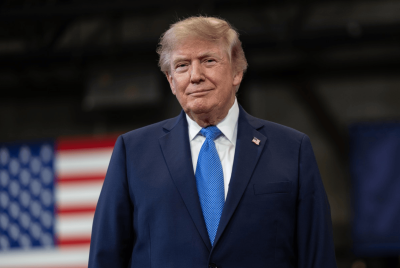
Sina Toossi, a fellow at the Center for International Policy, said that Trump's recent warmth towards Zelenskyy 'only strengthens this perception' in Tehran that the two conflicts are merging.
Toossi said the likely consequence is not an immediate missile strike on Ukraine, but a broader expansion of where Tehran believes it can legitimately impose costs.
Trita Parsi, of the Quincy Institute for Responsible Statecraft, said that Ukraine's involvement could 'reframe' the Iran war so it is seen less as serving Israel's agenda and more as a defence of Ukraine itself. He said that could appeal to European countries and US Democrats, who have broadly opposed the Iran war while supporting Ukraine, though it seems far less likely to win over Donald Trump's core base.
Analysts warn that if Iran responds by treating Ukraine as an active combatant in its own war with the US and Israel, the fallout could complicate ceasefire efforts already strained by the closure of the Strait of Hormuz, while drawing NATO-aligned states further into a widening regional confrontation.
A Blurred Line Between Two Conflicts
The Caspian Sea strike matters beyond its immediate death toll because it blurs the line between two conflicts that Washington, Kyiv and Tehran have so far tried to keep separate. If Iran expands its theatre of operations to include Ukraine, the fallout could complicate ceasefire efforts already strained by the closure of the Strait of Hormuz, while drawing NATO-aligned states further into a widening regional confrontation.
© Copyright IBTimes 2026. All rights reserved.
- Recommended For You