

'I Guess' — Trump Acknowledges US Risks in Iran Retaliation, Concedes 'Some People Will Die' in Conflict
The Pentagon has confirmed that 6 US service members have been killed in action, with 18 military personnel and 2 Defence employees sustaining injuries.
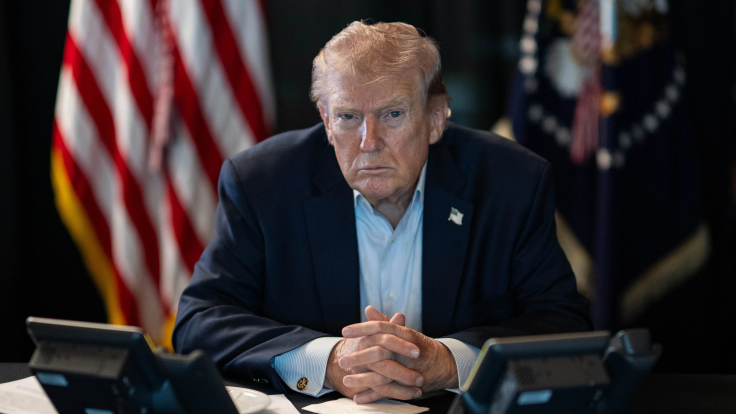
The United States finds itself locked in an intensifying military confrontation with Iran, a conflict that President Donald Trump has framed as a necessary, albeit perilous, endeavour to dismantle the Islamic Republic's offensive capabilities.
As 'Operation Epic Fury'—a coordinated joint military campaign between the US and Israel—enters its seventh day, the President has offered a blunt assessment of the risks facing the nation.
In an interview with Time magazine published on 5 March, when questioned about the potential for retaliatory attacks within the United States, President Trump acknowledged the danger with a stark, unsettling candour: 'I guess. But I think they're worried about that all the time. We think about it all the time. We plan for it. But yeah, you know, we expect some things. Like I said, some people will die. When you go to war, some people will die.'
These remarks come as the administration faces increasing pressure to justify a mission that has already claimed the lives of American service members and triggered profound anxiety across both domestic and international fronts.
Trump Concedes The Danger of Iran's Retaliation
When asked if Americans should worry about being attacked at home, he didn't dismiss the danger outright. Instead, he pointed out that Americans worry about security constantly. The government plans and prepares but admits uncertainty remains. 'Some people will die,' Trump added plainly.
His words cut through the usual political rhetoric, highlighting the grim reality of military conflict. The statement came just days after a deadly drone strike abroad that killed six US service members during a retaliatory attack.
The Human Cost Of Escalation
Operation Epic Fury, initiated on February 28, 2026, following the death of Supreme Leader Ayatollah Ali Khamenei, represents one of the most expansive air operations in the region in decades. The conflict has resulted in high human costs and ongoing regional instability.
The Pentagon has confirmed that six US service members have been killed in action, with 18 military personnel and two Department of Defence employees sustaining injuries.
The fallen soldiers included Capt. Cody Khork from Florida, Sgt. 1st Class Noah Tietjens from Nebraska, Sgt. Nicole Amor from Minnesota, Sgt. Declan Coady from Iowa, and Major Jeffrey O'Brien from Iowa. Chief Warrant Officer Robert Marzan from California was also believed to be among the casualties. Their deaths underscore the high stakes and human toll of ongoing hostilities.
As of March 4, reports estimate over 1,000 fatalities across the Middle East linked to the conflict. The Iranian Red Crescent Society confirmed the chaos, deploying more than 1,000 emergency teams across 153 affected regions. The violence has rippled outward, affecting neighbouring countries and spreading chaos.
The Shadow Of Terrorism And Domestic Violence
The tension doesn't stay overseas. Back in the US, the conflict's shadow looms large. Just days before the Time interview, Austin experienced a tragic mass shooting. Three people, including the gunman, were killed, with 14 others injured in a bar on West 6th Street.
The shooter, Ndiaga Diagne, 53, was wearing a sweatshirt with the words 'Property of Allah' and an Iranian flag. This detail has sparked questions about potential terrorist links, though investigators remain cautious. FBI officials said early indications point to a possible terrorist motive.
The incident deepened fears that domestic violence could be fuelled by international conflicts. It also highlighted the unpredictable violence that can erupt in American cities, especially amid heightened tensions with Iran.
Candid About Lost Lives
Trump's candid admission about lives being lost has sparked mixed reactions. Some see it as a necessary truth, recognising the brutal realities of war. Others worry it signals a dangerous escalation that could spiral out of control.
The president's comments come at a sensitive time, as the nation grapples with fears of retaliation and a fragile global situation. The threat of Iran's response remains real, with military and diplomatic channels strained.
Many Americans now face the uncomfortable realisation that conflict might lead to loss of life, both abroad and possibly on US soil. The words 'some people will die' resonate with the harsh realities faced by families of service members and civilians alike.
As diplomatic efforts continue, the possibility of further violence hangs in the air. The nation watches closely, uncertain about what tomorrow may bring. The Middle East's chaos, combined with domestic fears, creates a volatile atmosphere.
The message from the highest levels remains clear: the risk of conflict is real, and the human cost will be significant. For many Americans, the question is no longer if, but when and how this dangerous chapter will unfold.
© Copyright IBTimes 2026. All rights reserved.