

'His Decline Is Starting to Really Show': GOP Strategist Predicts Trouble for Trump and Republicans Before Midterm
As Republicans brace for the midterms, one of their own warns they are tied to an ageing standard-bearer chasing his name in lights while voters count the cost at the till.
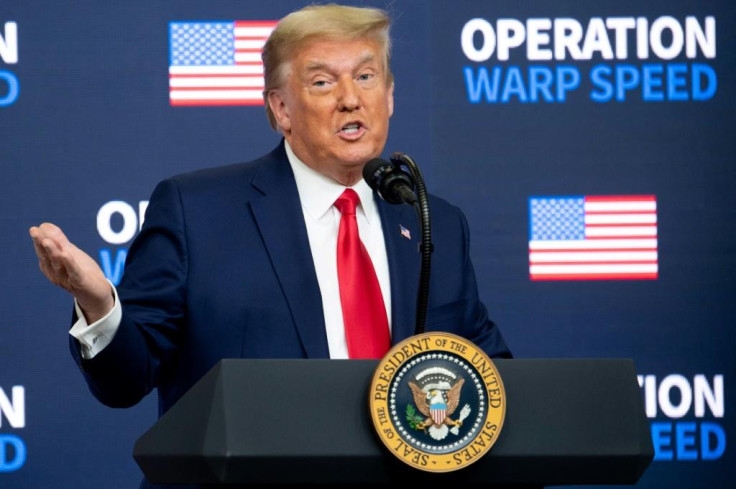
Republican strategist Maura Gillespie warned on Friday that Donald Trump's visible physical and cognitive decline, combined with his fixation on branding his name across Washington, is becoming a serious political liability for Republicans as they head towards the midterm elections in the United States. Gillespie said party operatives are increasingly anxious about how to defend a president who appears more focused on his personal legacy than on the economic pressures facing voters.
The Republican Party over Trump's leadership style, his historically low approval ratings and his habit of stamping his name and image on government projects and public spaces. Trump, now 80 in the scenario outlined by Gillespie, has long cultivated a public persona built on power, dominance and personal branding. That approach, which once helped propel him into office, is now seen by some on the right as a vulnerability rather than an asset.
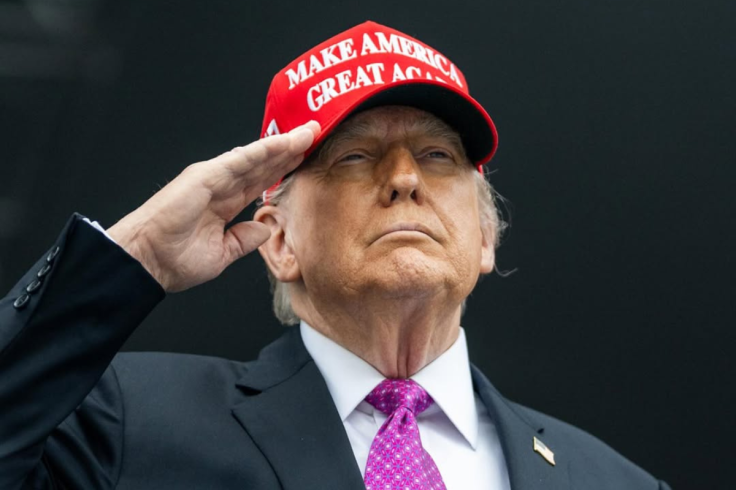
Gillespie, founder of Bluestack Strategies and a veteran of Republican campaigns for former representative Adam Kinzinger and ex-House Speaker John Boehner, did not mince words about what she sees when she watches Trump today. His decline, she argued, is no longer speculative.
'He's 80 years old. His decline is starting to really show physically, also cognitively ... [with] some of his slurred speeches and things of that nature,' she said. For a politician obsessed with appearing 'strong and powerful,' she suggested, that reality is sinking in. In her view, Trump now sees one straightforward route to immortality: put his name on everything in sight.
Donald Trump, Legacy Building And Republican Anxiety
Gillespie framed Trump's current behaviour as an extension of patterns that defined both his business career and his time in office. As a real estate developer, Trump treated buildings, golf courses and casinos as billboards for his brand. In the White House, he leaned heavily on that instinct, attaching his name to initiatives and demanding high-visibility set pieces that reinforced his status.
'It's what he knows how to do,' Gillespie said. 'As somebody who is in real estate and who does business and puts his name and branding on everything, this is his way to make a legacy impact because he doesn't have all the time that many presidents do post-presidency for legacy at the age of 80.'
There is, she argued, a hard political limit to this strategy. Republicans running in tough districts are already being pressed to explain why a party that rails against wasteful spending appears unbothered when public money goes towards burnishing the president's image. Gillespie doubted they would find convincing answers.
'I don't think Republicans are going to be able to explain to their constituents about spending constituent money on things like that when grocery costs are high and gas is high,' she said. Voters might tolerate vanity when times are good. When it is more expensive to fill the car or feed the family, the calculus shifts.
No one in the party, at least publicly, is suggesting that Trump's supporters are about to abandon him in droves. But Gillespie was pointing to a quieter fear: that the president's personal priorities and visible ageing could complicate the midterms just enough to make the difference in close races.

Donald Trump And The Legacy Question
Former Democratic representative Jamaal Bowman offered a sharply different idea of what Trump's legacy should look like. In remarks cited in the segment, Bowman suggested the president ought to focus less on plastering his name on projects and more on tangible economic gains for working-class Americans.
He urged Trump to be remembered for strengthening the economy and lifting people out of poverty, instead of for failures or crises that can define a presidency in retrospect. The examples he listed were hardly subtle. A leader can be remembered, he said, for 'a $1 billion-a-day on a war on Iran, high gas prices or an insurrection'.
That advice landed with a thud where Gillespie was concerned. She made it clear she does not believe Trump has any real interest in a legacy built on policy achievements for others.
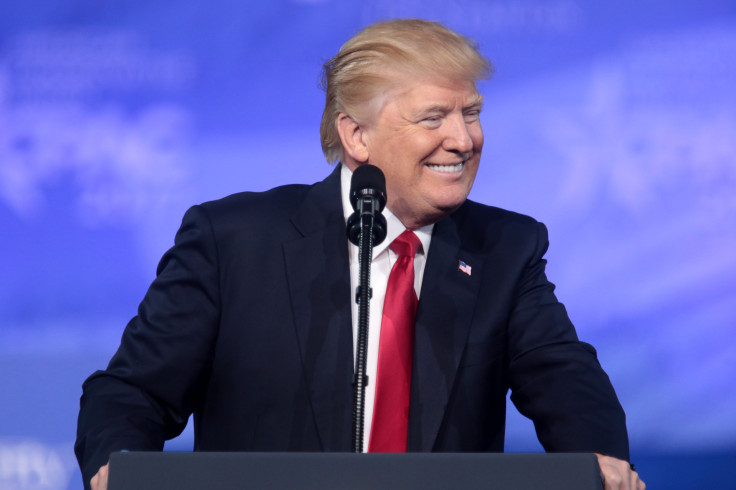
'I think he's not interested in that. Sorry. I just think he's not interested,' she said, cutting through with unusual bluntness for a strategist from his own party. 'I think he really is interested about what everything means to him. He's not a Republican or a Democrat. Donald Trump is someone who is egocentrically focused, and so it really just matters how it looks to him, not to anybody else.'
There is a kind of weary familiarity to that assessment. Republicans have spent years defending or downplaying the president's self-interest, often arguing that his unconventional style masks shrewd political instincts. Gillespie's comments suggest an emerging strand of conservative opinion that no longer assumes the instincts are shrewd, only that they are deeply ingrained.
If she is right, Republicans heading into the midterms will be tethered to a leader whose primary concern is how history treats his name, even as they try to convince voters they are focused on the price at the pump and the cost of bread. For strategists tasked with writing campaign scripts and debate lines, that is not an abstract worry. It is the problem that keeps them up at night.
© Copyright IBTimes 2026. All rights reserved.