Can Two Earthquakes Happen at Once? Venezuela Experiences 7.2 and 7.5 'Doublet' Quake Just 39 Seconds Apart
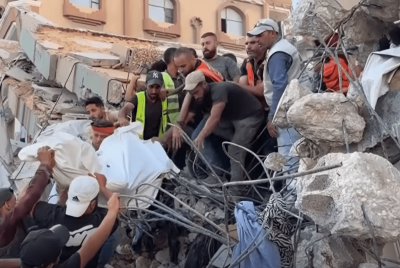
A devastating back-to-back earthquake sequence has left the nation reeling, with rescuers scrambling to save survivors from collapsed buildings across the capital and beyond.

Northern Venezuela has been plunged into a state of emergency after a rare and punishing seismic doublet struck the region on Wednesday evening, killing at least 164 people and leaving nearly 1,000 injured. In a geological event described by experts as both unusual and catastrophic, a magnitude 7.2 earthquake was followed just 39 seconds later by a magnitude 7.5 mainshock, compounding the destruction before emergency services could even mobilise.
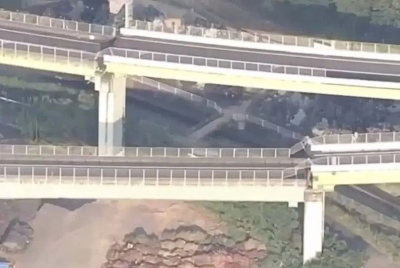
The US Geological Survey (USGS) confirmed the sequence, noting that the events were distinct ruptures rather than a typical mainshock-aftershock pattern. The disaster, which has been labelled one of the most destructive in Venezuela's modern history, saw buildings in Caracas crack and collapse, trapping residents beneath rubble and overwhelming local hospitals.
When One Big Quake Is Not the Whole Story
In most earthquake sequences, the largest quake comes first, followed by smaller aftershocks. Venezuela's disaster did not follow that script. Instead, two large earthquakes of comparable size struck almost back-to-back, close in time and location but still distinct enough to be treated as separate ruptures.
That is what makes a doublet different. These are not just one big quake and its fading echoes. There are two major earthquakes, linked but separate, capable of piling destruction upon destruction before emergency services or the public have had any time to react.
According to the USGS, the first earthquake struck near San Felipe in Yaracuy state. The second followed 39 seconds later near Yumare, only a short distance away. Seismic data suggest they likely originated from different but related faults, rather than from a single rupture propagating along the same break. In practical terms, that means one fault system appears to have lurched, transferring stress into another already primed to fail.
The 2023 earthquakes in Turkey and Syria are one recent example of closely linked large quakes causing catastrophic compound damage, though those shocks were separated by hours rather than seconds. The Venezuelan case is more compressed and arguably more unforgiving. There was scarcely enough time to register the first quake before the second arrived.
Why Northern Venezuela Is So Vulnerable
The deeper story lies in Venezuela's tectonic setting. Northern Venezuela sits along the active boundary between the Caribbean Plate and the South American Plate, where the two grind past one another at roughly 20 millimetres a year. That movement does not sound dramatic, but over time, it places enormous strain on the crust.
The region is cut through by major strike-slip fault systems, including the Boconó, San Sebastián and El Pilar faults. These are faults where blocks of rock slide horizontally past each other, and they can generate large, shallow earthquakes, the kind most likely to cause serious surface destruction.
The latest doublet struck in the broad onshore plate boundary zone west of Caracas, an area where the tectonics are messy, and the faulting is not confined to one neat fracture. It creates multiple pathways for stress to propagate through the crust, which in turn increases the likelihood that a rupture can destabilise a nearby fault.
Then there is the landscape itself. Much of northern Venezuela is mountainous, and strong shaking in that terrain can trigger landslides and slope failures. In Caracas, geology adds another layer of risk. Sediments beneath parts of the capital can amplify seismic waves, intensifying ground motion and worsening damage to buildings. That combination of shallow quakes, urban vulnerability, and unstable terrain is why early casualty estimates were so grim from the start.
A Country Hit By A Rare And Punishing Sequence
Venezuela is no stranger to earthquakes, but this was still an extraordinary event. The country has experienced major seismic disasters before, including the 1900 Caracas earthquake and the deadly 1967 quake that struck the capital. What sets this one apart is not only the magnitude of the shaking, but the sequence itself.
A doublet does not merely extend a disaster. It compounds it. Structures weakened in the first rupture can fail in the second. People trying to flee after the initial shaking can be caught in a more powerful follow-up shock almost immediately. Rescue operations, communications and emergency response are thrown into chaos before they have even begun.
The phrase 'two earthquakes at once' is not scientifically precise, but it captures the public horror of what happened. Two major ruptures, virtually on top of each other in time, hit a heavily populated and geologically exposed part of the country. The result was devastation measured not just in magnitudes, but in collapsed homes, overwhelmed hospitals and a death toll that may yet rise.
For now, Venezuela remains in a state of shock. As the aftershocks continue and the search for survivors enters its most critical phase, the focus remains on the immense challenge of reconstruction and the grim task of identifying those lost in a disaster that gave the nation no time to prepare.
© Copyright IBTimes 2026. All rights reserved.
- Recommended For You