Hungarian PM Viktor Orbán Defeated—Election May Shake Trump's Policies, Russia-Ukraine War Plans
The fall of Viktor Orbán marks a significant shift in Hungary's political scene, with repercussions felt across Europe and the US.

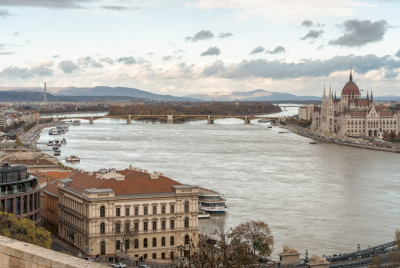
Viktor Orbán and his party's defeat to Peter Magyar in Hungary has landed with force far beyond Budapest, cutting into a political alliance that stretched all the way to Washington and even Russia and Ukraine.
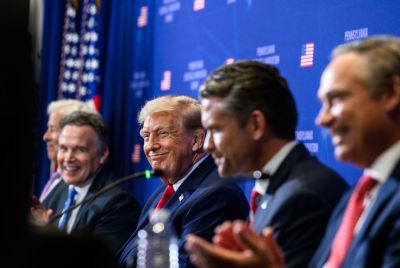
For US President Donald Trump and the conservative movement that elevated Orbán as a model, the result is more than a foreign upset.
The Hungarian prime minister's fall ends a 16-year grip on power, despite VP JD Vance's backing, as voters turn on his authoritarian rule.
Viktor Orbán reshaped Hungary's institutions, tightened his party's hold on the courts and media, and promoted what he openly described as an 'illiberal democracy'. It was a system admired by parts of the American right, not least Donald Trump.
Trump openly backed Orbán's re-election bid and sent JD Vance to Budapest in the closing days of the campaign. The visit, staged against the backdrop of the ongoing Iran war, was meant to signal commitment, but gathered harsh criticisms in the home country.
Orbán conceded quickly after the result.
'I congratulated the victorious party,' he told his supporters. 'We are going to serve the Hungarian nation and our homeland from opposition as well.'
What Hungary's Vote Really Signals
The explanation offered by some of Orbán's ideological allies is blunt. Voters wanted change. That sentiment cuts across borders and ideologies, and it is difficult to dismiss in a year defined by economic strain and geopolitical tension.
Hungary has not been insulated from either. Inflation, energy pressures linked to the war in Iran, and broader uncertainty across Europe have eroded the stability Orbán once promised. What makes this striking is that such pressures broke through even in a system widely criticised as tilted in the incumbent's favour.
Steven Levitsky, who has written extensively on democratic backsliding, put it plainly. 'Oppositions can win despite a tilted playing field.' The remark lands with a certain sharpness when applied to Hungary, which has long been labelled by the European Union as an 'electoral autocracy'.
Under Orbán, parliamentary districts were redrawn, judicial appointments channelled through loyalists, and much of the media landscape shifted into their control.
Washington Watches Closely
The result has not gone unnoticed in the US. Orbán's political project has often been cited by Trump allies as proof that a leader can reshape institutions while retaining electoral legitimacy. Now, that argument looks less secure.
Criticism has come from both sides of the aisle. Republican figures have cautioned against overt involvement in foreign elections, while Democrats have been more direct in drawing parallels with domestic politics.
Ro Khanna used the moment to publicly challenge Vance, asking whether he would accept defeat in a future US election. Chris Van Hollen went further, arguing that Hungarian voters had rejected a governing style he sees echoed in Trump's approach.
Levitsky himself suggested that, in some respects, Trump's use of executive power has gone further than Orbán's, citing investigations into political opponents and aggressive enforcement actions.
Orbán's defeat becomes a reference point, not just a foreign result.
Europe's Strategic Balance Shifts
Orbán was the European leader most closely aligned with Vladimir Putin and had repeatedly blocked European Union aid to Ukraine following Russia's 2022 invasion.
Now that he is no longer the elected PM, critics point out that his exit may change that equation. It potentially removes a key obstacle within the EU at a time when the bloc is trying to maintain a unified stance on the war.
Meanwhile, the Iran conflict has already strained transatlantic relations and unsettled European economies. Orbán's loss hints at how Washington's foreign policy decisions can reverberate politically across allied nations.
Romanian MEP Diana Sosoaca called the US intervention in Hungarian politics 'a big mistake', pointing to widespread unease in Europe over the war. Her remarks, aired on a Kremlin-backed network, underline how quickly narratives around influence and interference can take hold.
Hungary's vote will not determine American politics. Trump has yet to comment publicly on the result, especially when it undercuts a long-standing ally and, by extension, a model some in his movement have openly admired.
EU Celebrates Win For Democracy
About 98.74% of the vote has been counted for Magyar and his Tisza party, which has won about 138 of the 199 seats. The party seeks to reverse Hungary's relationship with the EU and might seize opportunities and funds.
'My fellow Hungarians, we have done it!' Magyar announced. 'Tonight, truth prevailed over lies. Today, we won because Hungarians didn't ask what their homeland could do for them – they asked what they could do for their homeland. You found the answer. And you followed through.'
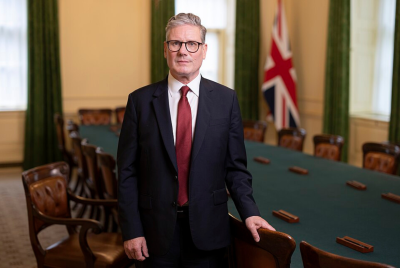
UK Prime Minister Keir Starmer wrote on social media, welcoming Magyar's win as a 'historic moment, not only for Hungary, but for European democracy.'
Poland's Prime Minister Donald Tusk said, 'Back together! Glorious victory, dear friends!' before adding in Hungarian, 'Russians, go home!'
France's President Emmanuel Macron congratulated Magyar and said he was looking forward to working together.
Seeking to unblock aid to Ukraine, one of Magyar's goals, Volodymyr Zelenskyy said Ukraine is ready to cooperate with Hungary to fast-track EU aid. 'We are ready for meetings and joint constructive work for the benefit of both nations, as well as peace, security, and stability in Europe.'
© Copyright IBTimes 2025. All rights reserved.
- Recommended For You