

'The Debt Is the Symptom': 24-Year-Old in $30,000 Gambling Spiral Seeks Bankruptcy
Exploring the pitfalls of using bankruptcy to escape gambling debt and the importance of tackling the root cause
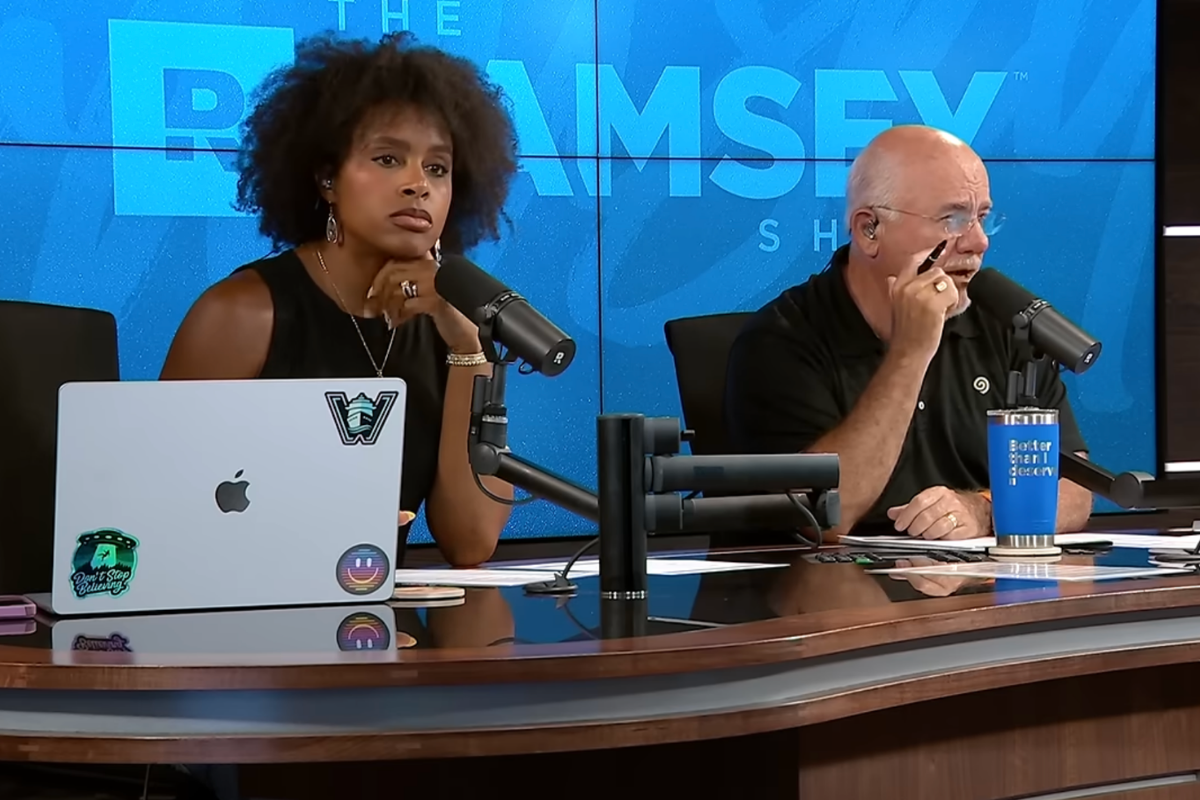
A 24-year-old caller wanted a simple answer to a costly question: pay off roughly $30,000 (£22,500) in gambling debt, or wipe it out in bankruptcy court. He had already put the dilemma to ChatGPT, which told him to file.
When he brought the same question to The Ramsey Show, the hosts refused to give him the exit he was looking for.
The caller, who gave his name as Philip, said he had built the balance across credit cards, personal loans, and accounts now sitting in collections, and was living from one paycheque to the next. The cause was not a lost job or a medical bill. 'I started gambling last year,' he said. He had won early, then lost steadily, and had placed his most recent bet two days before ringing in.
Pressed on whether he had a problem, Philip insisted he did not. 'It's not an addiction because I could stop right now,' he said. A co-host cut in: 'Then why don't you?' His reply worried them most. He was, he admitted, 'just trying to chase the win back.'
That is where Dave Ramsey drew a line between the balance and the behaviour. 'The debt is not the problem. It's the symptom,' he said. 'The problem is the gambling.' Filing for bankruptcy, he argued, would clear the $30,000 while leaving the habit that produced it untouched.
He was blunt about the odds. 'You're under the illusion that you're good at this and you're not. You suck at it,' Ramsey said. 'You're $30,000 in the hole.' Chasing losses, he added, was a classic marker of addiction, not skill. 'You know what addicts always say? I can stop anytime I want.'
Ramsey also questioned the source Philip had trusted first. A chatbot, he noted, does not have to live with the paperwork. 'ChatGPT has never had to live 30 years later, still filling out forms that says, "Have you ever filed bankruptcy?" And for the rest of your life, you have to say yes.'
Why Bankruptcy Won't Fix a $30,000 Gambling Debt
The case against filing rested on arithmetic as much as principle. At around $30,000 (£22,500), the debt was, in Ramsey's view, too small to warrant the lasting mark of a bankruptcy, which can sit on a US credit report for years and follow someone onto mortgage, rental, and licensing forms. More to the point, filing would not stop the losses. If the gambling carried on at the pace that built the debt in a year, he put the odds of landing back in the red at 100 percent.
His prescription was practical and unsentimental. 'You need three extra jobs, a detailed plan, and quit gambling,' he said, steering Philip towards Gamblers Anonymous before any courtroom. A co-host put it more plainly still: 'I'm scared for you.'
Ramsey speaks about debt with some history of his own. He has said he lost everything and went bankrupt decades ago, before building the media business behind the show, and his framing of debt as a symptom rather than a cause is a staple of his coaching. It did not land here. Philip ended the call still naming the $30,000, not the gambling, as his real problem.
What Gambling Debt Is Costing a Generation of Men
The exchange resonated partly because the pattern is neither unusual nor uniquely American. In Britain, the Gambling Commission's Gambling Survey for Great Britain, one of the largest studies of its kind, found that 48 percent of adults had gambled in the four weeks before being polled in its most recent quarterly wave.
The financial fallout shows up in the same survey. Among adults who had gambled in the previous year, 6.7 percent said they had cut back on everyday spending because of it, and 5.7 percent said they had used savings or borrowed money to keep gambling.
Once lottery-only players are set aside, those aged 25 to 34 record the highest participation of any age group. On air, Ramsey called gambling one of the fastest-growing addictions on both sides of the Atlantic, driven by online access, and named men in their 20s as the hardest hit.
Anyone in the UK worried about their own gambling, or someone else's, can contact the free National Gambling Helpline on 0808 8020 133.
© Copyright IBTimes 2026. All rights reserved.