'10% Tithing Is Not Enough': George Kamel Exposes What Christians Miss About True Financial Faithfulness
Finance expert George Kamel argues that Christian financial faithfulness extends beyond a 10% tithe, calling on believers to balance generosity with saving, investment and responsible enjoyment
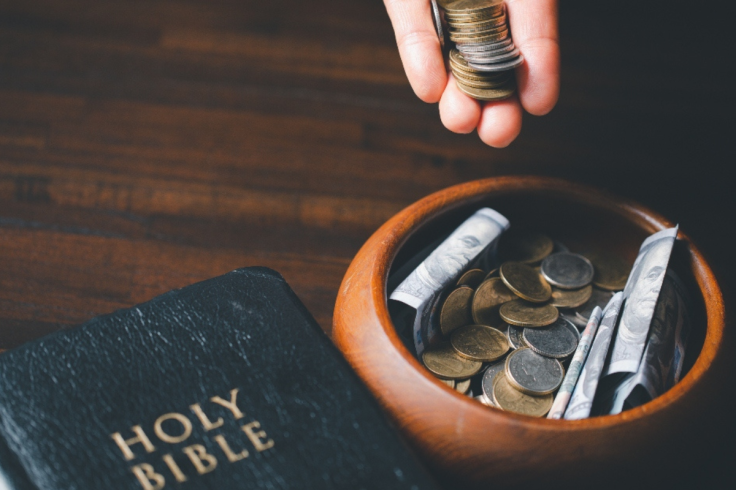
Christian finance personality George Kamel has argued that financial faithfulness requires more than simply giving 10 per cent of an income to a Church.
Speaking on Relatable, Kamel told host Allie Beth Stuckey that believers should view money as something entrusted to them by God, rather than as personal property. The discussion covered tithing, saving, investing and charitable giving.
Kamel said this mindset changes how Christians decide what to spend, save and give away. For him, the headline figure of 10% is only part of a far bigger question about stewardship.
'Ten Per Cent Tithing Is Not Enough' for Real Financial Faithfulness
Kamel was asked directly whether Christians must give 10 per cent and whether that could go to charities instead of the church.
He replied that while the word 'tithe' literally means a tenth, treating it as a legalistic number misses the posture God is after. 'God doesn't need your money, he wants your heart,' he said, adding that if someone 'can't bother with the 10%', it exposes where their treasure really lies.
Tithing, he argued, is less about the gross or net calculations that obsess some Christians and more about obedience and trust, the decision to believe you can genuinely live on the 90 per cent that remains.
At the same time, Kamel was unambiguous about where he believes that 'tithe' should go. He said the biblical pattern is that 'tithe goes to your local church', describing other Christian charities and ministries as separate, additional giving.
In his own home, he explained, the family gives the first 10% to their church, then supports other organisations from a different pot.
For him, investing financially in a congregation's pastors, staff and mission work embeds a believer in their community in a way a one‑off online donation cannot.
Beyond Tithing: The 'Three Buckets' of Financial Faithfulness
Kamel framed tithing as only one part of what he called 'financial faithfulness'. The deeper shift, he told Stuckey, is recognising that all money is 'God's money' and that Christians are stewards, not owners.
Once that mindset is in place, he said, every pound or dollar inevitably flows into one of three 'buckets': enjoyment, saving and investing, and giving.
On enjoyment, Kamel pushed back against a grim, joyless frugality that treats holidays or a decent car as moral failure. Using money to go on a family trip or upgrade your home, he said, is not inherently sinful, provided it does not drift into 'debauchery' or drown a household in debt.
When it comes to saving and investing, he grounded his case in the parable of the talents in Matthew 25, noting that the servant who grew what he had was praised while the one who buried his money was rebuked. Smart investing, he argued, is part of good stewardship because it allows believers to 'give an inheritance to your children's children', citing the book of Proverbs.
Yet in the Bible, he stressed, money is most often discussed in the context of giving. Quoting teaching that 'there are around 2,300 verses dealing with wealth and possessions,' he suggested the Biblical writers knew 'we would struggle with the treasures on earth part more than the treasures in heaven part.'
Financial faithfulness, as he framed it, is therefore measured not primarily by how much someone keeps, but by how freely they release it for what he called 'kingdom impact' even when it hurts.
When 'Wise Stewardship' Collides With Real‑World Pressure
Kamel did not pretend these ideals are easy to live out in the current economic climate. He acknowledged an affordability crisis, noting that in previous generations a typical house might cost two to three times the median income, whereas today he cited figures of five to six times income, and higher mortgage rates.
He accepted that for many millennials and Gen Z buyers, home ownership may take 'four or five more years' than it did for their parents.
Even so, he pushed hard against what he sees as a slide into financial nihilism, the view that because the system feels rigged, day‑to‑day habits no longer matter. Dismissing the idea that Uber Eats orders and premium coffee are irrelevant to the bigger picture, he argued that every transaction reveals priorities.
A few pounds saved every day, he said, becomes thousands over a couple of years, enough to break the 'I'll never get ahead' story many people tell themselves.
Kamel's harsher anecdotes were aimed less at shaming individuals and more at exposing what he called the emotional and identity layers wrapped around money.
The woman who would not sell her prize horse to pay down six‑figure debts, or the couple insisting on a $50,000 wedding at the cost of any realistic house deposit, were, in his view, examples of people clinging to 'treasures on earth' while praying for a miracle.
From a Christian perspective, he suggested, the uncomfortable question is obvious, what is your 'horse', the thing you refuse to surrender even though it is sabotaging your future.
Tithing, Frugality and the Line Between Wisdom and Fear
On one side is the Christian who tithes, perhaps even gives far more than 10%, but leaves their own family in a financial mess. He described cases where people were giving away 30% of their income while unable to put food on the table or stabilise a failing marriage.
That, he insisted, is 'not biblical in any way' because Scripture also commands believers to care for their households.
On the other side is the believer who hides behind 'frugality' as a pious excuse for fear and scarcity. Asked whether someone can be too frugal, he refused to call it a sin outright but drew a sharp line between cutting back to 'create margin to have kingdom impact' and hoarding out of miserly anxiety.
The former he welcomed, the latter he said has 'no biblical scripture to back that up'.
Underlying all of this was Kamel's insistence that God invites believers to 'test' him in the area of giving. He quoted Malachi 3, where the Lord tells Israel to bring 'the whole tithe into the storehouse' and promises to 'throw open the floodgates of heaven' in response.
He was careful to distance this from a crude prosperity gospel, the spiritual vending machine version of faith where $10 given guarantees $20 back. Still, he argued that habitual generosity changes a person in ways that often lead to better decisions, healthier work habits and, over time, greater material stability.
Tithing has long been taught in many churches as the expectation that believers should give the first 10% of their income to their local congregation. The practice is drawn from Old Testament law and has been variously reinterpreted in modern evangelical circles, with some arguing the principle is binding and others treating it as a guideline.
It can be recalled that tithing debates have become sharper in recent years as younger Christians juggle student debt, high housing costs and a cost of living crunch that makes even basic generosity feel like a luxury.
Kamel stepped into that tension by insisting the biblical call is broader and more disruptive than a single line on a budget spreadsheet.
The uncomfortable implication of his argument is that many practising Christians are settling for a thinner, safer version of obedience. They write the tithe cheque, or tap the giving app, and feel they have met the standard.
Kamel's claim that '10% tithing is not enough' is not a demand to double the figure by next Sunday. It is a challenge to reconsider whether Christians are truly treating every paycheque, every purchase and every financial plan as something that belongs to someone else.
© Copyright IBTimes 2026. All rights reserved.
- Recommended For You