Elon Musk's Insane 1 Billion-Share SpaceX Bonus Revealed After Smashed Warren Buffett's Records
Elon Musk's SpaceX surge leaves Warren Buffett looking strangely small by comparison.
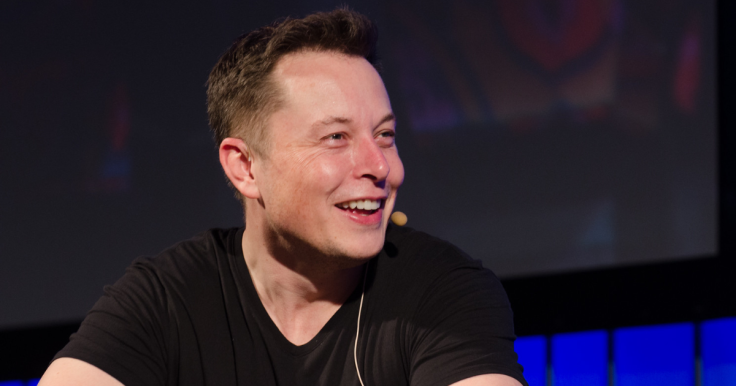
Elon Musk's SpaceX windfall has vaulted him further ahead of Warren Buffett in a day that underlined just how wildly private-market valuations can move, but some of the most dramatic claims around the latest bonus package remain tied to prospectus language rather than cash in the bank.
Warren Buffett In A Billionaire World Gone Skewed
SpaceX's shares were priced and began trading at a level that pushed Elon Musk's paper wealth sharply higher, with Forbes' live billionaire tracker putting the one-day gain at $164.8 billion (£122.93 billion) and his net worth around $1.4 trillion (£1.04 trillion).
Warren Buffett also had a strong session by ordinary standards, with an estimated $2 billion (£1.49 billion) gain, but he still finished far behind Musk at about $146.4 billion (£109.2 billion).
The comparison is less a tidy contest between two men than a snapshot of how modern wealth is now built, marked and re-marked in real time. Buffett's fortune has long been associated with Berkshire Hathaway's slow, relentless compounding.
Elon Musk is officially the world’s first trillionaire after SpaceX’s public debut sent his net worth past the $1 trillion mark.
— Benzinga (@Benzinga) June 15, 2026
SpaceX $SPCX went public at $135 per share, valuing the company at just under $2 trillion. The stock then debuted at $150, pushing Musk’s estimated… pic.twitter.com/x51ckNuaZ3
Musk's latest jump, by contrast, is tied to a single company and a market that appears happy to assign it a valuation that would have sounded mad only a few years ago.
SpaceX is the engine here. According to its S-1 filing, Musk beneficially owns both Class A and Class B shares, with the company's dual-class structure leaving him in control of the bulk of voting power.
The filing also says that each Class B share carries ten votes, while Class A carries one, a setup that helps explain why Musk's influence remains so outsized even after the listing.
Musk's SpaceX Bonus Could Still Get Bigger
The really striking part is that this may be only the opening act. SpaceX's prospectus discloses a grant of 1,000 million performance-based restricted shares of Class B common stock for Musk, but those shares only vest if the company clears a long list of milestones.
These include market-capitalisation targets and the far more ambitious condition of a permanent human colony on Mars with at least one million inhabitants.
Morningstar ran a discounted cash flow model on SpaceX and got $780 billion. Damodaran's range tops out near $1 trillion. The market says $2.65 trillion. Same company.
— Shanaka Anslem Perera ⚡ (@shanaka86) June 17, 2026
That gap is not a verdict on rockets. It is about who is doing the buying. Retail was handed more than 20… pic.twitter.com/0beXCFjPj5
The filing says the market-value thresholds run in $500 billion (£372.95 billion) steps, from $500 billion (£372.95 billion) all the way to $7.5 trillion (£5.59 trillion) , with grant-date fair values set at between $90.40 and $95.92 (£67.43 and £71.55) per share for each tranche.
It also details a second performance grant of 302.1 million restricted Class B shares, replacing an earlier xAI award, which would vest only if SpaceX reaches valuation milestones from $1.065 trillion (£790 billion) to $6.565 trillion (£4.9 trillion) and completes non-Earth-based data centres capable of delivering 100 terawatts of compute per year.
Those targets read like science fiction because, frankly, they are. Still, they are written into a public filing, which means investors are being asked to price not just rockets and satellites but Mars colonies and orbital computing. Nothing is confirmed yet so everything should be taken with a grain of salt.
SpaceX, Starship And The Reality Check
There is, however, real business underneath the spectacle. SpaceX reported 2025 consolidated revenue of $18.67 billion (£13.93 billion) and adjusted EBITDA of $6.58 billion (£4.91 billion) , while its Connectivity segment produced $7.17 billion (£5.35 billion) in segment adjusted EBITDA.
That kind of scale helps justify some of the market enthusiasm, even if the jump from strong operator to trillion-dollar behemoth still feels like a stretch.
Musk has also framed the public moment in typically theatrical fashion, saying, 'It is certainly hard to believe that little company that started in a warehouse in El Segundo is now going public.'
It is the sort of line that sounds half self-mythology, half prediction, and it lands because the company's story has already broken so many of the usual rules.
JUST IN: Elon Musk's net worth rises by $165 billion today, more than Bill Gates' entire net worth.
— Watcher.Guru (@WatcherGuru) June 16, 2026
Elon is now worth $1.3 trillion. pic.twitter.com/r4h5em6Tl4
The practical test now is whether SpaceX can keep building at a pace that matches the valuation and whether Starship can become the workhorse its backers expect.
The company is also leaning harder into connectivity and data-centre ambitions, including moves that could make terrestrial infrastructure a much bigger part of the story than rockets alone. That may be where the next serious money sits, not in the Mars rhetoric, impressive as that is.
Musk's latest leap over Buffett is eye-watering, but it is also fragile in the way all paper fortunes are fragile. One sharp repricing can turn a record into a footnote by tomorrow morning, which is, in its own way, the most billionaire thing of all.
© Copyright IBTimes 2026. All rights reserved.
- Recommended For You