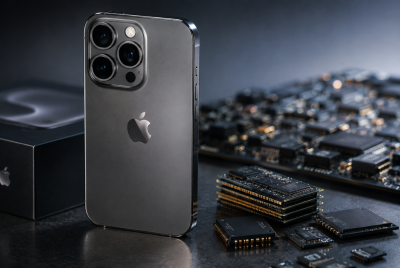
Planning To Buy An iPhone? You May Want To Do It Before Apple Raises Prices
Rising memory costs force Apple to consider price increases across its product range.

Anyone considering buying a new iPhone may want to act sooner rather than later. Apple is preparing to increase prices across its product range as it faces rising costs for memory and storage chips, according to comments made by Chief Executive Tim Cook in a recent interview.
The company has so far attempted to absorb the higher costs rather than pass them on to customers, but Cook said that approach can no longer continue indefinitely.
The warning comes as technology companies compete for a limited supply of memory components, with demand being driven largely by the rapid expansion of artificial intelligence infrastructure and data centres.
While Apple has not revealed which products could become more expensive or when any changes may take effect, the company has made it clear that rising component costs are becoming increasingly difficult to avoid.
Higher Memory Costs Becoming Impossible to Absorb
As per reports, Cook said Apple plans to raise prices on its products to offset the increasing costs of memory and storage chips. The executive explained that the company has tried to protect customers from these rising expenses, but the situation has reached a point where maintaining current pricing is becoming difficult.
'Unfortunately, price increases are unavoidable,' Cook said. 'We're doing our best to mitigate the huge increases that are being passed to us, and we've been trying to shield our customers from the increases, but the situation has become unsustainable.'
The pressure stems from growing demand for memory components used in artificial intelligence systems and data centres. As technology firms invest heavily in AI infrastructure, competition for memory supplies has intensified, pushing prices higher.
Earlier this month, groups representing automakers, retailers, and electronics companies warned that increasing demand for memory chips could lead to sharp rises in the prices of consumer goods in the United States. They also cautioned that supply chains could face disruption as manufacturers compete for available supplies.
Cook pointed to the memory market as one of Apple's primary concerns, particularly the market for DRAM chips. According to him, more production is now being directed towards high-bandwidth memory, a component widely used in AI servers.
'There's less supply at a time when consumers want devices and the memory guys are passing along huge price increases,' Cook said. 'We definitely need memory pricing and supply to return to reasonable levels for consumer products. That's the bottom line.'
Although Apple has confirmed that price increases are being considered, Cook did not reveal when they might be introduced. He also declined to specify how large any increases could be or which products would be affected.
Exploring Chip Alternatives Amid Supply Concerns
The discussion comes at a busy time for Apple. The company is reportedly preparing to launch its first foldable iPhone in September, alongside the iPhone 18 Pro and iPhone 18 Pro Max.
As supply concerns continue, Cook suggested that Apple is prepared to use its financial resources to help address the issue.
While he did not provide specific details, he indicated that the company could use its balance sheet to support efforts aimed at increasing memory supply.
'We're willing to use our balance sheet to help be a part of the solution,' Cook said. 'Obviously, more capacity is needed.'
Cook also addressed questions about potential supply sources. China has major domestic memory and storage manufacturers, but current national security rules mean American companies would likely require licences to work with them.
When asked whether such restrictions should be relaxed, Cook indicated that all options deserve consideration.
'Everything needs to be on the table,' he said, adding, 'I think we should look at all supply.'
Despite Apple's willingness to explore solutions, Cook ruled out one possibility. He said the company has no intention of using its cash reserves and chip-making expertise to build its own memory and storage manufacturing facilities.
© Copyright IBTimes 2026. All rights reserved.
- Recommended For You