

Book Of Enoch Antichrist Prophecy: Banned Bible Scriptures Reveal Eerie End-Times Warning
An outlawed ancient vision of 'kings and the mighty' crumbling in shame feels uncomfortably close to our own age of untouchable power and quiet dread.

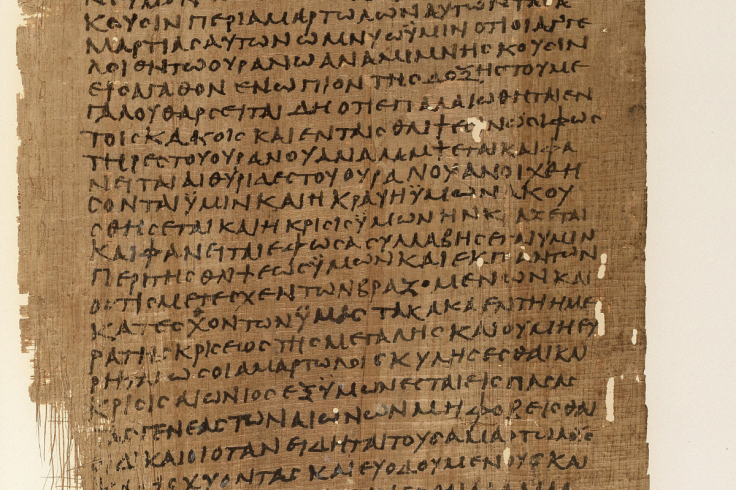
An ancient Jewish text known as the Book of Enoch, long excluded from the traditional Bible, is fuelling fresh debate online after researchers highlighted what they see as a stark Antichrist prophecy in its pages, warning of corrupt 'kings and the mighty' whose power, wealth and institutions ultimately collapse in judgment.
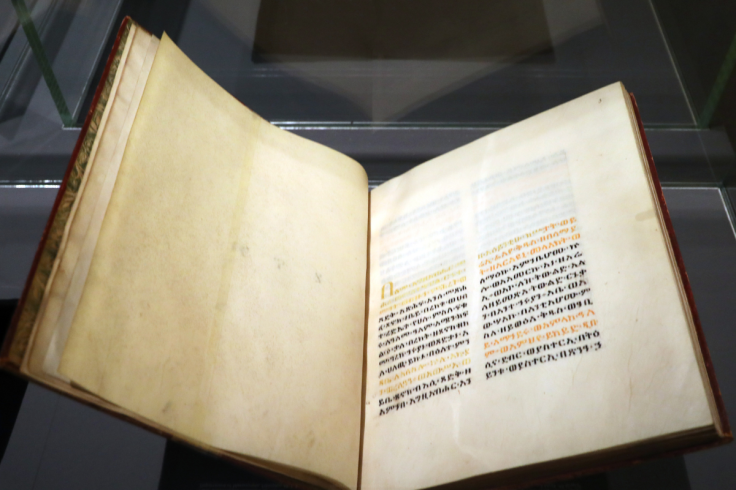
The Book of Enoch is one of dozens of writings that circulated among early Jewish and Christian communities but never made it into the 66-book biblical canon used by most churches today.
Preserved in part in the Dead Sea Scrolls at Qumran and written more than 2,200 years ago in Aramaic, the work is famous for its vivid stories of fallen angels, giants and the origins of demons, material that later readers found too strange or too speculative to sit alongside Genesis and the Gospels.
Book Of Enoch Antichrist Prophecy Reimagines The Enemy
The latest attention on the Book of Enoch Antichrist prophecy comes from renewed interest in the text's so‑called Book of Parables, its second major section, which runs from Chapters 46 to 63. In those chapters, Enoch describes a heavenly figure called the 'Son of Man' who judges a distinct class of rulers labelled 'the kings and the mighty.'
One interpretation, recently discussed on YouTube channel The Hermon Codex, argues that these chapters function almost like a four‑part drama. Rather than picturing a single charismatic villain as the Antichrist, the Book of Enoch is said to portray a recurring pattern, a system of 'unrighteous power' that surfaces again and again through history.
According to this reading, the first movement introduces 'the kings and the mighty' as wealthy, influential leaders who reject God, worship the gods they have made with their own hands and persecute the faithful while behaving as if the earth simply belongs to them.
The second movement then shifts the camera, so to speak, to the arrival of the 'Son of Man,' when those same rulers suddenly realise, too late, that they have denied God's chosen one.
The third section turns to heavy symbolism. Enoch is shown six mountains of iron, copper, silver, gold, soft metal and lead. An angel explains that these seemingly permanent structures will 'melt like wax before the fire ... and become powerless before the feet of the Elect One,' according to 1 Enoch 52:6.
Scholars have long seen this as imagery of collapsing wealth and empire. The Hermon Codex goes further, suggesting it evokes modern institutions built on riches and political authority, the kind of stuff people assume cannot fail until it does.
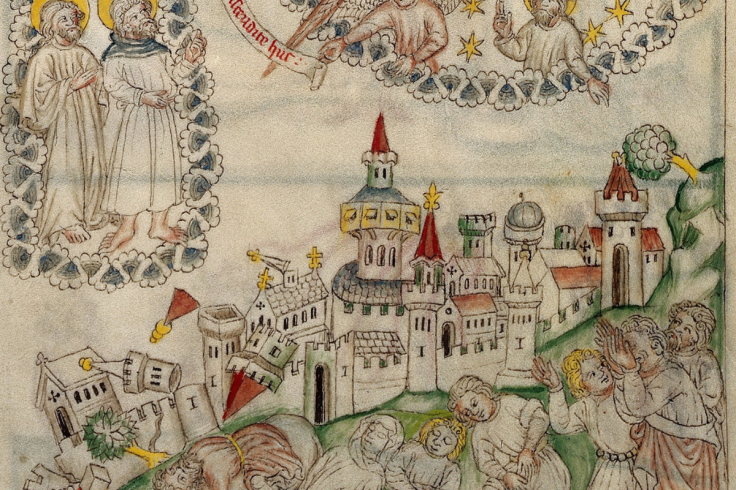
The final movement, in Chapters 62 and 63, is an unflinching judgment scene. The 'kings and the mighty' stand before the 'Son of Man,' see him enthroned in glory, then fall on their faces in desperation. They petition for mercy, but the text says their pleas are rejected and their faces are filled with shame. At that point, God delivers them to angels 'to execute vengeance on them because they have oppressed His children and His elect.'
How Translators Shaped The Book Of Enoch Antichrist Debate
If that sounds intense, some academics argue the original language is even stronger than many English readers realise. Variations between translations of the Book of Enoch have become part of the Anti-Christ debate in their own right.
More literal renderings by Michael Knibb and Ephraim Isaac describe rulers whose 'power rests upon their riches,' who 'deny the name of the Lord of Spirits' and actively 'persecute the houses of His congregations, and the faithful who hang upon the name of the Lord of Spirits.'
Some scholars cited in the discussion claim that earlier English editions softened or smoothed some of these phrases, muting the critique of entrenched power.
Biblical scholar George W E Nickelsburg, in his commentary on 1 Enoch, identifies 'the kings and the mighty' not as Satan or the fallen Watchers, but as corrupt political and religious elites.
That single judgement call opens the door for the Antichrist to be read less as a lone end‑times tyrant and more as a recurring phenomenon: arrogant systems that trust in 'the sceptre of our dominion and of our glory,' as Chapter 63 puts it, and assume they are untouchable.
The Hermon Codex, which focuses on manuscripts omitted from the traditional Bible, leans into that angle. Its narrator links Enoch's imagery to contemporary anxieties about powerful leaders, global institutions and economies propped up by financial might while ordinary people feel exploited or ignored.
IBTimes UK cannot independently verify the theological claims made in the video, so take everything lightly, but the resonance with modern frustrations is difficult to miss.
A Banned Book, Fallen Angels And End‑Times Anxiety
The Book of Enoch already occupies a charged place in popular imagination. Authorship is traditionally attributed to Enoch, the great‑grandfather of Noah, although scholars agree the text is a composite work, compiled over time.
Fragments among the Dead Sea Scrolls confirm it was circulating centuries before Christianity, giving it serious historical weight even if most churches eventually set it aside.
The work's mythology is wild by any measure. It expands on the brief reference in Genesis 6 to 'sons of God' and 'giants,' turning this into a sprawling narrative of rebellious angels, monstrous offspring and the birth of evil spirits that corrupt humanity.
Those sections alone have made Enoch a favourite in fringe Christian and conspiracy‑minded spaces, where every strange headline can be folded into an end‑times script.
Into that mix, the Antichrist prophecy material adds something quieter but arguably more pointed. Across Chapters 46 to 63, the rulers confess that they 'have not confessed before him ... but we have trusted in the sceptre of our dominion and of our glory.' Later they admit, in 1 Enoch 63:10–12, that 'in the day of our suffering and of our trouble, he will not save us ... All our sins are truly without number.'
Many scholars read this less as a coded timetable for future events and more as a sustained warning: human empires built on wealth, pride and oppression may look invincible, but they are temporary. It is a message that has outlived a long list of regimes that thought otherwise.
Official church bodies have not rushed to embrace this renewed focus on the Book of Enoch. For most mainstream denominations, the document remains outside the canon and therefore outside regular teaching, even if it is acknowledged as historically important.
Yet its language about power, riches and judgment keeps finding an audience, particularly online, where fears about political corruption and institutional failure are never far from the surface.
Whether one accepts the Book of Enoch as prophecy, parable or simply ancient religious literature, its Antichrist passages keep prodding the same uncomfortable question. If 'the kings and the mighty' are judged not for lack of power but for how they used it, what does that say about the systems we have built and quietly trusted to save us?
© Copyright IBTimes 2026. All rights reserved.