

'Not Demons': UK Vicar Claims Ancient Prophet Ezekiel Witnessed Advanced Alien Technology in Secret Bible Code
When a village vicar starts treating aliens as possible neighbours instead of demons, the old boundary between faith and the cosmos begins to thin.
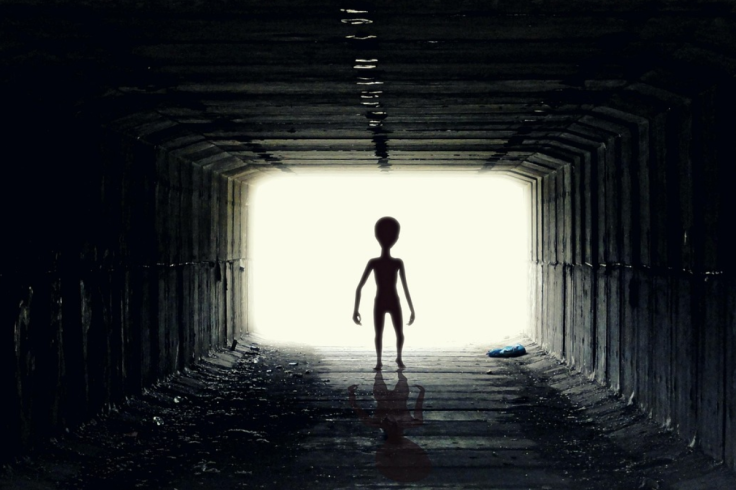
A Church of England vicar in North Wales has claimed that biblical prophet Ezekiel may have witnessed advanced alien technology, arguing that key passages of scripture point to the possibility of intelligent life elsewhere in the universe. Father Lee Taylor, who oversees three churches in the region, says he believes aliens could be part of God's wider creation rather than demons or forces of evil.
Taylor said he had been re-reading parts of the Bible with an eye on how Christians might respond if scientists ever confirm the existence of extraterrestrial life. Rather than seeing UFOs and aliens as a threat to Christian belief, he suggests that a 'bigger universe' simply points to a bigger understanding of God and creation.
Alien Ideas Rooted In Scripture, Says North Wales Vicar
Taylor's argument leans heavily on some of the Bible's more mysterious verses, including the Old Testament prophet Ezekiel's vivid vision of a 'wheel within a wheel' rising from the earth. Biblical scholars have traditionally interpreted the scene as symbolic language for the glory and presence of God. Taylor acknowledges that mainstream view, but notes that a minority of readers have long wondered whether the description sounds uncannily like complex alien technology witnessed by someone with no vocabulary to describe it.
He also highlights Jesus' words in John 14:2, when Christ tells his disciples: 'In my Father's house are many rooms.' Christians have usually read that line as a metaphor for the breadth of heaven, a reassurance that there is space for many types of believers. Taylor suggests an additional layer of meaning. He asked whether this could be read as 'some sort of hint' at a far larger cosmos populated by more of God's creations than humans alone.
Taylor's wider concern is straightforward enough. He wants believers, especially in his own parishes, not to panic if alien life is one day detected. In his view, Christianity has absorbed scientific revolutions before, from heliocentric astronomy to evolutionary biology, and could do so again without collapsing.
'A bigger universe, or the discovery of a bigger universe, doesn't make God smaller. It just makes creation bigger,' he told the paper. 'I don't think it's a challenge to faith. I think it's a challenge to the limits of our theological imagination.'
Challenging 'Demons Or Nothing' Thinking About Alien Life
Taylor is openly pushing back at a particular strain of Christian thinking that treats every alien report as either deception or demonic activity. He argues that labelling anything unexplained as satanic shuts down curiosity and keeps people locked in fear rather than honest investigation.
He is careful not to claim proof. Nothing in his reading settles the alien question, and he does not pretend otherwise. But he believes the Bible leaves more conceptual room than many churchgoers assume. Genesis, he points out, repeatedly presents humanity as God's supreme creation on Earth. Emphasis on 'on Earth.' Taylor takes that phrase as quietly significant, leaving open, at least in principle, the possibility of other intelligent beings elsewhere in God's universe.
If aliens are ever discovered, he argues, 'there's no reason to assume that every other form of intelligence would fit neatly into categories of absolute good or absolute evil.' That is a direct challenge to those Christians who see UFOs as camouflage for fallen angels, and it is also a swipe at secular narratives that imagine any advanced civilisation as automatically benevolent or automatically hostile.
The Church of England has not issued any formal response to Taylor's comments, and his ideas sit firmly in the realm of theological speculation rather than official doctrine. No denomination-wide policy exists on how to interpret reports of UFOs or claims of alien contact, and nothing he cites from scripture has been verified as a reference to extraterrestrial visitors. Without concrete scientific evidence of alien life, all of these interpretations remain contested and should be taken with a grain of salt.
What Taylor does capture, though, is a mood that crosses the boundary between church and laboratory. Astronomers keep identifying distant planets that might be able to support life. Governments declassify old UFO files. Public fascination with aliens refuses to fade. Sitting in the middle of that noise, a parish priest in North Wales is quietly asking his flock to consider that, if we are not alone, Christian faith may bend but does not have to break.

His reading of Ezekiel and John will strike many as imaginative, if not outright far-fetched. Others will hear in it a cautious attempt to keep religious belief honest in the face of an expanding universe. Either way, Taylor has dragged a once-fringe question into the Sunday sermon: if aliens exist, are they part of 'our' story, or a challenge to it?
For now, without a single confirmed alien microbe, let alone a visitor in a spacecraft, it is theology talking to a hypothetical future. Yet the fact that a Church of England vicar is even framing aliens as potential neighbours rather than demons marks a small but noticeable shift in how some believers are thinking about life beyond Earth.
© Copyright IBTimes 2026. All rights reserved.