'We Are Being Tested': Doctor Claims Visions of Hell Prove Earth is a Matrix-Style Simulation Run by God
Orson Wedgwood suggests near-death experiences indicate a God-created simulation testing human souls.
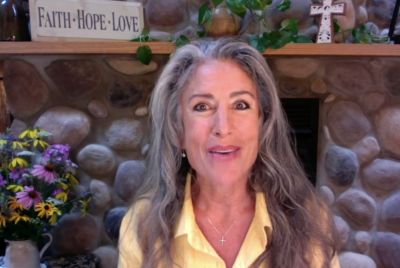
Orson Wedgwood, author and researcher, posits that negative near-death experiences are not neurological malfunctions but diagnostic tools within a constructed reality designed to evaluate human souls.
In a theory that bridges theological tradition and modern simulation hypothesis, Orson Wedgwood—author of NDE: Near Death Experience and AWARE studies: Proof Of The Soul and God?—claims that distressing near-death experiences (NDEs) provide evidence that Earth is a created environment.
Wedgwood, who is based in New Zealand, argues that these phenomena are not merely the result of a dying brain but rather encounters within a 'simulation' governed by God, sorting consciousness based on earthly conduct.
Earth Is A Matrix-Style Simulation Run By God: Wedgwood
The news came after Wedgwood laid out a theory that sits awkwardly, and rather madly, between Christian belief and simulation theory. In his telling, hell-like near-death experiences are not simply the brain misfiring, but encounters that happen inside a God-created simulation designed to sort souls according to how they lived.
He said, 'We are in a created environment, or a 'simulation' in which we are being tested. Our consciousness, how we behave, and the experiences we have are real, but the rest is not.'

He added that, as he sees it, the simulation is meant to separate those who will be with God when it ends from those who will not. That is the core of the argument, and it is a bold one, though hardly the sort of thing science can tidy up neatly with a spreadsheet.
Wedgwood also linked the idea to wider speculation among believers in simulation theory, which imagines that what humans call reality may be a kind of computer-generated construct.
The Doctor Claims Visions Of Hell
The simulation idea has been a recurring pop-culture fixation for years, and Wedgwood leaned on that overlap to make his case. He pointed to Elon Musk, who has publicly mused that reality could be artificial, though the billionaire's remarks are more of a thought experiment than a settled fact.
Wedgwood said, 'Most of this is in line with the Bible, and it is also somewhat in line with simulation theory expounded by people like Elon Musk who have concluded that life is not a random act of nature.'
A reporter from the Mail read my book, liked it, asked me a few questions et voila. He captured a couple of the key points of my book…empirical evidence suggests NDEs are real; Hell exists and more may end up there than we should comfortable about. https://t.co/Rgzw8N17w3
— Orson Wedgwood (@orsonwrites) June 8, 2026
He then turned to one of the best-known Christian testimony stories in the NDE world, Ian McCormack, the New Zealander surfer who said he was stung by a jellyfish in 1982 and experienced hell before being drawn back towards light.
McCormack has described feeling evil around him and later said he felt like 'a speck of dust being drawn up into a radiant light and delivered out of the kingdom of darkness.' Those claims remain matters of personal testimony, not laboratory proof, but they have become central to the wider debate on the afterlife.
Wedgwood said the thread running through such accounts is hopelessness, and that hellish visions are among the rarest forms of near-death experience reported. He said that if people have no interest in God, they may either lose 'the eternal part of themselves' or find themselves in a dark place.
He also said people can still be rescued from such a realm if they call out to God, which places his argument firmly in Christian theology rather than strict science.
The researcher's claims sit uneasily beside published work that takes a far more restrained line. A 2019 study in Memory compared positive and negative near-death experiences and found little difference between them beyond emotional tone, suggesting that both may produce similarly vivid memories.
The researchers said that helps explain why some people return from the brink with stories that are terrifying rather than peaceful, but the paper did not endorse the supernatural conclusions Wedgwood draws from them.
Wedgwood cited reporting that only 14 per cent of patients who said they had an out-of-body experience described it as negative, and that around half of those negative accounts featured demonic imagery. Even so, percentages in this corner of the literature can be slippery stuff, because they often come from small samples, mixed definitions and studies that measure very different experiences.
My books: https://t.co/H2FioYLG2O
— Orson Wedgwood (@orsonwrites) July 30, 2025
Wedgwood has collected those accounts in his book, Near Death Experience and AWARE studies: Proof Of The Soul and God?, where he explores distressing testimonies from people who said they were near death. In one 2019 study, a 42-year-old woman described 'human, bestial, monstrous' forms in a 'stinking stench' as she approached death. It is grim reading, and the language is stark enough to make even sceptics pause, if only for a second.
Still, the scientific question remains stubbornly unresolved. Wedgwood says many colleagues privately accept that they cannot explain the origin of the universe, life or consciousness, and that some are moving towards simulation theory. That may be true for a few, but it is not a consensus position, and it would be reckless to dress it up as one.
Despite the lack of consensus, Wedgwood contends that several colleagues privately acknowledge the difficulty of explaining consciousness through purely materialist lenses, leading some to consider simulation-based frameworks.
For now, his theory remains a theological interpretation of a complex and deeply human body of testimony, highlighting the enduring mystery of what happens when human consciousness approaches its terminus.
© Copyright IBTimes 2026. All rights reserved.
- Recommended For You