Why a Real Alien Encounter Would Push Modern 'Traditionalists' Completely Out of the Church
Exploring the impact of extraterrestrial life on religious beliefs.
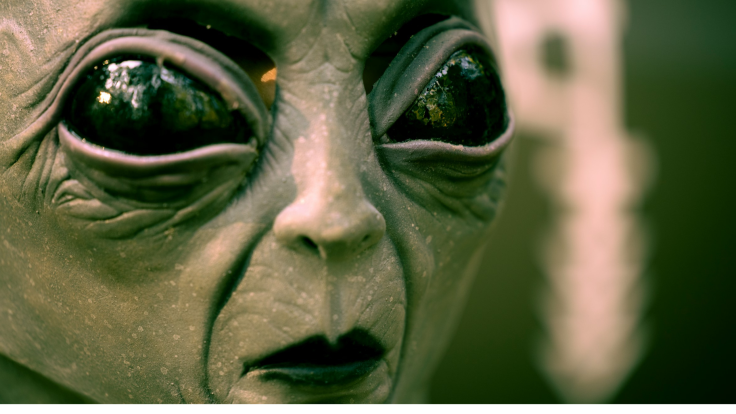
Theological debates revived in June 2026 around the release of Steven Spielberg's Disclosure Day suggest that, if an alien encounter ever did occur, it would be far more likely to drive today's self‑styled traditionalists out of church life than to bring organised religion itself crashing down, though much of that argument rests on speculation rather than established doctrine.
Speculation about alien life unsettling religion is not new. As scientific knowledge expanded over centuries, religious institutions were repeatedly forced to confront uncomfortable ideas, from heliocentrism to evolution. Yet those moments did not erase belief systems. They exposed weak interpretations while leaving broader traditions intact, often reshaped rather than replaced.
Traditionalists Debate Reopens Old Fault Lines
The suggestion that religion would collapse under the weight of an alien encounter tends to focus on its most rigid adherents. Historical and theological records suggest a more complicated picture. Within Catholic thought, the possibility of extraterrestrial life has long been entertained rather than dismissed outright. Pope Francis once remarked he would baptise a willing alien, a statement often cited to illustrate doctrinal flexibility rather than novelty.
Theologians have explored the idea for centuries. Nicholas of Cusa, writing long before modern astronomy, argued that life beyond Earth was plausible. Even those who rejected the idea typically did so based on limited cosmological understanding rather than outright theological prohibition. Across Protestant traditions, views vary widely. Some question how alien life would fit with doctrines such as the incarnation, while others, including C.S. Lewis in his Space Trilogy, imagined scenarios where such life coexists with Christian belief.

This diversity undermines the popular narrative that Christianity holds a single, fragile position on extraterrestrial life. It does not. What emerges instead is a spectrum of interpretations, many of which leave room for adaptation should new evidence arise.
Claims that alien contact would pose an existential threat to religion have circulated for decades, frequently relying on fringe interpretations. In some cases, extraterrestrials are framed not as biological beings but as demonic deception. That view has surfaced in both Protestant and Catholic circles.
A recent example highlighted tensions within the Catholic Church itself. Cardinal Robert McElroy reportedly rebuked a priest promoting the idea that UFO phenomena are demonic, going so far as to remove him from his role as an official exorcist. The intervention signalled a boundary between speculative theology and what church authorities consider unfounded claims.
Traditionalists Out of Church
The deeper fault line lies not between religion and science, but within religious communities themselves. Catholic teaching, like many long-standing traditions, has evolved over time, often slowly and not without internal conflict. The pattern is familiar. New knowledge emerges, resistance follows, and eventually a recalibration takes place.
Traditionalists, particularly those committed to fixed interpretations of doctrine, are more likely to resist such shifts. In some circles, this resistance already extends to established scientific concepts such as evolution and modern cosmology. Within these frameworks, alien life is not merely improbable but incompatible with a tightly defined worldview.
Faced with evidence that contradicts those assumptions, the response is often reinterpretation rather than revision. The claim that aliens must be demonic reflects that instinct. It preserves the existing worldview at the cost of engaging with new information on its own terms.
Catholic Inc. doesn't seem to understand that belief in extraterrestrials turns Catholic dogma into rubble.https://t.co/wGnImXBprD pic.twitter.com/FP7bwitdWk
— Sign of the Cross (@CatholicSOTC) June 8, 2026
History offers parallels. Early Christian disputes over how to treat those who renounced their faith under persecution led to the Novatian schism. The disagreement was not about external threats but about how rigidly tradition should be applied. Church authorities ultimately endorsed a more flexible, pastoral approach, while the stricter faction broke away.
That pattern has repeated in different forms across centuries. Each time, the tension centres on whether tradition is understood as fixed or developing. The same dynamic appears to be at play in current debates about extraterrestrial life. If an alien encounter were confirmed, it is not difficult to see which side would struggle to accommodate it.
None of this confirms that such a scenario is imminent. There is no verified evidence of alien contact, and discussions remain firmly in the realm of speculation. What is clear, however, is that religious traditions have historically shown an ability to absorb disruptive ideas. The more immediate question is whether all believers would be willing to adapt alongside them.
© Copyright IBTimes 2026. All rights reserved.
- Recommended For You