Columbine Victim's Parent Slams Zendaya and Pattinson's 'The Drama' Film Over School Shooting Plot Twist
Tom Mauser, father of a Columbine victim, questions the use of school shooting themes in a romantic film.
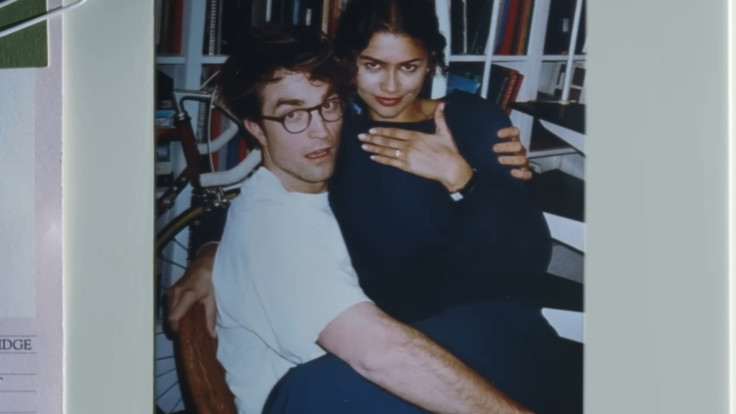
A parent of a victim of the 1999 Columbine High School massacre has criticised Zendaya and Robert Pattinson's upcoming film The Drama, after learning of a controversial plot twist involving a planned school shooting.
Tom Mauser, whose son Daniel was killed in the attack in Colorado, told TMZ on 24 March that he found the film's storyline 'awful', objecting to its inclusion in what is being marketed as a romantic comedy.
For context, The Drama, produced by A24, has been promoted as a lighthearted wedding-themed film. However, early viewers have revealed a darker turn in the story, where Zendaya's character confesses to her fiancé, played by Pattinson, that she once planned a school shooting but ultimately did not go through with it.
The twist has circulated online ahead of the film's release, prompting backlash from those directly affected by real-life tragedies.
Columbine Parent Reacts To The Drama Plot Twist
Mauser, who has been a vocal gun reform advocate since his son's death, said he was taken aback that such subject matter would appear in a film positioned as a romantic comedy.
He told TMZ he could not understand why filmmakers would choose a school shooting scenario as a dramatic reveal meant to challenge a relationship.
His concerns go beyond the twist itself.
Mauser argued that including this kind of narrative risks 'humanising' individuals who contemplate mass violence, even if the character ultimately does not act on those thoughts.
In his view, placing that storyline within an entertainment context, especially one tied to humour or romance, risks normalising behaviour that should remain firmly condemned.
The criticism also extends to Zendaya's recent appearance on Jimmy Kimmel Live!, where the film was discussed. Mauser said he felt uncomfortable watching what he perceived as a lighter reaction to the twist, noting that the subject carries lasting weight for families like his.
He acknowledged that people who experience violent thoughts should seek help rather than judgement. But he stressed that such experiences should not be used as a plot device for entertainment.
The plot twist had been revealed in a Reddit discussion months ago. One commenter reflects concerns from concerned families and survivors themselves, saying, 'Wow this is all very good to know bc I was planning to see it but I recently survived a mass shooting on my campus and I definitely cannot handle that as a plot point yet.'
Revisiting the 1999 Columbine Shooting
The Columbine High School massacre was a mass shooting that took place on 20 April 1999 at Columbine High School in Littleton, Colorado. Two senior students, Eric Harris and Dylan Klebold, carried out a planned attack on their classmates and teachers, killing 12 students and one teacher before taking their own lives.
The assault began around midday and involved firearms as well as improvised explosive devices, some of which failed to detonate. The attackers moved through the school, targeting individuals in classrooms, hallways, and the library, where most of the victims were killed.
The incident lasted less than an hour but left a lasting impact on survivors and families.
As The Drama approaches its theatrical release, the question now is less about the twist itself and more about how audiences will respond. Some may see it as an attempt to explore difficult themes through fiction. Others, particularly those with lived experience of such violence, are likely to continue questioning whether certain stories should be told at all.
Investigations found that the two perpetrators had been planning the attack for over a year, leaving behind journals and videos that revealed a mix of anger, alienation, and a desire for notoriety.
Harris appeared to show signs of deep-seated rage and wrote about wanting to cause widespread destruction. Klebold's writings, by contrast, suggested depression and feelings of isolation. Together, they fed off each other's thinking, escalating their plans into a large-scale attack that they initially intended to be even more destructive using explosives.
Early narratives often blamed bullying, but later findings suggested that while social struggles may have played a role, they were not the sole cause. Experts point instead to a combination of mental health issues, violent ideation, access to weapons, and a desire for control and recognition.
© Copyright IBTimes 2026. All rights reserved.
- MOST POPULAR IN Entertainment