

'They Brought Me Here to Kill Me': Detained Gaza Pediatrician's Explosive Allegation Shocks the World
A lawyer's alarming account has reignited global concern over Dr Hussam Abu Safiya as rights groups, UN experts and Israel's highest court come under renewed scrutiny.
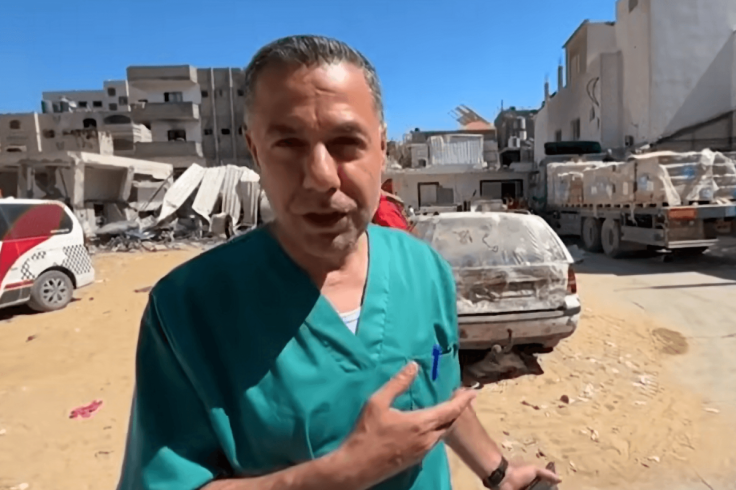
For months, Dr Hussam Abu Safiya became a symbol of Gaza's collapsing healthcare system, refusing to abandon patients as war closed in around Kamal Adwan Hospital. Now, it is what he allegedly told his lawyer from inside an Israeli prison that is sending fresh shockwaves far beyond the battlefield.
'They brought me here to kill me.'
The remark, reportedly made during a legal visit earlier this month, has intensified calls for the prominent Palestinian paediatrician's release and placed renewed focus on his lengthy detention without formal criminal charges.
According to Physicians for Human Rights Israel, lawyer Nasser Odeh visited Abu Safiya on 2 July and found him in a severely weakened condition. The organisation said the doctor struggled to breathe and speak, appeared close to losing consciousness several times, and bore visible injuries that his lawyer said made him difficult to recognise.
A Disturbing Account From Prison
The latest allegations have become the most serious development in the ongoing Hussam Abu Safiya detention case.
Physicians for Human Rights Israel said Abu Safiya arrived at the meeting with his hands and feet restrained and surrounded by masked prison officers. The rights group alleged that fresh injuries were visible around his head, eyes, ears and neck, prompting urgent concern for his health.
Naji Abbas, who heads the organisation's Prisoners and Detainees Department, described the lawyer's testimony as among the most disturbing the group has received since the war began. He warned that the information raised immediate concerns for Abu Safiya's life.
Israel's Prison Service has rejected allegations that detainees are mistreated, saying prisoners are held in accordance with Israeli law and receive appropriate medical care.
Israeli authorities have also maintained that Abu Safiya is under investigation over alleged links to Hamas, allegations his family, colleagues and humanitarian organisations strongly deny. He has not been formally charged.
1/2:UPDATES ON DR. HUSSAM ABU SAFIYA: Dr. Abu Safiya’s lawyer reported that during her last visit he was barely recognizable, with bruises covering his face and head, barely able to breathe or sit upright.
— U.S. Palestinian Community Network (@uspcn) July 4, 2026
Dr. Abu Safiya has been subjected to severe beatings daily in Israeli... pic.twitter.com/RGkU07ghK5
Who Is Dr Hussam Abu Safiya?
Long before his arrest, the Gaza pediatrician detained by Israel had become one of the conflict's most recognisable doctors.
As director of Kamal Adwan Hospital in northern Gaza, Abu Safiya remained at the facility during weeks of intense fighting, repeatedly warning that patients, newborn babies and medical staff were running out of medicine, food and fuel. His public appeals drew international attention as the territory's healthcare system edged towards collapse.
His personal tragedy also resonated widely. Weeks before his arrest, one of his sons was killed during the conflict, yet colleagues say the paediatrician continued treating patients despite mounting dangers.
Israeli forces detained Abu Safiya on 27 December 2024 during operations around the hospital. Since then, he has remained in custody under Israel's Unlawful Combatants Law, a legal framework that allows prolonged detention in certain security cases without filing ordinary criminal charges.
Human rights organisations argue the law can leave detainees imprisoned for extended periods with limited judicial oversight, while Israeli authorities say it is necessary to address security threats.
Calls grow for the release of Dr Hussam Abu Safiya, the director of a major Gaza hospital who has been held without charge and imprisoned by Israel since 2024. He is in immediate life-threatening danger, Physicians for Human Rights said Saturday, after his lawyer reported a…
— Alex Crawford (@AlexCrawfordSky) July 5, 2026
Legal Pressure Continues To Grow
The case has increasingly moved beyond humanitarian concerns into a significant legal battle.
In June, Israel's Supreme Court rejected an appeal seeking Abu Safiya's release, allowing his detention to continue. More recently, the court ordered the Israeli government to respond to a separate petition involving Abu Safiya and 13 other Gaza doctors reportedly being held without charge or trial.
Rights organisations say the Palestinian doctor detained without charge is among at least 14 medical professionals from Gaza currently held under similar legal provisions.
The United Nations has also voiced concern. Earlier this year, UN experts called for Abu Safiya's immediate release and urged Israel to ensure he receives appropriate medical treatment while in custody.
Dr. Hussam Abu Safiya’s life is in immediate danger.
— Aamir Ali Khan (@Aamir_Aali) July 5, 2026
His lawyer visited him in underground unit “Rakefet” inside Nitzan Prison.
He was handcuffed & shackled, with fresh injuries to head, face,neck.He was struggling to breathe,speak & subjected to daily assaults.#GazaGenocide pic.twitter.com/bysRT641gO
A Wider Debate Beyond One Doctor
For supporters, Abu Safiya's detention has become emblematic of the broader Gaza healthcare crisis, where hospitals have struggled to function amid conflict, shortages and repeated attacks.
For Israel, the case forms part of a wider security campaign against individuals it suspects of links to militant groups.
As the Israel prison allegations surrounding Abu Safiya draw renewed international attention, pressure is mounting for greater transparency over his medical condition, legal status and continued detention.
Whether the latest claims alter the course of his case remains uncertain. Yet one alleged statement, reported by his lawyer after months of detention, has once again placed Dr Hussam Abu Safiya at the centre of one of the conflict's most closely watched humanitarian and legal disputes.
© Copyright IBTimes 2026. All rights reserved.