

Iran Launches Legal Action Against Israel and US for Khamenei Assassination as Crowds Chant 'Kill Trump'
Tehran gathers evidence for a legal complaint following the assassination of Ayatollah Ali Khamenei.
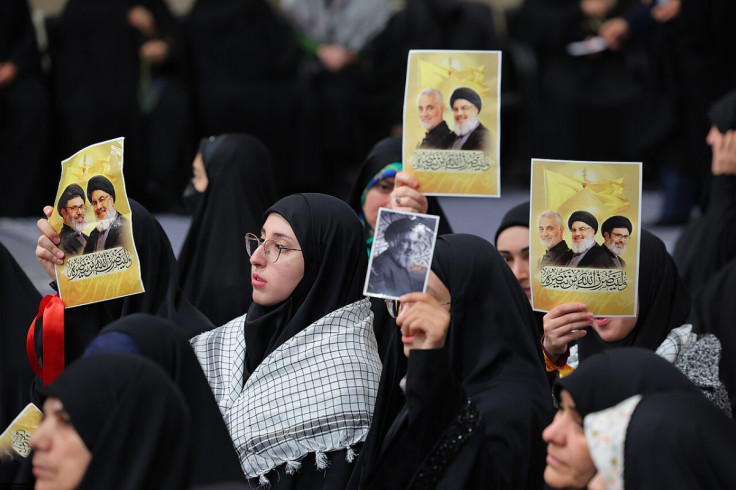
Iran has begun preparing a legal complaint against Israel and the United States over the assassination of former supreme leader Ayatollah Ali Khamenei, with officials saying evidence is being gathered as part of the process.
The announcement came on Sunday during the second day of Khamenei's funeral ceremonies in Tehran, where mourners chanted 'kill Trump, kill Bibi' while thousands gathered to honour one of the country's most influential political and religious leaders.
Report: Iran will pursue a legal complaint against Israel and the US for the assassination of former supreme leader Ali Khamenei, the Iranian government spokeswoman, Fatemeh Mohajerani, said.
— The Jerusalem Post (@Jerusalem_Post) July 5, 2026
✍️ @Tobiholchttps://t.co/oeIyR9i7I8
Government spokeswoman Fatemeh Mohajerani said the complaint was being pursued by the Presidential Legal Office in coordination with the Foreign Affairs Ministry. Although preparations are under way, Iranian officials have not identified which court or international legal body they intend to approach.
Iran Confirms Legal Preparations
Mohajerani said authorities had already begun compiling evidence and documentation relating to Khamenei's assassination. 'The process of filing a complaint after collecting evidence and documentation has begun and is being followed up,' she told reporters, according to Iran's Mizan News Agency.
She added: 'The Presidential Legal Office, in cooperation with the Foreign Affairs Ministry, is seriously following up on this case.'
While officials confirmed that legal preparations are under way, they did not specify the legal basis of the complaint, the jurisdiction in which it may be filed or the timetable for any formal proceedings.
Sunday's announcement nevertheless provides Tehran's clearest indication to date that it intends to pursue legal measures alongside its diplomatic response to Khamenei's death.
Funeral Marked by Anti-US and Anti-Israel Chants
The legal announcement coincided with the second day of funeral ceremonies in Tehran. Videos published by Iranian media showed crowds gathered at the Imam Khomeini Grand Mosalla chanting 'kill Trump, kill Bibi' during the service. The slogan referred to US President Donald Trump and Israeli Prime Minister Benjamin Netanyahu.
Iranian officials did not publicly address the chants during Sunday's briefing, focusing instead on the government's legal initiative and the continuing funeral arrangements.
Three of Khamenei's sons stood beside his coffin and those of four other family members during funeral prayers. Mojtaba Khamenei, who succeeded his father as Iran's supreme leader after being wounded in the same attack, did not appear. Iranian state media reported that senior clerics led the prayers in his absence.
Television footage showed Khamenei's coffin draped in the Iranian flag and topped with his black turban. It rested alongside the other family coffins on a large black platform designed to resemble the Kaaba, the cube-shaped structure at the centre of Islam's holiest site in Mecca. The ceremonies form part of a week-long period of national mourning.
Assassination Continues to Shape Iran's Response
Khamenei was killed during the opening strikes of Operation Roaring Lion in February 2026. Mojtaba Khamenei was among those wounded in the same attack before later assuming the role of supreme leader.
Since then, Iranian officials have repeatedly described the assassination as a violation of international law and pledged to pursue accountability through diplomatic, political and legal channels.
Mohajerani also reflected on Khamenei's legacy during Sunday's briefing, saying some of his guidance had not been fully implemented during his lifetime. She said Iran's 'most important task' was now to implement his policies and guidance more faithfully.
Legal Route Remains Unclear
Although Tehran has confirmed that work on the complaint is under way, significant questions remain about how the proposed legal action will proceed. Iran has not disclosed which legal forum it believes has jurisdiction, what specific claims it intends to pursue or when any complaint could be formally submitted. Whether the initiative ultimately results in international legal proceedings therefore remains uncertain.
For now, the announcement signals that Iran intends to keep Khamenei's assassination at the centre of its diplomatic agenda as funeral ceremonies continue. The legal initiative, together with the public mourning and official statements issued over recent days, illustrates how Tehran is framing its response following the death of the former supreme leader.
© Copyright IBTimes 2026. All rights reserved.