Is Donald Trump 'Sundowning'? Inside the Shocking New Claims of POTUS' Nighttime 'Psychosis'
Psychologist claims Trump's online behaviour indicates mental decline.
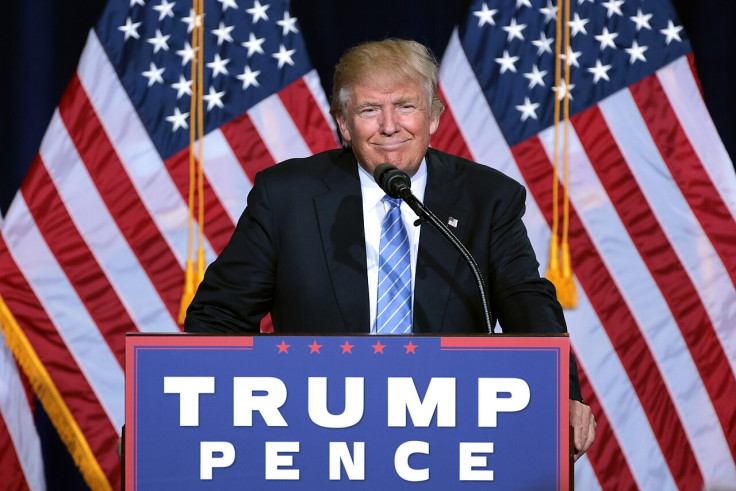
Donald Trump's mental fitness has been thrust back into the spotlight after psychologist Dr. John Gartner claimed the US President is 'mentally ill and cognitively deteriorating' and suggested his behaviour shows signs of either mania or sundowning. Speaking on The Daily Beast Podcast, the former Johns Hopkins University professor argued that Trump's age, restless posting habits and increasingly unusual online content point to what he sees as a serious decline.
Gartner's comments come as Trump approaches 80 and continues to dominate headlines with an unrelenting stream of social media activity. The psychologist rejected the idea that public figures cannot be judged from afar, insisting the pattern is obvious enough for ordinary observers to recognise. In his view, the issue is not whether Trump has been formally examined, but whether his public behaviour has become too erratic to ignore.
Night Posting Claims
One of Gartner's central claims is that Trump's late-night posting habits are themselves a warning sign. He said the president is 'up at all hours of the night, all night,' posting what he described as lies and 'crazy stuff,' and argued that the pace and tone of those posts could indicate either mania or sundowning. Gartner added that, in Trump's case, the two may be appearing together.
Donald Trump is sundowning on his pedophile app
— Jamie Bonkiewicz (@JamieBonkiewicz) May 11, 2026
The psychologist also pointed to the type of content Trump has recently shared online. Over the same weekend, Trump posted a series of AI-generated images and videos on Truth Social, including imagery of himself in a futuristic command centre pressing a red button while appearing to oversee a military strike scenario. Critics interpreted the imagery as a reference to conflict and escalation, while Gartner cited it as further evidence supporting his concerns about the president's behaviour.
Donald Trump is sundowning https://t.co/oywjlx7PAt
— 𝕂𝔼𝕄𝔼𝕀𝕌ℕ 🪷 ℝ𝔼𝕏 (@yourlittldogtwo) May 24, 2025
Gartner said Trump 'never, ever jokes' and argued that the president uses provocative imagery to prepare audiences for increasingly extreme ideas. In Gartner's interpretation, the red button imagery reflected more than political theatre and formed part of what he sees as a broader behavioural pattern.
Dementia Allegations
This was not the first time Gartner had publicly raised concerns about Trump's mental state. In April, he claimed Trump had been 'showing signs of frontotemporal dementia since 2019' and later referred to what he described as the president's habit of 'magical thinking,' which he linked to psychosis.
Gartner has also referred to Trump as a malignant narcissist, arguing that such personalities can derive a sense of power through destruction and domination. Those claims remain highly controversial and are likely to be rejected by Trump supporters and allies, many of whom view Gartner's commentary as politically motivated rather than clinically authoritative.
Mental health professionals have long debated the ethics of publicly assessing political figures without formal examination, often citing the Goldwater Rule, which discourages psychiatrists from diagnosing public officials they have not personally evaluated. Gartner, however, has consistently argued that observable public behaviour can still justify professional concern.
Donald Trump is addled and sundowning.
— tree herder 💍 (@Bliss_Hughes) May 23, 2026
White House Response
The White House responded quickly to the latest remarks. Spokesperson Davis Ingle said Trump is 'the sharpest and most accessible President in American history' and insisted he is working nonstop to solve problems and deliver on his promises. Ingle added that the president remains in excellent health.
Imagine thinking that illiterate, adderall-addict Donald Trump, sundowning into an endless night of dementia, doddered his way into a law library and poured over legal tomes until his diaper got all filled up.
— Jay Black (@jayblackisfunny) February 21, 2026
All he did was shout at his legion of fart-sniffing sycophants. https://t.co/Am7Ayycmkp
Trump himself has often pointed to cognitive test results as proof that he remains sharp. Reuters reported that he is scheduled to undergo another annual physical at Walter Reed on 26 May 2026, days after the latest wave of criticism. That timing has added fresh attention to the debate surrounding the president's health and public behaviour.
After it became clear he was surrendering to Iran, Trump is now in damage control mode and backpedaling.
— Maine (@TheMaineWonk) May 24, 2026
Trump is weak, ineffective, and desperate— all of which empowers America’s enemies to take advantage.
And they are. pic.twitter.com/E1Njz969z4
Debate Continues
The latest claims arrive at a time when Trump's age and public conduct are already under intense scrutiny. His late-night posting habits, confrontational online style and use of provocative imagery have become central features of his political persona, while critics increasingly cite the same behaviour as cause for concern.
There is no formal medical assessment in the public record supporting Gartner's claims, and Trump's allies continue to dismiss such criticism as partisan speculation. Even so, the debate surrounding the president's behaviour is unlikely to fade soon, particularly as his online activity continues attracting attention across political and media circles.
© Copyright IBTimes 2026. All rights reserved.
- Recommended For You