

Women Say They're Feeling Poorer Under Trump: New Poll Reveals Cost of Living Crisis Is Hitting Hard
Black women report the steepest hit to savings as gas prices climb 26.7%
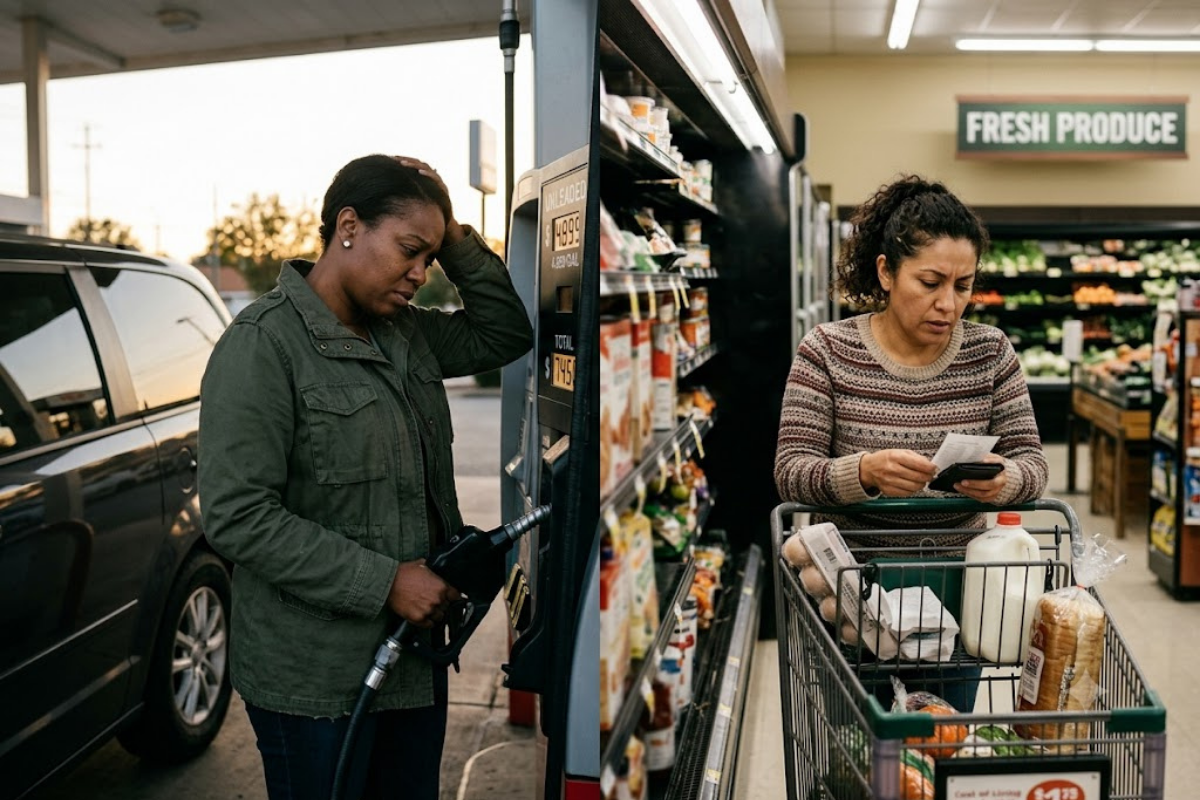
More than four in 10 American adults say they are worse off than before Donald Trump returned to the White House, and the steepest financial hit that women report is their ability to save.
The National Women's Law Center (NWLC), a gender justice advocacy group, surveyed 1,500 adults with YouGov between 17 and 23 April and published the results on 5 May. Some 42 per cent said they were worse off than before the president took office, against 28 per cent who said they were better off.
Among Black women, 51 per cent said they were worse off overall, and 57 per cent said their ability to put money away for the future had weakened. That was the steepest reading in the group.
Two-thirds of adults, 66 per cent, said the country is on the wrong track on the cost of living. Of those, 81 per cent held Trump responsible and 55 per cent blamed Republican leaders in Congress. Trump campaigned in 2024 on a pledge to end inflation.
Pay Rises Have Stopped Outrunning Prices
Real average hourly earnings, which strip out price rises, grew 0.1 per cent in the year to June and fell 0.1 per cent for production and non-supervisory staff, the Bureau of Labor Statistics said on 14 July. Average hourly pay reached $37.64 (£27.90), up 3.5 per cent over 12 months, almost exactly matching the rise in consumer prices.
Inflation stood at 2.4 per cent in January, the lowest since May 2025, climbed to 4.2 per cent by May on an energy shock tied to the conflict with Iran, then eased to 3.5 per cent in June. NWLC ran an earlier poll during that January low, and 42 per cent still said they were worse off on affording essentials.
Gas and Groceries Hit Women Hardest
Some 74 per cent of women said they were worried about affording gas, and the same proportion said they were worried about groceries and food, against national readings of 69 and 68 per cent. Concern peaked among Latinas at 79 per cent on fuel and Black women at 77 per cent on food.
Gasoline cost 26.7 per cent more in June than a year earlier, despite a 9.7 per cent fall during the month. Groceries were 3 per cent dearer.
A Safety Net That Pays Women Less
Women who lose work also collect less. A brief from the National Employment Law Project (NELP) and the 75 Million Project, published on 28 January, found 25 per cent of unemployed women received unemployment insurance in the first half of 2025, against nearly 30 per cent of men. Men's payments ran 10.6 per cent higher than women's in 2024, a gap NELP attributes largely to unequal pay. NWLC is a partner in the 75 Million Project, and its president, Fatima Goss Graves, is one of its leaders.
Coverage was far wider during the pandemic, when more than 20M women drew benefits—nearly one in six adult women. Those expansions were allowed to expire.
'In states across the country, unemployment insurance is still structured around the model of a white, male, able-bodied, full-time worker who has a caregiving wife at home,' said Amy Traub, the brief's author and a senior researcher and policy analyst at NELP.
Low payments compound the problem, said Jocelyn Frye, president of the National Partnership for Women and Families. 'When women don't get fair pay at work, the unemployment benefits based on their previous paychecks aren't fair either.'
Adult women's unemployment stood at 3.7 per cent in June, below the 3.9 per cent rate for men, though Black unemployment held at 6.6 per cent and labour force participation slipped to 61.5 per cent.
Cost of Living Support Crosses Party Lines
Some 91 per cent of respondents backed measures to lower the cost of living, including 93 per cent of Democrats, 90 per cent of Republicans, and 86 per cent of Independents. Eighty per cent said their representatives should be doing more on prices.
Asked what would help their families, 73 per cent named paid family and medical leave, rising to 86 per cent of mothers with children under 18. Some 72 per cent backed making billionaires pay their fair share in taxes, including 74 per cent of adults in households on less than $60,000 (£44,500).
The April survey carries a margin of error of 3.2 percentage points.
© Copyright IBTimes 2026. All rights reserved.