

'Trump's Tariffs and Federal Purge': The Hidden Economic Toll Tapering American Hiring Revealed
Behind the reassuring unemployment figures lies a labour market quietly reshaped by tariffs, purges and a steady loss of nerve.

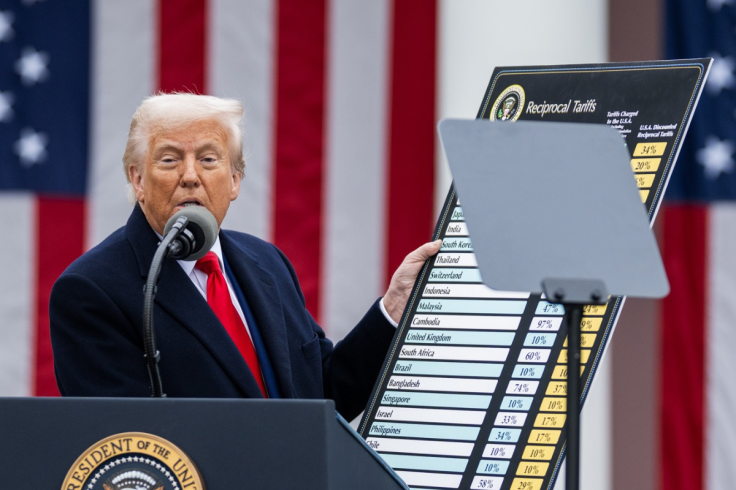
US jobless claims fell slightly to 215,000 in the week ending 4 July, the Labour Department said on Thursday in Washington, even as economists warn that President Donald Trump's tariffs and his purge of the federal workforce are quietly weighing on hiring across the country.
For context, weekly applications for unemployment benefits are one of the cleanest, near real-time reads on the American jobs market because they largely track people newly laid off. Since the United States emerged from the pandemic recession, these claims have mostly hovered between 200,000 and 250,000, a range many economists treat as a sign of a labour market that is cooling but still fundamentally intact.
The latest report fits squarely into that pattern. Claims dipped by 2,000 from the previous week, undershooting the 220,000 that analysts surveyed by FactSet had forecast. The four-week moving average, which smooths out short-term volatility, also slipped, down 3,750 to 218,750.
Trump's Tariffs, Federal Purge And The Slow Bleed In Hiring
The news came after the government's June employment report showed that the brakes are being tapped harder on hiring. Employers added just 57,000 jobs last month, less than half May's total, according to official Labour Department figures. That is not a sudden crash, but it is a clear downshift that points to a more cautious corporate mood.
The unemployment rate actually fell, to 4.2 per cent from 4.3 per cent in May. That would normally be cause for celebration, but the detail matters. Officials said the decline was driven largely by people dropping out of the labour force altogether, no longer actively searching for work, and therefore no longer counted as unemployed. Fewer people looking, not more people working, is doing some of the statistical heavy lifting.

June's weaker jobs growth follows a relatively brisk three-month run of hiring gains that had briefly eased worries that the war in Iran might knock an already fragile labour market off course. The conflict has raised energy costs and rattled markets, but for a while, American employers seemed willing to keep adding staff at a decent clip.
That appetite has been fading for about two years. Hiring has been cooling since well before this summer, and officials now explicitly link the tapering of job creation in 2025 to Trump's own policy mix. The Labour Department report notes that the slowdown deepened last year 'due to President Donald Trump's tariffs, his purge of the federal workforce and the lingering effects of high interest rates meant to control inflation.'
Tariffs have pushed up costs across swathes of manufacturing and retail, while the aggressive effort to replace and remove sections of the federal bureaucracy has injected a kind of institutional uncertainty that businesses tend to hate. Add in already restrictive borrowing costs and it is not hard to see why company boards might be hitting pause on expansion plans, even if they are not yet swinging the axe on a large scale.
Jobless Claims Stay Low As Corporate Cuts Creep Up
For starters, the headline jobless claims numbers still look, in the words of many economists, 'historically healthy.' The total number of people receiving unemployment benefits in the previous week, ending 27 June, edged up by 8,000 to 1.81 million. In a labour force of more than 160 million, that is a relatively small share, and not at all what you would expect to see on the eve of a classic recession.
Yet there is a quieter story running through boardrooms and HR departments. Some of America's biggest corporate names have been trimming headcount, even if the cuts are not yet large enough to blow up the national totals.
Among the companies that have pared back staff recently are Verizon, UPS, Amazon, Disney, Starbucks and Walmart, all of them bellwethers for different parts of the consumer and services economy. Taken individually, none of those announcements has signalled panic. Taken together, they suggest executives are preparing for leaner times, or at least for a world in which Trump-era tariffs and policy churn are simply part of the cost base.

Earlier this week, Microsoft confirmed it was cutting 4,800 jobs, about 2.1 per cent of its global workforce. The technology giant said the reductions would include a large number of roles at its Xbox video game business. Tech layoffs have become such a feature of the post-pandemic cycle that another four or five thousand can feel like background noise, but for the people inside those teams, that is not how it feels.
Officials at the Labour Department, for their part, have stuck to the data rather than the politics. Weekly claims are released with clinical regularity, a spreadsheet snapshot of who has lost work and who has not. The agency's job is to count, not to comment. The interpretation of why the numbers look the way they do has become more contested territory.
Critics of Trump's economic strategy argue that the tariff regime and the upheaval inside federal agencies have created an atmosphere of chronic uncertainty. Supporters counter that the labour market is still adding jobs, that unemployment remains low by historical standards, and that a degree of pressure on employers is a reasonable price to pay for resetting trade relationships and reshaping government.
What is harder to dispute is that the once red-hot post-pandemic jobs boom has cooled into something more cautious and uneven. Fewer big hiring announcements, more targeted cuts, executives talking about 'discipline' and 'efficiency' in earnings calls. The official figures show that Americans are not being thrown out of work en masse, at least not yet. They also show a labour market that is not delivering the kind of broad-based momentum households grew used to in the early rebound years.
In other words, the hidden economic toll of tariffs and the federal purge is not a headline surge in jobless claims, it is the slow grind of opportunities that never quite materialise.
© Copyright IBTimes 2026. All rights reserved.