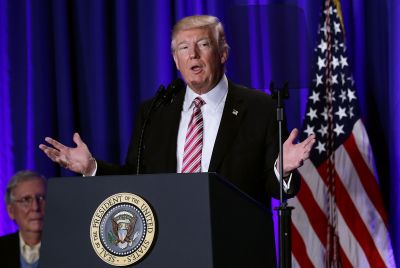
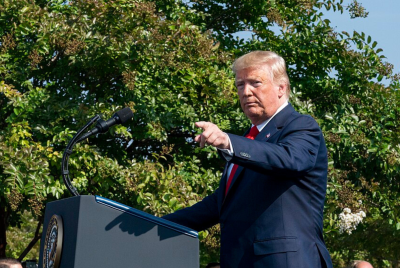
Donald Trump's OBBBA Bill Accidentally Pushes Social Security Closer to Insolvency, Costing $168 Billion
A tax cut sold as relief for retirees has left Social Security weaker, not safer, and pushed millions a year closer to a painful reckoning.
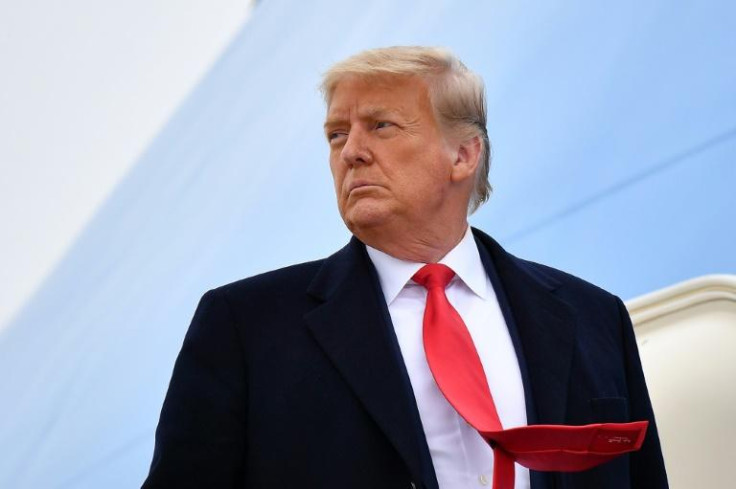
Donald Trump's flagship tax package, the One Big Beautiful Bill Act, has inadvertently pushed the US Social Security system closer to insolvency, according to the latest Trustees report published in June, bringing forward the date when retirement benefits may have to be cut and stripping an estimated $168.6 billion from the programme's income by 2034.
After years of warnings from Social Security's own Trustees that the scheme was drifting towards a funding crunch. Their 2026 update confirmed that the main trust fund backing retirement benefits is now expected to be depleted as early as 2032. Once that pool of money runs dry, the system will only be able to cover about 78% of promised payments from incoming payroll taxes, implying a potential 22% cut in monthly cheques unless Congress steps in with a fix.
Those projections pre-date Trump's OBBBA changes. The Trustees had already been sounding the alarm about an ageing population, longer lifespans and lower birth rates combining into an uncomfortable maths problem. What has changed since the president's tax law is the timetable. Before OBBBA, broad benefit cuts were not expected to be on the table until 2033. The latest figures suggest that, as a direct consequence of the law, the crisis point has moved forward by at least a year.
Trump, who repeatedly campaigned on a promise to 'protect Social Security,' did not run as a traditional small-state Republican on this issue. On the trail he assured older voters he would not cut their benefits and floated the idea of scrapping taxes on those payments so retirees could, in his phrase, 'keep more of their money.' Those pledges helped him shore up support among seniors, a demographic that votes in high numbers and tends to pay close attention to Social Security policy.
In office, Trump did not manage to abolish benefit taxation altogether. Instead, through OBBBA, he created a temporary $6,000 senior tax deduction that runs through 2028. On its face, that sounds generous. The deduction is large enough that, according to estimates cited in the Trustees analysis, roughly 88% of Social Security recipients now pay no federal tax on their monthly benefits at all.
Supporters of Trump have hailed that change as proof he kept faith with retirees. Yet the detail is less flattering. That tax break doesn't just mean the Treasury collects less revenue. It also cuts off money that would otherwise flow into Social Security's own coffers, because taxes on benefits form part of the programme's income stream. In other words, what looks like a tax win for older Americans today simultaneously hollows out the fund that pays their future benefits.

How Donald Trump's OBBBA Bill Shifted Social Security's Outlook
Once the senior deduction is combined with other income tax changes under OBBBA, the damage to Social Security's finances becomes more visible. The Trustees estimate the law will deprive the programme of about $168.6 billion in revenue between now and 2034. That is not a marginal sum. For a system already projected to fall short, it is the difference between a long glide towards insolvency and a shorter, steeper descent.
Prior to the law, depletion of the main trust fund was forecast for 2033. After the law, the projected date has been pulled forward to 2032. That acceleration is laid out directly in the Trustees' 2026 report, which ties the shift to the impact of Trump-era tax policy on taxable Social Security income. Nothing in the document suggests that Trump intended to force cuts. The more obvious reading is that he prioritised a political win on taxes and either underestimated or downplayed the impact on the retirement system.
The Trustees stress that their projections are just that: estimates based on current law and economic assumptions. They warn that future reports could bring further revisions, for better or worse. If growth slows, lifespans rise faster than expected or Congress passes additional unfunded tax breaks, the depletion date could move even closer. Conversely, robust wage growth or new revenue measures could buy more time.

What Donald Trump's Policy Means for Future Retirees
Even with the OBBBA impact spelled out, nothing is guaranteed. Lawmakers have never allowed across-the-board cuts to Social Security benefits to take effect in the programme's history. Each time the system has approached a cliff edge, Congress has eventually intervened, sometimes at the last minute, with a mix of tax increases, benefit tweaks and retirement age changes.
Still, working Americans and current retirees would be unwise to assume that history will automatically repeat itself on terms they like. If the Trustees' base case plays out and politicians do nothing, beneficiaries could see roughly a fifth of their cheque vanish in 2032. That would be a brutal adjustment for people who planned their later years around today's promises.
The numbers argue for unglamorous but practical steps. The report's projections amount to a warning to re-examine day-to-day spending, to look critically at any areas where costs can be trimmed, and to consider part-time work if health allows. It also underlines the need to ensure investments are generating steady income rather than sitting inert.
Younger workers, meanwhile, face a harsher sort of arithmetic. If Social Security proves less generous than advertised, or more heavily means-tested, the burden of retirement security will tilt further towards private savings. That means pushing contribution rates higher over time, claiming every available employer match in workplace schemes and choosing assets with a realistic chance of outpacing inflation.
None of this absolves Trump, or any other politician, of responsibility for the policy decisions that shaped the latest Trustees report. The OBBBA tax breaks may still be celebrated at campaign rallies, but on paper they have nudged Social Security a little closer to the edge that Trump once insisted he would never approach.
Nothing in the Trustees report guarantees that benefit cuts will happen, and any long-term forecast should be taken with a grain of salt. What is clear, though, is that choices made under Trump's watch have made an already difficult problem harder to solve.
© Copyright IBTimes 2026. All rights reserved.
- Recommended For You