

Why Are Thousands of Moroccans Risking Their Lives to Reach Spain? Inside the Deadly Ceuta Border Rush
Ceuta faces humanitarian emergency amid surge in migrant crossings
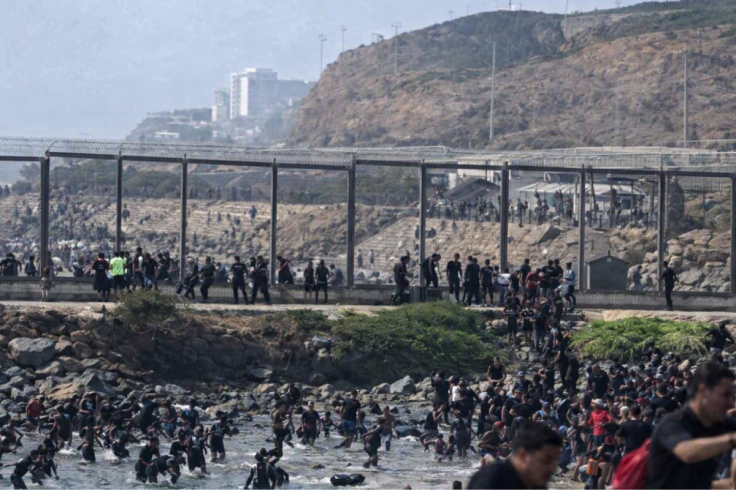
Thousands of migrants have risked drowning to reach Spain's Ceuta enclave from Morocco, turning one of Europe's most fortified borders into the scene of a deadly humanitarian crisis.
At least 34 people have died amid a sudden surge of crossings into Ceuta, the Spanish territory on North Africa's coast that shares a land border with Morocco. Footage from the area showed groups of people, many of them young men, swimming around the Tarajal border fence in an attempt to enter the enclave. Others crowded parks, streets and reception centres after arriving.
By Friday morning, Spain's interior ministry had reportedly estimated that around 49,000 migrants had entered Ceuta in 24 hours, although the statement was later removed without explanation.
Ceuta's president, Juan Jesús Vivas, described the situation as 'a situation of absolute humanitarian and social emergency' and called for the city to be placed under a 'national emergency.'
Why Ceuta Matters
Ceuta is one of two Spanish autonomous cities in North Africa, alongside Melilla. Together, they form the European Union's only land borders with Africa. The enclave covers just 19.9 sq km and has a population of more than 83,000, including Christians, Muslims, Spanish residents and Moroccan day workers.
Ceuta is seen as a possible gateway into Europe. Spain has controlled the territory since 1580, but Morocco has long disputed Spanish sovereignty over Ceuta and Melilla, treating them as occupied lands.
That history has repeatedly turned the border into a flashpoint. In 2021, nearly 8,000 people entered Ceuta in two days during a diplomatic crisis between Spain and Morocco over Western Sahara.
Court Ruling May Have Fuelled Crossings
Spanish officials have suggested that human trafficking networks may have exploited confusion around a recent Supreme Court ruling. The 29 June decision stopped authorities from summarily returning migrants who arrive in Ceuta and Melilla by sea without due process. It did not legalise irregular entry or guarantee that migrants could remain in Spain.
But the ruling reportedly spread widely on Moroccan social media, encouraging some people to believe they had a better chance if they reached Ceuta by swimming. That message may have been enough to convince desperate people to risk the sea.
Economic Pressure Adds to the Push
The surge also appears tied to economic frustration in Morocco, especially among young people. Although Morocco's national unemployment rate fell slightly from 13.3% in 2024 to 13% in 2025, joblessness remains far higher among those aged 15 to 24. Youth unemployment rose from 36.7% to 37.2%, while unemployment among women increased from 19.4% to 20.5%.
🇪🇸 Insane footage from the Moroccan border with Spain: thousands of migrants are gathering at the border
— Visegrád 24 (@visegrad24) July 30, 2026
This is exactly what Spanish Prime Minister Sanchez was aiming for. pic.twitter.com/Fb1pEKU0jj
Those figures help explain why many are willing to take dangerous routes into Europe. For young Moroccans with few prospects at home, even a perilous swim may seem like a chance at work, security or a different future.
Spain Sends in Military Support
Spain called in military support to help police manage the crisis in Ceuta. Prime Minister Pedro Sánchez said his government was working with Moroccan and international authorities 'to restore normalcy as soon as possible.' He also travelled to the enclave as pressure mounted.
Morocco, meanwhile, said it did not want the situation to continue. Ambassador Karima Benyaich said Rabat preferred 'legal, orderly, and safe immigration for everyone' and urged Moroccan citizens who had crossed to return.
Crisis Becomes Political Weapon
The crossings have quickly become a political fight inside Spain and across Europe. Vox leader Santiago Abascal accused Sánchez's government of encouraging an 'invasion' through its migrant regularisation plans. Conservative opposition leader Alberto Núñez Feijóo said the government was refusing to recognise a 'serious national security problem.'
The crisis also drew foreign reaction. Italy's Giorgia Meloni threatened to push for Spain's suspension from the Schengen free-travel zone, while France said it would strengthen controls at its border with Spain.
© Copyright IBTimes 2026. All rights reserved.
- Recommended For You


