

Ceuta Migrant Surge Leads to Nine Deaths as Thousands Try To Reach Spain in One Night, Echoing Deadly 2021 Crisis
Spanish enclave faces humanitarian emergency amidst mass migration
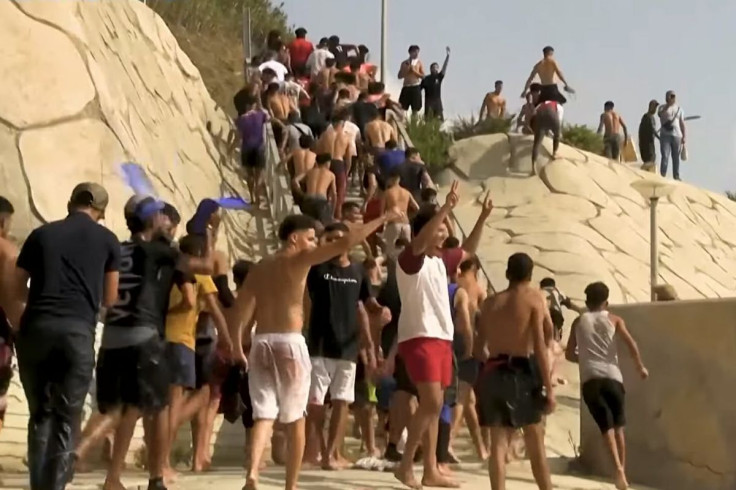
A mass migration event at the Ceuta border has led to the deaths of nine people after thousands of individuals attempted to cross into the Spanish enclave from Morocco in a single night.
Senior regional officials in the North African territory formally pleaded with the government in Madrid on Thursday to declare a national emergency and deploy the military. While Madrid dispatched armed forces to reinforce security, the Interior Ministry clarified that a national emergency could not be declared over migration concerns.
The territory experienced a comparable migration event in May 2021 when more than 8,000 people crossed into Spain over a chaotic 48-hour period. Rescue teams had already noted a steady increase in groups trying to bypass land checkpoints using inflatable tubes and improvised rafts to reach European soil by sea earlier this week.
Immediate Fallout From the Ceuta Migrant Surge
The Guardia Civil reported that the large number of individuals breached the primary perimeter barriers, overwhelming officers stationed at the maritime divide. Footage from the scene captured hundreds of individuals navigating the open water with makeshift flotation devices.
Rachid Sbihi, head of the association representing the Guardia Civil in the city, told the Associated Press that the situation is 'absolute chaos' and confirmed that the border had 'totally collapsed' under the weight of the sudden arrivals.
A spokeswoman for the government delegation later confirmed to the French AFP news agency that nine individuals perished during the offshore rush.
Juan Jesus Vivas, the regional government leader, explicitly stated that the territory of 85,000 residents is facing a 'humanitarian and social emergency' of national proportions. He warned online that local resources, including the overcrowded temporary reception centre, are completely overwhelmed after another life was lost at sea.
Vivas noted that approximately 1,500 individuals arrived over the past week, which equates to two per cent of the local population, adding that with every passing hour the logistical situation becomes significantly more difficult.
How Madrid is Handling the Ceuta Migrant Surge
Spanish Prime Minister Pedro Sanchez promised an 'immediate response' and stated his administration is mobilising all necessary resources alongside Moroccan and international authorities.
The Interior Ministry announced that armed forces personnel will reinforce the Guardia Civil to maintain civil security. The ministry confirmed that Rabat is closely cooperating to intercept groups on the Moroccan side of the border.
Both nations agreed to facilitate the swift return of those who crossed illegally. Interior Minister Fernando Grande-Marlaska is scheduled to arrive on Friday morning to evaluate the fallout from the mass crossing. Questions remain about how border forces will process those already inside the enclave.
Supreme Court Precedents
The exact catalyst for this sudden movement remains unconfirmed, though recent legal shifts present a complicated backdrop. Earlier in July, the Spanish Supreme Court ruled that migrants arriving by sea cannot be subjected to immediate pushbacks, a practice previously common at land borders.
The North African enclaves of Ceuta and Melilla occupy a unique legal loophole because individuals can technically enter them by sea to bypass terrestrial checkpoints without actually crossing the Strait of Gibraltar.
An earlier government amnesty offer for undocumented residents also generated international attention, though it strictly applied to those already residing in Spain before the law passed.
This policy offers no legal pathway for the current wave of arrivals. Spanish naval assets and local police now face the significant challenge of securing a breached coastline as night falls over the breakwater, leaving authorities working urgently to prevent further loss of life in the waters separating the two continents.
© Copyright IBTimes 2026. All rights reserved.
- Recommended For You


