

France Mobilises Military as 250,000 Flee Wildfires Spreading Across Spain and France
Firefighters and military personnel battle unprecedented wildfires in Bordeaux and Spain, prompting mass evacuations
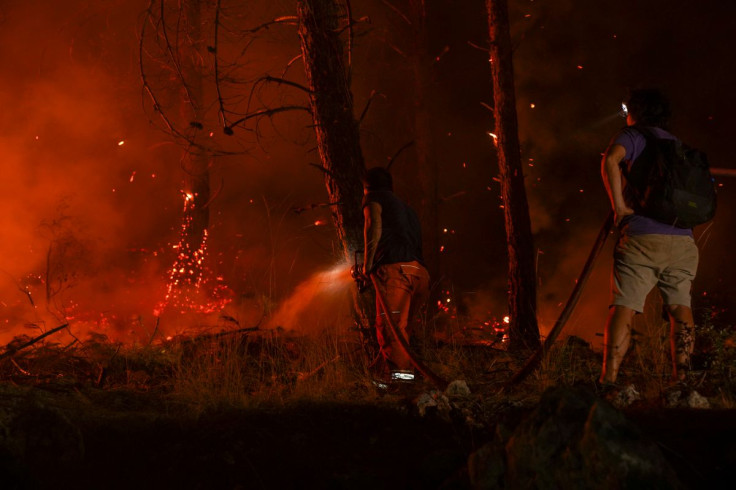
Firefighters backed by military personnel are battling fast-moving wildfires threatening the outskirts of Bordeaux as hundreds of thousands of people across France and Spain flee advancing flames fuelled by extreme heat, strong winds and prolonged drought.
More than 300,000 people have either been evacuated or ordered to shelter in place as authorities struggle to contain the fires. In France, more than 220,000 people have been evacuated, while in Spain about 75,000 have fled their homes and a further 30,000 have been told to remain indoors. French Interior Minister Laurent Nuñez described conditions around Bordeaux as 'unprecedented', warning the blaze remained out of control and was moving erratically towards the city.
The fires have already claimed the lives of two firefighters in France's Gironde region, while dozens more emergency workers have received medical treatment. Around 1,500 military personnel have been deployed to assist firefighters with evacuations, rescue operations and logistical support, while several European countries have sent aircraft and personnel to reinforce firefighting efforts in Spain. Forecasters have warned another spell of extreme heat later this week could further complicate efforts to contain the blazes.
Bordeaux Region Faces Growing Threat
The largest French wildfire continues to burn across Gironde and neighbouring Landes, destroying more than 240 homes and scorching vast areas of forest, including the Cap Ferret peninsula.
Bordeaux Mayor Thomas Cazenave said the fire remained about 15 kilometres from the city's outskirts and there were no immediate plans to evacuate the metropolitan area, home to around 850,000 people. Shifting winds and dry vegetation continued to hamper efforts to contain the blaze.
More than 2,500 firefighters, supported by military personnel, police and gendarmerie, remain deployed across the region. Officers carried out overnight door-to-door evacuations in Marcheprime and Cestas as the fire advanced.
Smoke disrupted transport across south-western France. Bordeaux Airport experienced widespread delays and cancellations after airspace restrictions were introduced to prioritise firefighting aircraft, while the final stage of the Tour de France was shortened so police and security personnel could support wildfire operations.
Spain Battles Record Wildfires
Spain is also battling several major wildfires, with the province of Ávila suffering what Environment Minister Sara Aagesen described as the country's largest wildfire in recent history after more than 50,000 hectares burned.
Another blaze has spread into the Sierra de Espadán Natural Park in Castellón, where strong winds and low humidity continued to hamper firefighting efforts.
Prime Minister Pedro Sánchez said 'difficult hours lie ahead' despite signs of progress overnight and announced the government would declare a civil protection emergency for the worst-affected central provinces to unlock additional recovery funding.
Through the European Union Civil Protection Mechanism, Greece and Italy have each deployed Canadair firefighting aircraft, Portugal has sent more than 100 military personnel and equipment, and Turkey is preparing to provide additional aircraft.
Massive wildfire erupts just 15km from Bordeaux as terrifying aerial footage reveals the inferno, forcing tens of thousands to evacuate. pic.twitter.com/XlAjmklEvB
— Breaking911 (@Breaking911) July 26, 2026
Wildfires Stretch Across Southern Europe
Reuters Climate Monitor data showed average July temperatures in both Bordeaux and Ávila were almost 6C above the long-term average, creating conditions for fires to spread rapidly. The emergency extends beyond France and Spain.
In Scotland, hundreds of firefighters continue tackling a blaze in the Cairngorms National Park, while in southern Italy coastguard vessels evacuated tourists after fires cut off roads and rail routes in parts of Puglia.
🔥 ALERTE - Le mégafeu de Gironde a parcouru près de 40.000 hectares, désormais aux portes de la métropole de Bordeaux. 167.000 personnes sont évacuées. La France vit sa plus grande évacuation de population depuis la Seconde Guerre mondiale. Les pompiers sont à bout. Des… pic.twitter.com/IRt2RSzatP
— Infos Françaises (@InfosFrancaises) July 25, 2026
Officials in both France and Spain have warned the coming days will be critical as firefighters work to contain the largest blazes before hotter, drier conditions return later this week.
© Copyright IBTimes 2026. All rights reserved.