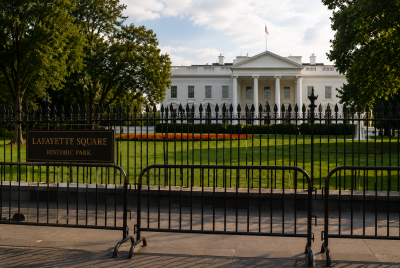
F-16 Fighter Jets Scrambled After Two Planes Breach No-Fly Zone Near Trump Golf Club
Military jets scramble into action above Bedminster as holiday weekend airspace violations trigger high-stakes security protocols and minor departure delays
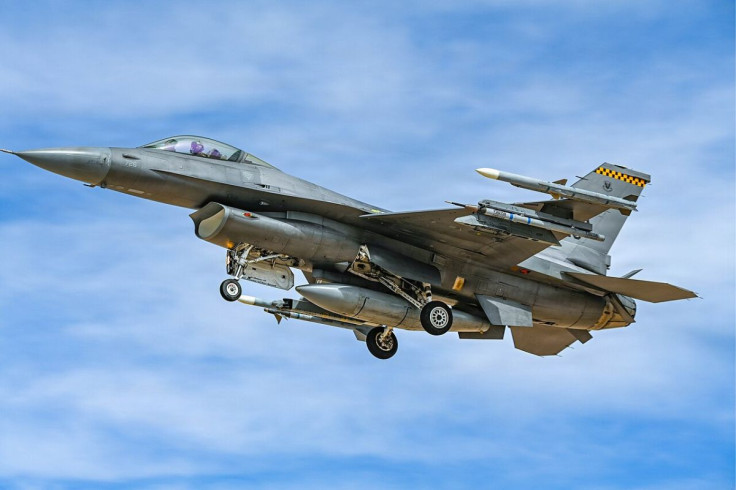
American skies above New Jersey turned tense on Sunday afternoon when F-16 fighter jets scrambled to intercept unauthorised civilian planes.
The dramatic security operation unfolded above Trump National Golf Club in Bedminster, where President Donald Trump was spending the weekend attending the LIV Golf New York tournament.
According to official reports from the North American Aerospace Defence Command (NORAD), at least two general aviation aircraft drifted directly into prohibited temporary flight restrictions (TFRs), triggering an immediate military response.
Sleek F-16 Fighting Falcons intercepted the stray private planes, establishing visual contact and safely escorting them out of the protected perimeter without further incident.
A third minor alert later in the day briefly disrupted departure preparations, causing a minor 13-minute delay before communication was re-established and compliance secured. Aviation authorities continue to stress that strict adherence to federal notice protocols remains mandatory for all regional pilots.
F-16s Respond to Airspace Breach
A security alert was triggered near Trump's New Jersey golf club on Sunday after at least three private aircraft came into airspace that had been temporarily restricted for his visit on Sunday, officials said.
The four-day LIV Golf New York tournament was taking place at his golf club, per Fox News.
The first two aircraft prompted the NORAD to scramble F-16s, which located the planes and guided them away from the protected zone.
A separate alert was raised later in the day while Trump was getting ready to leave the area, reports say.
The incident had seemingly delayed the president's departure by 13 minutes. Police, Secret Service personnel and emergency vehicles gathering around the runway ahead of his expected 5 pm ET departure. The situation involving the third aircraft was 'reestablished communications and became compliant before NORAD intervention was required,' per officials.
According to NORAD, contact with the plane was restored and the pilot then followed instructions. Officials said the earlier two aircraft were also safely removed from the restricted area after being intercepted.
Flares Used During Earlier Intercepts
On 19 July, NORAD recorded a significant cluster of airspace incursions around Bedminster and East Rutherford, involving over 10 general aviation aircraft entering restricted zones.
Military jets were required to intervene in three of the cases. In two of those intercepts, F-16 pilots deployed flares as a visual warning to draw the attention of the civilian pilots.
NORAD said the flares were designed as a visual signal rather than an attack. The military command also stated that the devices burn out rapidly and were deployed with safety considerations for both the aircraft involved and people on the ground.
All of the aircraft intercepted during that July operation were eventually escorted out of the restricted area.
Layered Defences Already in Place
Security preparations around the New Jersey property had begun before Trump's arrival in the state, with NORAD set to oversee several FAA-established temporary flight restrictions covering the area during his weekend stay.
The measures were reportedly intended to control aircraft activity around the president and give authorities a structured response to any unauthorised entry into protected airspace.
The defence arrangements were not limited to fighter aircraft. US Army air-defence equipment was also expected to operate in the region under the authority of the Continental US NORAD Region.
'These systems are operating under NORAD authorities, constitute a routine component of the command's layered defence posture and work in tandem with the command's airborne assets to monitor and protect the airspace,' the Defence Visual Information Distribution Service stated.
While Sunday's interceptions concluded safely, the recurring volume of accidental breaches serves as a stark reminder of the zero-tolerance measures enforced in presidential airspace.
© Copyright IBTimes 2026. All rights reserved.
- Recommended For You