

Trump Facing Unprecedented Threat Surge as Secret Service Opens 10,000 High Risk Intelligence Cases
The agency points to a surge in online threats, mental health interventions and evolving security risks, including drones and foreign intelligence concerns.
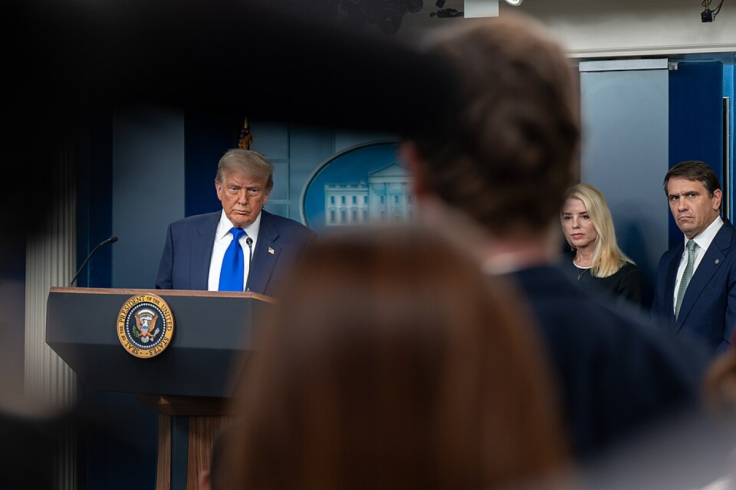
President Donald Trump is facing what the US Secret Service has described as an unprecedented threat environment, with the agency revealing on Wednesday that it has opened roughly 10,000 protective intelligence investigations since January.
The figure, disclosed just days before the rescheduled White House Correspondents' Dinner, marks a nearly 40 per cent increase compared with the same period last year, according to agency officials.
The disclosure comes as the Secret Service continues to expand security measures around Trump and other protected officials following a sharp rise in online threats, lone actor cases, ideological grievances and foreign security concerns.
Senior officials said the changing nature of modern threats has forced the agency to devote significantly more resources to identifying potential attackers before they can reach protected people or locations.
Threats Against Trump Have Reached Record Levels
Secret Service Director Sean Curran said the scale of the agency's workload is unlike anything he has witnessed during more than two decades of service.
'The numbers are numbers that this agency and certainly I have never seen in my 24-year career,' Curran said, adding that the current threat environment is 'as large as I've ever seen it'.
Officials also disclosed that mental health-related interventions linked to individuals making threats have increased almost tenfold compared with last year. Those interventions have included voluntary and involuntary commitments as well as efforts to work alongside relatives and mental health professionals to stabilise people considered to be in crisis.
According to the agency, threats increasingly originate online rather than through traditional channels such as letters. Investigators assess behaviour rather than relying on demographic profiles, looking instead for warning signs including obsessive fixation, escalating grievances, stalking, paranoia, significant behavioural changes, suicidality and unusual interest in violence.
Secret Service officials stressed that reported threats are treated as potentially credible until investigators determine whether an individual has both the intent and the capability to carry out targeted violence.
Trump Protection Expands as Secret Service Confronts New Risks
The latest briefing also addressed security preparations ahead of Friday's rescheduled White House Correspondents' Dinner, which will take place at the Waldorf Astoria in Washington. Curran rejected suggestions that the event should be viewed as a repeat of the earlier dinner, saying every presidential appearance receives a fresh security assessment.
'If the president goes to the same site 100 times, we will send an advance team there 100 times, because things change,' he said.
Curran also defended the security arrangements used during the earlier White House Correspondents' Dinner after an armed individual was stopped at a screening checkpoint outside the Washington Hilton. He argued the incident demonstrated that the security system functioned exactly as designed because the suspect was intercepted before reaching the venue.
'We do expect bad people to show up,' Curran said. 'It's just a reality of where we are.'
The agency also outlined growing concerns over drone technology, describing unmanned aircraft as one of the most serious emerging security challenges.
Deputy Director Matt Quinn said the threat posed by drones is genuine and continues to evolve as new technology becomes more sophisticated.
'The threat's real,' Quinn said. 'It's a matter of time before it comes to the United States.'
Officials said advanced drone detection and mitigation systems are already being deployed around the White House and other protected sites, while specialised counter-drone equipment now routinely accompanies presidential travel. Curran added that some of those systems have already been used on American soil for the first time.
Threats From Iran Not Ignored
The agency also acknowledged continuing intelligence regarding threats from Iran directed at Trump. Quinn said public statements made by Iran are only one component of the intelligence considered when planning presidential security, while Curran declined to discuss operational details, saying the Secret Service would not reveal methods that could benefit potential adversaries.
Beyond protecting Trump, officials said the Secret Service has conducted nearly 3,000 protective visits this year, securing major events ranging from the FIFA World Cup championship at MetLife Stadium to Independence Day celebrations in Washington and presidential appearances across the country.
Much of that work, officials noted, takes place well before a protectee arrives, involving intelligence gathering, surveillance detection, logistics and coordination with federal, state and local law enforcement partners.
The agency said tips from relatives and members of the public remain among its most valuable investigative tools, noting that a concerned family member's report helped uncover an alleged plot targeting a UFC event at the White House after authorities identified troubling behaviour, online statements and the accumulation of weapons.
© Copyright IBTimes 2026. All rights reserved.