Lawsuit Claims ICE's 'Alligator Alcatraz' Detention Site Pumps Toxic Diesel Emissions to Nearby Community and Environment
Lawsuit claims the detention site's emissions violate Clean Air Act, threatening public health and Everglades ecosystem.
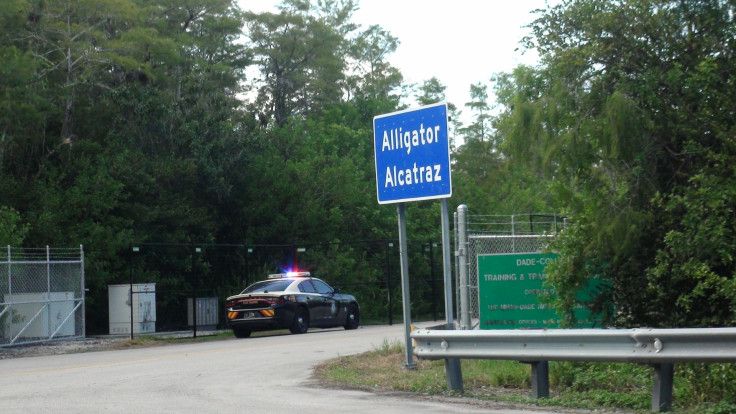
A federal lawsuit has accused the operators of the so-called 'Alligator Alcatraz' detention site in Florida of releasing harmful diesel emissions into the Everglades, as activists challenge what they say are violations of the US Clean Air Act.
The complaint, brought by the Center for Biological Diversity, claims the facility relies on more than 200 diesel generators and 100 lighting towers and argues that the 'Alligator Alcatraz detention emissions' pose risks to public health and the fragile wetland ecosystem.
The migrant detention site opened in July 2025 on a remote airstrip surrounded by Big Cypress National Preserve and land belonging to the Miccosukee Tribe. Built under Florida's Division of Emergency Management, the tent-based complex was designed to hold up to 3,000 detainees, alongside roughly 1,000 staff and more than 400 security personnel.
Alligator Alcatraz Detention Emissions Under Legal Fire
The Invading Sea reported that legal claims alleged that the state constructed and operated the facility without securing the air-quality permits required under the Clean Air Act. The lawsuit argues that such permits would normally trigger detailed environmental assessments and public consultation, alongside requirements to install pollution controls before operations begin.
According to the complaint, the site's diesel generators and lighting towers run continuously to support a population on an isolated stretch of land. The emissions include carbon monoxide and fine particulate matter, pollutants linked in the filing to serious health risks such as asthma attacks, cardiovascular disease, cancer and premature death.
The document also warns of potential damage to visibility and air quality within Everglades National Park, located roughly seven miles away.
Ryan Maher, a staff attorney at the Center for Biological Diversity, described the scale of the pollution in stark terms. 'The pollution that we're talking about here would be the equivalent of hundreds of diesel trucks driving around them,' he said, adding that the state had effectively built what amounted to a diesel-powered energy plant inside a protected preserve.
Emissions and Dispute Over Permits and Power
The lawsuit names Kevin Guthrie, executive director of Florida's Division of Emergency Management, as the sole defendant. It calls for the immediate suspension of generator and lighting tower operations until the appropriate permits are obtained, and seeks civil penalties of up to $124,426 (£93,200) per day for each alleged violation. Those penalties, if imposed, would be paid to the US Treasury.
State officials have not responded to the legal complaint, and the Division of Emergency Management has not publicly addressed the allegations in detail. In previous statements, however, officials have defended the project's emergency infrastructure approach and questioned claims about environmental harm.
Environmental concerns have also been raised by people living near the site. Members of the Miccosukee Tribe, whose villages sit within a few miles of the detention complex, have warned of possible long-term exposure to diesel fumes. One village lies just 1,000 feet from the facility boundary, according to the filing.
The complaint argues that emissions from the site could affect both detainees and nearby communities, while also adding pressure to an already sensitive ecosystem.
The Everglades, one of the most heavily protected wetlands in the United States, is home to endangered species, including the Florida panther, and is widely regarded as ecologically fragile.
A broader environmental assessment commissioned by state authorities has previously raised concerns about air pollution and greenhouse gas emissions from the facility. That report, made public as part of separate litigation, pointed to potential climate impacts linked to sustained diesel use at scale.
ICE's 'Alligator Alcatraz' Detention Center
The lawsuit is another separate dispute surrounding the detention site, which has already faced separate lawsuits over detainee treatment.
Recent reporting describes situations where food, drinking water, and other necessities were allegedly withheld unless detainees signed English-language documents they did not understand. Some also claim the water provided was contaminated or unsafe.
Other investigations and human rights reports have described patterns of alleged mistreatment at the same facility, including unsanitary conditions, restricted access to water and inadequate food and medical care, although state officials have repeatedly denied these claims and said standards are being met.
Now, there is also disagreement over transparency that could harm the environment. Advocates claim the public was not given a meaningful opportunity to review environmental risks before construction began, particularly around baseline air quality measurements that could now be difficult to reconstruct after the fact.
Local residents and Miccosukee community members voice out fears for children's health and the long-term condition of nearby wildlife habitats. But for now, the state has said it is still reviewing the legal filings.
© Copyright IBTimes 2026. All rights reserved.
- Recommended For You