

£500 School Lunch Bill: How Much UK Parents Could Save With Choosing Free School Meals This Year
Free school meal changes in England could reduce school food costs for eligible families from September 2026
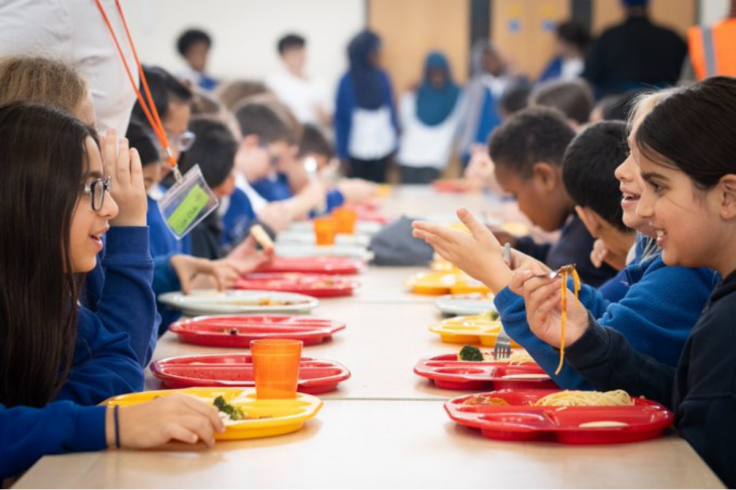
For families facing rising household costs, school lunches are a significant annual expense. From September 2026, changes to free school meal eligibility in England could give more parents a way to reduce that cost, with government funding based on £2.66 per meal across 190 school days, equivalent to £505 per eligible pupil.
That does not mean every family will save exactly £505. The actual saving depends on the price of school meals at the child's school, how often the child takes a meal and how many school days they attend.
For parents deciding between paying for school meals and preparing packed lunches, the expansion could make a noticeable difference to the household budget.
Free School Meals 2026: Who Qualifies Under the New Universal Credit Rules
The biggest change applies to families in England receiving Universal Credit. From the beginning of the 2026/27 school year, all children in households receiving Universal Credit will qualify for free school meals, regardless of household income.
The previous £7,400 annual earnings threshold for Universal Credit households is being removed. The Government expects the expansion to make more than half a million additional children eligible for free school meals.
Parents who already receive free school meals do not need to switch to a different type of meal. The change primarily expands eligibility to children whose families previously fell outside the income threshold.
The rules discussed here apply to England. School meal eligibility and arrangements differ across Scotland, Wales and Northern Ireland, so parents elsewhere in the UK should check their own national or local guidance.
What £505 Actually Buys and Why It Varies
The £500 figure needs some context. For the 2026/27 academic year, the Department for Education's funding calculation assumes 190 school meals at £2.66 each, producing an allocation of £505 per eligible pupil.
That provides a useful indication of the potential value of free meals, but it should not be treated as a guaranteed £505 cash saving for every household. School meal prices vary between councils and schools.
For example, Bradford's published price for most primary school meals is set to rise to £2.66 for 2026/27, while Durham lists a primary school meal at £2.95. A child who takes a paid £2.66 meal on every one of 190 school days would therefore cost a parent £505 over the academic year.
At £2.95 per meal, the equivalent would be £560.50. The actual total will be lower if a child does not buy lunch every school day.
Free School Meals Could Change the Packed Lunch Calculation
Parents can choose lower-cost ingredients and use food already at home, which makes packed lunches appear cheaper. However, the cost is not necessarily zero.
The London Assembly has previously used an estimated £2.34 per day for a packed lunch equivalent to a school meal, based on 190 school days. That would amount to £444.60 across an academic year.
Those figures show why parents should compare their own spending rather than assuming a £500 saving automatically applies. A family spending £2 per packed lunch for 190 school days would spend £380.
If the child instead receives a free school meal, the potential direct food saving would be £380. For another family spending £2.66 per packed lunch, the equivalent would be £505.
What Parents Should Check Before September
Parents receiving Universal Credit should check their child's eligibility with their local authority or school rather than relying solely on household income. The Government's new rules mean Universal Credit itself becomes the key eligibility requirement in England from September 2026, removing the previous £7,400 earnings limit.
For eligible families, free school meals could remove hundreds of pounds from annual school food spending for each child. But the precise saving will depend on what the family currently spends on lunches and the number of meals the child actually takes.
The £500 figure is a useful benchmark rather than a guaranteed household saving. Parents receiving Universal Credit should check their eligibility with their school or local authority before the September term begins.
© Copyright IBTimes 2026. All rights reserved.