How Telegram Fueled Medical Exam Cheating and Sparked a Nationwide Crackdown in India
Digital rights groups call the last‑minute ban a blunt, unconstitutional tool that punishes ordinary users while fraudsters simply move on.
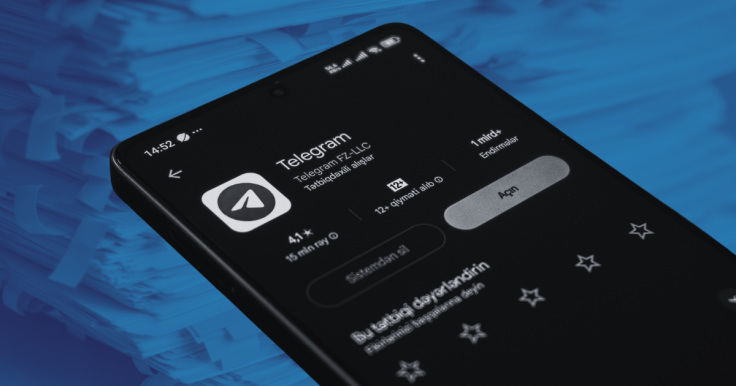
India's temporary Telegram block has put exam fraud back at the centre of the National Eligibility cum Entrance Test - Undergraduate (NEET-UG) row, with officials saying the app was being used by cheating rackets to target candidates ahead of the re-test in New Delhi and across India on 21 June. The government says the Telegram restriction will remain in place until 22 June.
The move affects a platform that the National Testing Agency says was being used to 'defraud candidates', while critics argue it risks punishing ordinary users for a much bigger system failure.
NEET-UG was cancelled in May after allegations of a paper leak, triggering protests and an investigation by the Central Bureau of Investigation. Nearly 2.28 million candidates sat the exam on 3 May at more than 5,000 centres.
Telegram Ban Amid NEET-UG Cheating Allegations
The news came after weeks of speculation that Telegram channels were being used to sell access to supposed question papers for the NEET retest. In a statement, the NTA said India's Ministry of Electronics and Information Technology had ordered that Telegram be restricted in India until 22 June, the day after the re‑examination.
According to the agency, the order was issued in response to the 'organised use of the platform [Telegram] by cheating rackets to defraud candidates.'
Officials said the Indian Cyber Crime Coordination Centre had already taken down a 'substantial number' of Telegram channels, groups and bots that openly advertised NEET‑linked scams, acting on information from the NTA and police forces.
Investigators allege that operators behind these channels demanded hundreds of thousands of rupees from desperate students and their families in exchange for what they claimed was advance access to the new paper.
The NTA has been explicit that 'there is no such paper available outside the secured examination chain', accusing the channels of pure fraud.
On top of the temporary block, the ministry has asked Telegram to disable its message‑editing function in India until 30 June, arguing that it had been used to fabricate screenshots and chats purporting to prove leaks.
Telegram Ban Pits Exam Security Against Digital Rights
Telegram had issued no public response at the time of writing, and the app was still accessible for many Indian users in the hours after the announcement. It is not yet clear exactly how, or how quickly, mobile operators and app stores will enforce the restriction.
The government has invoked a hardline provision of India's IT law that allows platforms to be blocked in the 'interest of sovereignty and integrity of India.' Officials describe the move as defined, time‑limited and a 'last resort', saying earlier attempts to remove offending content from Telegram had 'not produced' satisfactory results.
Critics see something else. The Internet Freedom Foundation, a digital rights group, called the Telegram block 'reactive and ineffective' and argued that it punishes ordinary users instead of addressing what it describes as the systemic causes of exam leaks inside the education bureaucracy and printing chain.
'This blocking comes in the final days of NEET preparation, when thousands of students depend on Telegram for study groups, doubt‑clearing, and shared resources,' the group said, warning that the ban lacks transparency and is likely unconstitutional.
Activists have long argued that the government leans on the same legal provision to chill free speech; the administration of Prime Minister Narendra Modi insists it acts within the law and in the public interest.
Inside The Telegram Cheating And Fraud Rackets
The cheaters, for their part, were hardly operating in the shadows. Police in Ahmedabad say they have arrested two alleged members of an inter‑state cyber‑fraud gang accused of using multiple Telegram channels to scam NEET candidates and parents in the run‑up to the 21 June retest.
Investigators say the pair, identified as Sumer Singh from Jaipur and Akash from Kota in Rajasthan, created at least eight NEET‑linked Telegram channels, including one titled 'Raghav_singh_neet'.
Through those channels, officers allege, they pushed 'false, misleading and enticing' posts claiming they could provide re‑examination question papers and other confidential material.
'Under the pretext of providing the examination question paper and other confidential information, the accused obtained money from students and their parents,' Ahmedabad's cybercrime branch said in a statement.
The unit says the same network also ran investment scams through Telegram groups such as 'Trade With Karol' and 'PANKAJ BHARDWAJ.'
Preliminary findings, according to police, show transactions worth nearly 15 million rupees (£118,239.48) were funnelled through various bank accounts tied to the gang. Officers say around 1,000 mobile numbers and Telegram accounts were contacted in the last month alone, and that about 44 websites were set up for gaming, betting, gambling and wider cyber‑fraud activity.
Separately, the same cybercrime branch has arrested a 19‑year‑old student from Bihar, accusing him of diverting NEET fee refunds meant for about 150 candidates into his own accounts by illegally accessing the NTA's portal using stolen application numbers and passwords. It is hardly the kind of CV line most parents expect from a Bachelor of Science student.
Police have now urged families not to trust Telegram channels, social media posts or online adverts that promise leaked papers, mark changes or guaranteed admissions to competitive exams.
Years Of NEET‑UG Trouble Boil Over Into A Crackdown
It is worth remembering that this is not the first time NEET‑UG has been engulfed by scandal. In 2024, the exam was hit by claims of paper leaks, fraud and irregular grace marks after thousands of candidates recorded unusually high scores.
The 2026 leak allegations, and a separate row over marking in a major school‑leaving exam, triggered demonstrations across the country earlier this year, including protests by the so‑called Cockroach Janta Party demanding Education Minister Dharmendra Pradhan's resignation.
NEET‑UG is not just another test; it is the main gateway to medical colleges in India.
Telegram, for its part, has grown rapidly in India and counts the country as its biggest market by downloads, even if WhatsApp still dominates overall messaging. Blocking it, even for a few days, is a rare and sweeping move that reaches far beyond exam halls or political chat groups.
Millions of Indian students are preparing to sit the National Eligibility cum Entrance Test – Undergraduate (NEET‑UG) again after the original paper, taken by about 2.28 million candidates on 3 May at more than 5,000 centres, was cancelled over allegations of a leak.
The National Testing Agency (NTA), which conducts NEET‑UG, has been under intense pressure since then, facing protests over paper leaks, marking irregularities and calls for the federal education minister to resign.
© Copyright IBTimes 2026. All rights reserved.
- Recommended For You