

Is Buying a Home Still Worth It? Some Americans Feel Like Their Houses Are Draining Their Accounts
Online conversations and housing data reveal many buyers are rethinking the long-term financial realities of homeownership
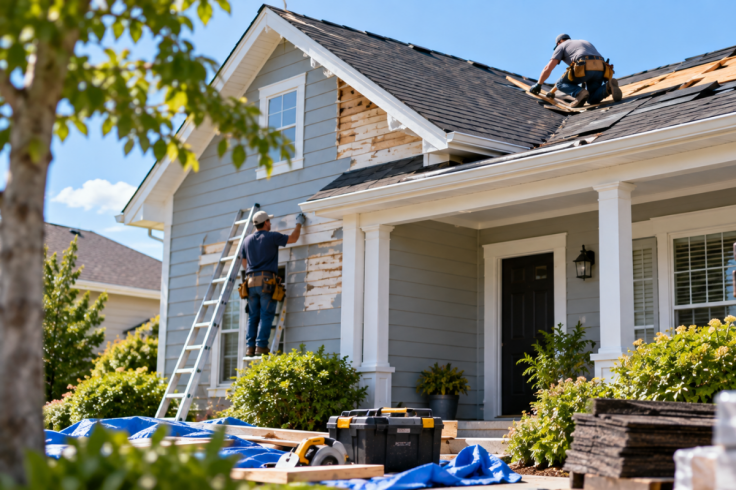
For generations, buying a home has been promoted as a cornerstone of the American Dream. For many homeowners, however, the reality is becoming increasingly expensive as unexpected repairs, rising insurance premiums, and routine maintenance consume larger portions of household budgets.
Those financial pressures are increasingly being reflected in online discussions, where homeowners are comparing the promise of homeownership with the practical challenges of maintaining a property after moving in.
The experiences mirror broader housing trends. Data from the U.S. Census Bureau and Harvard University's Joint Center for Housing Studies (JCHS) indicate that maintenance expenses continue to rise, particularly as America's housing stock ages, adding to affordability pressures that extend beyond monthly mortgage payments.
Unexpected Repairs Are Reshaping Homeownership Expectations
The debate gained momentum after a homeowner described feeling overwhelmed by the constant cycle of repairs that followed purchasing a property. Rather than experiencing the financial security often associated with homeownership, the homeowner said surprise expenses, failing systems, and continual maintenance had fundamentally changed their expectations.
The discussion resonated with hundreds of other homeowners, many of whom said they had also underestimated the cost and frequency of repairs after buying a home.
Several contributors acknowledged that ownership had increased their wealth over time but said replacing roofs, heating and cooling systems, plumbing, appliances, and other ageing components proved far more expensive than expected. Others argued that these ongoing costs receive far less attention than the potential for building equity, while some maintained that homeownership still offers greater long-term stability than renting despite the financial challenges.
National Data Show Maintenance Costs Continue to Climb
The concerns raised online are supported by national housing data. According to the U.S. Census Bureau's American Housing Survey, homeowners spent a median of $5,000 on home improvements in 2021, while nearly 59 million homeowners carried out improvement projects. The survey also identified widespread maintenance issues, including water leaks, foundation cracks, mould, and pest problems affecting millions of properties.
More recent Census Bureau data show that the median monthly housing cost for homeowners with a mortgage reached $2,035 in 2024, reflecting increases in insurance premiums and other housing expenses. Research from Harvard's Joint Center for Housing Studies suggests those costs are likely to become more common as the nation's housing stock continues to age. The median age of U.S. homes reached 44 years in 2023, the oldest on record, increasing the likelihood that owners will face major replacement projects involving roofs, windows, plumbing, heating, and electrical systems.
The Financial Equation Extends Beyond Mortgage Payments
Housing affordability discussions often focus on mortgage rates or monthly repayments, but financial experts note that the overall cost of ownership extends much further. Property taxes, homeowners insurance, routine upkeep, preventative maintenance, and emergency repairs all contribute to the long-term cost of owning a property, expenses that renters typically avoid.
Research from Harvard's Joint Center for Housing Studies estimates that around 27 million owner-occupied homes required at least one repair in 2022, representing approximately $98 billion in repair costs nationwide. Lower-income households face the greatest burden because essential maintenance accounts for a larger share of their income, while inflation has continued to push up the price of construction materials, labour, insurance, and home services.
Why Many Owners Still Believe Buying Can Pay Off
Despite the frustrations expressed by many homeowners, ownership continues to offer financial advantages that renting cannot always match. Mortgage repayments can gradually build equity, fixed-rate loans provide protection against rising rents, and homeowners may benefit from long-term property appreciation, although returns vary by market and location.
Several participants in the discussion said they still considered buying a home worthwhile despite the financial strain, arguing that the challenges become easier to manage with realistic budgeting and long-term planning.
The conversation reflects a broader shift in expectations surrounding the American Dream. Rather than viewing homeownership as a guaranteed route to financial security, many buyers increasingly recognise it as a long-term investment that requires emergency savings, ongoing maintenance planning, and the ability to absorb unexpected repair costs.
© Copyright IBTimes 2026. All rights reserved.