

How Did Kevin Keegan Die? Here's How a Car Crash Revealed Soccer Legend's Cancer
Kevin Keegan's Legacy: From European Glory to Managerial Fame
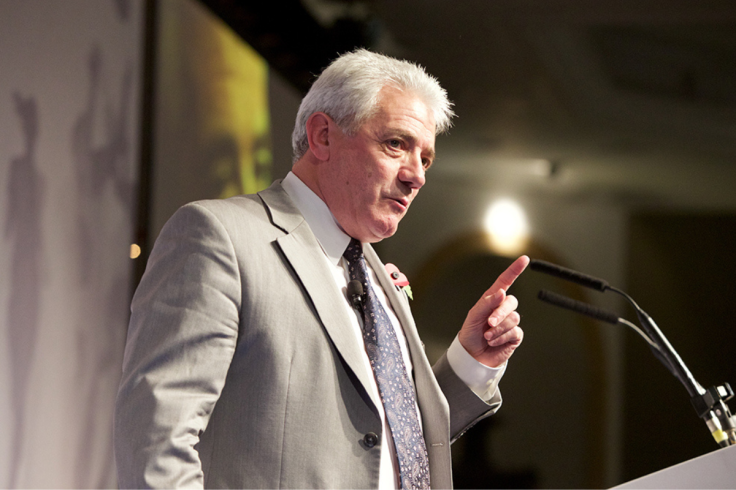
Kevin Keegan, the two-time Ballon d'Or-winning football star who captained and coached England and won the European Cup with Liverpool, has died at 75 after being diagnosed with stage four cancer. He was one of just four Englishmen to win the prestigious award. Newcastle United announced his death on Monday. Readers learned only last month that the football icon was battling a terminal illness.
The news came after his family first revealed his medical condition in early 2026. For context, the former England manager explained during a live event months later that his cancer was discovered purely by chance. Medical staff found the illness when he underwent a scan for an operation following a car crash.
Car Crash Revealed Kevin Keegan Cancer Diagnosis
The randomness of his medical discovery added a deeply poignant layer to his final months. Keegan told audiences that doctors uncovered the illness when reviewing imaging ahead of a procedure related to his road traffic collision. They informed him he had stage four cancer.
Newcastle United led the tributes following the announcement of his passing. They issued a heartfelt statement calling him one of the most iconic, influential, and deeply loved figures in the history of their club.
Facing this grim reality, he found comfort in football. He was placed under the care of a specialist pioneering a new treatment. 'They said we have a top doctor with this new way of fighting what you have got, which is stage four cancer,' Keegan shared. Upon learning the medical professional was a Liverpool supporter, Keegan felt immediate relief. He went to meet him, finding solace in knowing he would not be walking alone.
Kevin Keegan Secured European Glory With Liverpool
Born in Doncaster on 14 February 1951, Keegan began his journey at fourth-tier Scunthorpe before Bill Shankly brought him to Merseyside in 1971. His career was built on a relentless work rate and an undeniable hunger for success, qualities stemming from his working-class upbringing in northern England.
At Anfield, the affectionately named Mighty Mouse formed a highly effective on-field relationship with John Toshack. Their classic big man, little man strike partnership allowed the five feet eight inch forward to feed off the taller player's presence. This combination propelled the club to a league and UEFA Cup double in 1973.
He secured two more English league titles, an FA Cup, and a second UEFA Cup in 1976 when he scored in both legs against Club Brugge. His crowning achievement arrived during the 1977 European Cup final. Keegan won a crucial penalty, given after he was fouled by Berti Vogts, allowing Phil Neal to seal a three to one victory over Borussia Mönchengladbach. 'His legacy at Liverpool will be forever etched in history,' the club stated.
Kevin Keegan Reached Historic Heights In Germany
Keegan was a genuine trailblazer. He left Merseyside in 1977 for Hamburger SV as one of the first English players to join a continental team. It was widely reported he became European football's highest-paid player. Teammates were initially resentful of the Englishman arriving on big money, but his graft won them round.
He claimed his first Ballon d'Or in 1978 despite Hamburg finishing tenth in the German league. He helped drive the club to the league title the next season, securing a second Ballon d'Or. 'Hamburger SV will always cherish the memory of its former championship-winning player and two-time Ballon d'Or winner,' the club noted.
Off the pitch, he fully embraced celebrity culture. He popularised a perm haircut that players across Europe copied, and starred in an after-shave advertisement with heavyweight boxing great Henry Cooper. Releasing the pop track Head Over Heels in Love was mad stuff for an athlete then, reaching number ten in Germany and number thirty-one in England. He also opened up his home for a behind-the-scenes documentary.
Newcastle United Adored Kevin Keegan As Manager
Following a European Cup final loss to Nottingham Forest, he returned to Southampton. He finished as the English league's top scorer during the 1981–82 season, when he scored 30 goals. He moved to Newcastle, his father's favourite team, where he was adored until retiring in 1984. Internationally, he scored 21 times in 63 games for England, highlighted by a single 1982 World Cup cameo.
He found completely different fame transitioning to management in 1992. Regarded as tactically limited but a good man-manager, he led Newcastle out of the second tier. By February 1996, his team of Entertainers held a massive 12-point Premier League lead.
The pressure mounted as Alex Ferguson and Manchester United closed the gap in the run-in. In a post-match television interview, an emotional Keegan became unhappy at comments from Ferguson, a master of mind games. He unleashed a famous finger-pointing outburst, declaring they were still fighting for the title. 'I will love it if we beat them, love it,' he said. Newcastle ultimately finished four points behind in second place.
England Legend Kevin Keegan Leaves Incredible Legacy
His 20-month spell as England manager showed a much deeper vulnerability. Taking charge in 1999, he guided the squad into the 2000 European Championship, only for the team to fail to get out of its group. His tenure came to an abrupt end during World Cup qualification. He resigned after a one to zero home loss to Germany in the last game at the old Wembley Stadium.
In a human moment devoid of corporate gloss, he announced his departure to Football Association officials during an emotional conversation in a toilet cubicle. It was a starkly unscripted way to end a prestigious role.
He later coached Fulham and Manchester City before making a brief return to Newcastle in 2008. That final stint ended after nine months following a breakdown in his relationship with club owner Mike Ashley. Keegan never coached again, keeping in the public eye through television commentary work.
© Copyright IBTimes 2026. All rights reserved.