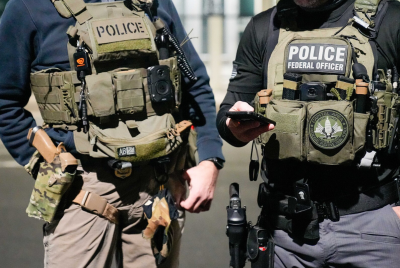
Taxpayers Could Pay for ICE's Electric Shock Gloves That Deliver Painful Jolts: $20M Budget Proposed
Manufacturer rules ban using shock gloves on children, pregnant women, or as punishment, citing injury risks


In a move drawing sharp criticism from civil rights groups, ICE is moving to purchase thousands of electric shock gloves for its enforcement officers in a deal valued at up to $20 million. Federal procurement notices show the agency plans to award the non-competitive contract to Georgia-based Fort Benning performance sites by late fiscal year 2026.
A $20M Federal Purchase
The CTG-5 G.L.O.V.E. is manufactured by Compliant Technologies LLC, based in Lexington, Kentucky. The gloves resemble ordinary patrol gloves. According to the manufacturer, officers can activate an electrical function using a switch. The glove must make contact with a person's skin to deliver the electrical stimulus.
The Associated Press reported that ICE is seeking thousands of the devices. It said the proposed purchase could be the largest order for the manufacturer so far. The federal notice says the solicitation could be released on 14 August. The procurement does not state exactly how many gloves ICE intends to purchase or how the devices would be distributed among officers.
How the Electric Gloves Work
Compliant Technologies describes the G.L.O.V.E. as a tool intended to distract a person and gain compliance during a physical confrontation. John Peters, president of the Institute for the Prevention of In-Custody Deaths, told the Associated Press that the device could be useful when officers encounter resistance while removing people from vehicles or buildings or moving detainees into or out of facilities.
Peters said the electrical stimulus is immediate and painful, comparing the sensation to a bee sting. He also said the technology could give smaller or older officers an additional option during physical confrontations. The gloves have already been used by some police departments and jails, according to the Associated Press. The manufacturer says officers must complete training before using the device and be recertified every two years.
Critics Question the Need for the Technology
The proposed purchase has drawn criticism from civil rights organisations. Jenn Rolnick Borchetta, deputy project director on policing at the American Civil Liberties Union, questioned why the devices would be necessary for civil immigration enforcement. She also raised concerns about whether people being detained would know that an officer was about to use the device.
The ACLU has previously criticised ICE's use of force and called for greater oversight of the agency's enforcement activities. The National Immigration Law Center also criticised the proposed purchase and called on Congress to prevent additional funding for ICE enforcement tools, according to The Jersey Vindicator. The criticism comes as the Trump administration continues to expand immigration enforcement and has set higher arrest targets for ICE.
Manufacturer Sets Limits on Use
The manufacturer states that the G.L.O.V.E. should not be used as a form of punishment. Its guidance also says the device should not be used against people solely because they are verbally defiant or belligerent. The manufacturer's instructions warn against using the device on children, pregnant women, elderly people, and people with severe disabilities.
The guidance also warns that failing to follow safety instructions could result in injury or death. The device contains memory capable of recording thousands of activations. Compliant Technologies recommends that agencies download the records at least once every three months.
The federal acquisition notice does not specify whether ICE would require officers to download activation records on a particular schedule. It also does not explain whether supervisors would review individual activations or whether people subjected to the device would receive medical evaluations.
Questions Over Oversight
The proposed purchase places particular importance on the rules ICE establishes for the devices. Peters told the Associated Press that some misuse could occur with any policing technology, but said he expected the gloves to have a limited risk of causing injuries if used properly. He said robust policies and training would be important if ICE proceeds with the purchase. The manufacturer also requires training and recertification.
However, the federal acquisition notice does not provide details of ICE's proposed use-of-force policy for the gloves. It does not say what circumstances would justify activation, who would authorise their use or what disciplinary measures would apply if an officer breached the rules.
© Copyright IBTimes 2026. All rights reserved.
- Recommended For You