

'Hanged by the Neck Until Death': Ex-US Marine Goes Viral Calling Trump a Traitor Who Deserves Execution
Kenneth O'Keefe's viral video reignites discussions on the human cost of the Iran war and his controversial past.
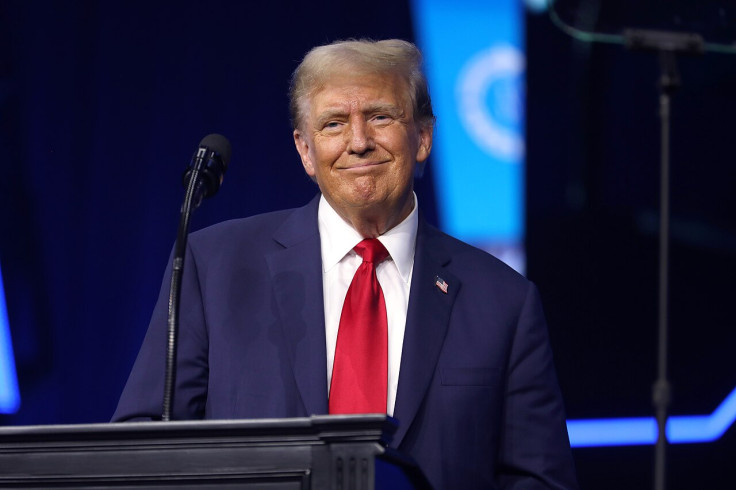
A former US Marine and Gulf War veteran has gone viral after calling Donald Trump a traitor deserving of execution by hanging, igniting fresh debate over the human cost of America's ongoing war in Iran.
Kenneth O'Keefe, 56, a California-born activist and ex-serviceman, made the remarks following a visit to the ruins of a bombed primary school in Minab, southern Iran, where more than 150 civilians, the majority of them schoolchildren, were killed on the first day of joint US-Israeli airstrikes on 28 February 2026.
The video clip, shared widely across X and picked up by outlets including the Times of India, shows O'Keefe breaking down in tears before issuing his incendiary call for the president's execution. His comments have drawn widespread reaction, though the man delivering them is himself a deeply contested figure.
From the Gulf War to the Fringes of Anti-War Activism
O'Keefe served in the US Marine Corps during the First Gulf War before emerging as a vocal anti-war campaigner in the years that followed. Born on 21 July 1969 in Napa, California, he has held dual American-Irish citizenship and has spent decades agitating against US foreign policy, military intervention, and what he describes as the abuse of power within the armed forces. His own website records him stating that 'the Marines supplied me with my first serious taste of injustice.'
Former U.S. veteran Ken O'Keefe says he wants President Trump to be hanged in public under the Constitution of the United States.
— Shadow of Ezra (@ShadowofEzra) May 27, 2026
He calls President Trump a pedophile and a traitor who has taken bribes from Miriam Adelson.
“I want to see Donald J. Trump hanged by the neck until… pic.twitter.com/D6Up4jc8v9
He rose to international attention in 2010 as a passenger aboard the MV Mavi Marmara during the Gaza flotilla raid, during which he reportedly disarmed two Israeli commandos who boarded the ship. Ten Turkish activists were killed in that confrontation.
Long associated with Palestinian rights advocacy, O'Keefe's public profile has since grown considerably more controversial: the Southern Poverty Law Center documents that from 2012 he began speaking at white supremacist events, promoted antisemitic beliefs, and endorsed former Ku Klux Klan leader David Duke, leading much of the Palestinian rights and anti-war community to publicly disavow him. The Anti-Defamation League has separately described him as an antisemitic conspiracy theorist.
Standing at the Graves of Minab's Schoolchildren
The viral clip originates from O'Keefe's visit to the Shajareh Tayyebeh Elementary School in Minab, Hormozgan province, the site of what has become the deadliest single civilian incident of the Iran war to date. On 28 February 2026, the school was struck in a triple-tap Tomahawk missile attack during the opening salvo of US-Israeli operations. According to Wikipedia's consolidated figures, 156 people were killed, among them 120 schoolchildren, with a further 95 injured. Other tallies from US Senate press releases and Human Rights Watch cite figures ranging from 168 to 175 casualties, likely reflecting evolving counts in the immediate aftermath.
O'Keefe, speaking from the ruins of the school and later from the graves of the victims, stated that he broke down crying 'like a baby.' It was in that context that he issued his now-viral call for Trump's execution. Journalist Rick Sanchez shared the clip on X, quoting O'Keefe directly: 'I want to see Donald Trump hung by the neck till death according to the Constitution of the United States.' The clip also circulated through accounts including ShadowofEzra, amplifying its reach across partisan audiences.
“I want to see Donald Trump hung by the neck till death according to the Constitution of the United States.” — Kenneth O’Keefe, former U.S. Marine and Gulf War veteran.
— Rick Sanchez (@RickSanchezTV) May 27, 2026
After visiting the graves of 168 children killed in Minab, O’Keefe says he broke down crying “like a baby” for… pic.twitter.com/sppsHDSoH5
The school's location near a former Islamic Revolutionary Guard Corps naval compound had been cited initially by officials as potential justification for the strike. Multiple independent investigations subsequently found no evidence the building served a military function at the time of the attack.
The Guardian's investigation concluded that the adjacent compound buildings were a medical clinic and a pharmacy. The compound's military security posts had been removed by 2016, and Minab's own mayor has stated publicly that all military personnel had vacated the site roughly 15 years before the strike.
The Viral Moment and Its Limits
O'Keefe's remarks spread rapidly across social media, where his military background lent them visceral weight for audiences already opposed to the Iran war. His use of explicitly constitutional language, framing a hanging as lawful rather than vigilante, sharpened the provocation. He stopped short of calling for extrajudicial violence, though the remarks remain inflammatory and have been condemned by Trump supporters as incitement.
What the viral clip did not convey was O'Keefe's documented history of extremist associations. His years of speeches at white supremacist events and his endorsement of David Duke, recorded in detail by the SPLC, represent a significant caveat for news organisations and audiences treating him as a straightforward anti-war veteran voice.
His remarks about Minab and Trump may land differently knowing they come from a figure the ADL classifies as an antisemitic conspiracy theorist. The viral mechanics of social media stripped that context entirely, delivering the clip to millions without it.
O'Keefe's video will not be the last time the ruins of Minab's school produce a reckoning, for those who ordered the strikes, for those who spread the footage, and for an American public still processing what its military did on the opening day of this war.
© Copyright IBTimes 2026. All rights reserved.