Trump Defends £310 Million White House Ballroom Without Congressional Approval As Judge Signals It May Be Illegal
Legal Challenges and Controversies Surrounding the White House Ballroom Construction

A federal judge has openly questioned whether US President Donald Trump's plan to build a multi-million-dollar ballroom at the White House, demolishing a historic wing in the process, is lawful, as the administration struggles to defend a project it launched without a vote from Congress.
Trump, who publicly announced the project on 31 July 2025 via a White House press release, has maintained that the endeavour is privately funded and requires no congressional blessing.
That position has found little sympathy before Judge Leon, a George W. Bush appointee who has presided over the case since the National Trust for Historic Preservation filed suit on 12 December 2025.
The Legal Battle Over the East Wing's Demolition
The National Trust for Historic Preservation, chartered by Congress in 1949, argues that the Trump administration violated no fewer than four areas of federal law.
Its December 2025 complaint alleges that construction proceeded without plans being filed with the National Capital Planning Commission as required by the National Capital Planning Act; without an Environmental Impact Statement under the National Environmental Policy Act; without congressional authorisation mandated for any structure built on federal park land in the District of Columbia; and in breach of the Property Clause of the Constitution, which reserves to Congress the right to make rules over property belonging to the United States.
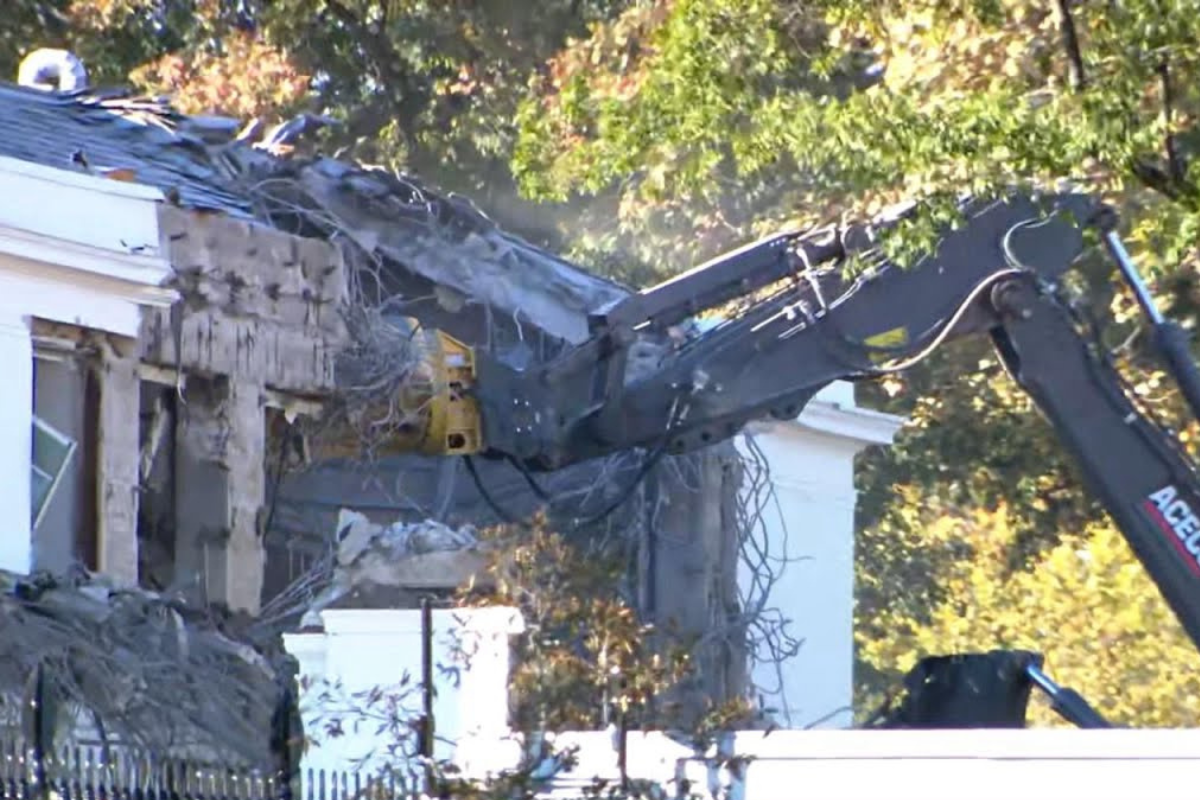
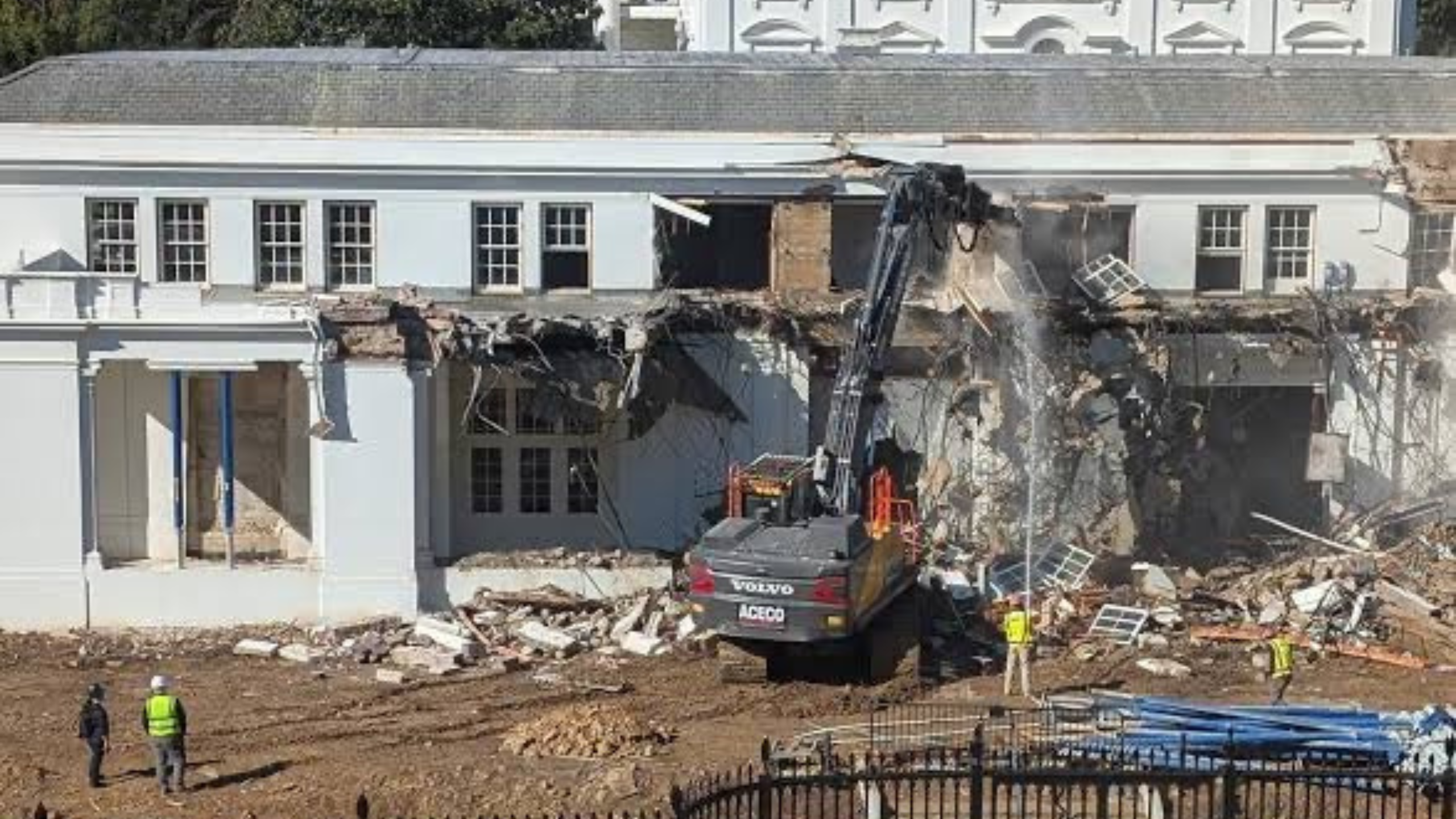
Demolition of the East Wing, constructed in 1902 and modified in 1942, began in October 2025. The White House's own July 2025 press release framed the project as a long-overdue solution to the absence of a grand event space, noting that the East Room holds only 200 guests and that previous administrations had relied on outdoor tents.
White House chief of staff Susie Wiles said in that release that the administration was 'fully committed to working with the appropriate organisations to preserving the special history of the White House.'
The administration's stance in court has been markedly less conciliatory. Justice Department lawyer Yaakov Roth argued at the 17 March 2026 hearing that the White House Executive Residence was directing one hundred percent of the project and that the National Park Service's role was limited to funding; a claim Leon found deeply inconsistent with previous government filings that attributed oversight to the Park Service.
Judge Leon's Escalating Scepticism
The 17 March hearing was not the first time Leon expressed pointed doubt about the administration's legal footing. At a January 2026 hearing, the judge had described the plan to fund the project through National Park Service gift authority as a 'Rube Goldberg contraption' designed to circumvent congressional oversight, a reference to the inventor known for elaborate machines that accomplish simple tasks through needlessly complex means.
On 17 March 2026, Leon's criticism sharpened. Calling the project an 'alteration,' he said, 'takes some brazen interpretation of the laws of vocabulary.' He also challenged the government's invocation of the Park Service's authority over the site.

'This isn't any national park,' Leon said. 'This is an iconic symbol of this nation.' The judge added: 'It would have been a heck of a lot easier by any standard to have just gone to Congress to get the authority to do it.' He described the government's evolving legal arguments as 'shifting theories and shifting dynamics.' Leon indicated he would issue a ruling by the end of March, noting that an appeal by the losing side was likely.
Architect Shalom Baranes, who replaced the original lead architect in December 2025, told the National Capital Planning Commission in January that the completed ballroom will have 40-foot ceilings, a 1,000-seat capacity, and will form part of an 89,000-square-foot new East Wing, a structure larger than the White House mansion itself, which occupies 55,000 square feet. Above-ground work is scheduled to begin as early as April 2026, according to the administration.
Private Funding, Corporate Donors, and Questions of Access
Trump has consistently framed the project as a gift to the nation at no cost to taxpayers. On Truth Social, he wrote: 'The White House Ballroom is being privately funded by many generous Patriots, Great American Companies, and, yours truly.'
When asked by reporters in December 2025 about the £310 million ($400 million) figure, Trump said he had given a higher sum as a buffer: 'I think I'll do it for less, but it's $400 [million] ... I should do it for less.' He also told reporters: 'We got sued. We're donating a $400 million ballroom, and we got sued not to build it.'
The donor list, published by the White House in November 2025, names 37 private contributors including Apple, Amazon, Meta, Microsoft, Google, Lockheed Martin, and cryptocurrency firms Coinbase and Ripple; companies with billions in federal contracts.
According to court records cited by CBS News, the donated funds were collected by a nonprofit intermediary, transferred to the National Park Service, and deposited into an account ordinarily used for minor White House repairs and maintenance. Judge Leon has separately described the financial architecture as an 'end run' around congressional oversight.
In his 26 February 2026 ruling, Leon declined to issue a preliminary injunction halting the project, concluding on procedural grounds that the Trust had not brought the case under the correct legal mechanism, the White House Office of the Executive Residence is not a government agency covered by the Administrative Procedure Act.
He did not rule on the merits. In his written opinion, Leon acknowledged the 'novel and weighty issues' raised by the challenge and explicitly invited the Trust to amend its complaint, writing that if it did so, the court would 'expeditiously consider it.' Trump declared on Truth Social that the judge had 'completely erased' the challenge to the project, a characterisation Leon had not made.
The fate of the most significant alteration to the White House in decades now rests with a judge who has made no secret of his doubts — and a president who shows no sign of backing down.
© Copyright IBTimes 2026. All rights reserved.
- MOST POPULAR IN World