

'Absolute Legend': Fans Share Moving Stories of Nobby Stiles After Landmark Coroner's Decision
Coroner's ruling on Nobby Stiles' death highlights the long-term impact of heading in football.
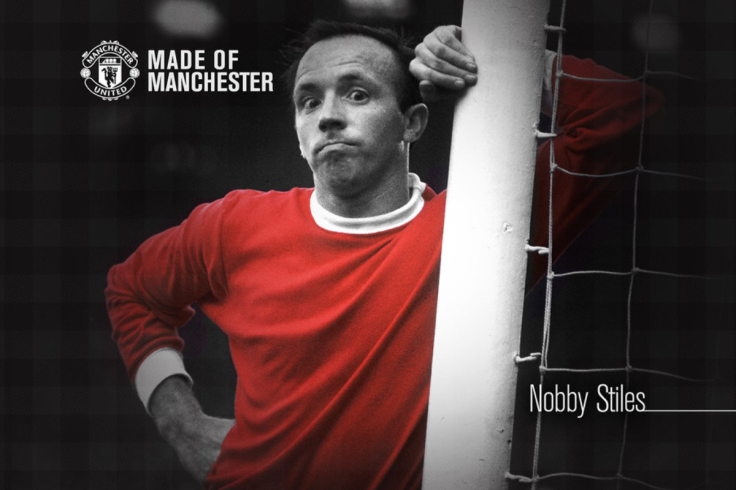
England World Cup winner Nobby Stiles died in Greater Manchester in 2020 from dementia caused in part by chronic traumatic encephalopathy linked to repeatedly heading a football, a coroner has ruled at Stockport Coroner's Court, prompting supporters across the country to share memories of a man many still describe as an 'absolute legend'.
Senior coroner Alison Mutch recorded Stiles' cause of death as Alzheimer's disease, contributed to by high-stage CTE, another neurodegenerative condition described as stage three limbic predominant age related TDP-43, and cerebrovascular disease.
The inquest was convened after Stiles' family asked earlier this year for his brain to be examined for signs of CTE, a degenerative condition associated with repeated head impacts.
Neuropathology expert Dr Daniel Du Plessis told the court he was 'quite convinced' that the sheer volume of headers the former Manchester United midfielder made during his 17-year career caused the CTE that contributed to his death at 78.
Asked directly whether repeated heading of the ball was, on the balance of probabilities, the cause of Stiles' CTE, Dr Du Plessis replied: 'Yes.'
What Heading Meant In Stiles' Era
The inquest set out, in granular detail, what repeated heading actually meant in Stiles' era. His son, John, told the court that heading the ball in training was 'absolutely massive'.
On what he called a conservative estimate, his father headed the ball about 40 times a day, five days a week, for 10 months of each season over 17 years in professional football, roughly 136,000 to 140,000 headers, many with old-style leather balls that grew heavier in the rain.
John Stiles, who now leads the Football Families for Justice group, said players at Old Trafford were even encouraged to practise with a ball hanging down from the stand so they could repeatedly head it.
'This wasn't forced upon them,' he stressed, adding that players simply did not know the risks at the time.
Fans Share Personal Memories Of Stiles
Since the ruling, tributes have resurfaced on social media, many recalling Stiles not as a damaged icon but as the sharp, funny, sometimes gruff presence they met in person over the years.
I had the pleasure of being in Nobby Stiles company many years ago at Alan Hansens testimonial match at Anfield.
— Michael Starke (@MichaelStarke57) July 15, 2026
What a great bloke. I wish a few Reds and Utd fans could have heard what he had to say? My Dad reckoned England would never have won the World Cup without him.😉👍🏼
Supporter William Powell recalled sharing an evening with Stiles at a grassroots club dinner, calling him 'a great raconteur and a better footballer'.
Another fan, Thomas Wells, described a sportsman's dinner roughly two decades ago where Stiles was 'brilliant' and relaxed enough to sign a cigarette packet during a smoke break.
The best goalie England ever had
— David Houltram (@Ashmaker1954) July 15, 2026
Former West Bromwich Albion youth player Chris Egan recalled accidentally catching Stiles with his studs during a training session as a 15-year-old, prompting Stiles to growl at him not to apologise on a football pitch again. Egan said he felt 'scared and in awe at the same time', calling Stiles an 'absolute legend'.
RIP to Nobby Stiles. Such a legend of the game. Hope his family is doing okay after this news.
— Funny (@YOLO_TrustSelf) July 10, 2026
John Stiles said his father was 'very humble' at home in Stretford, where 'you wouldn't know he was a footballer', adding that the family were 'much more proud of the father than the footballer'.
Coroner's Ruling Fuels Wider Legal Battle
The coroner's conclusion feeds directly into a broader legal fight.
John Stiles is among dozens of former professionals and relatives suing the Football Association, the Football Association of Wales and the English Football League, alleging negligence in failing to protect players from the long-term impact of heading and concussion.
The FA has pushed back in court submissions, saying it 'has not been established by science' that heading or 'occasional' concussion leads to permanent brain damage, while pointing to a 2019 co-funded study finding former players were three and a half times more likely to die of neurodegenerative disease, and to plans to phase out heading in matches for under-11s by 2026.
A separate inquest in January into former Scotland and Manchester United defender Gordon McQueen, who also had CTE, found heading was 'likely' to have contributed to his death at 70.
His daughter, broadcaster Hayley McQueen, has said England's 1966 winners have been 'pretty much wiped out' by neurodegenerative disease.
© Copyright IBTimes 2026. All rights reserved.