

Inside Trump's 12 AM Phone Routine: Kid Rock Explains Why He Calls the 80-Year-Old POTUS Late at Night
Exploring Kid Rock's unique relationship with Donald Trump through late-night calls and shared political theatrics.

Donald Trump is fielding late-night calls from Kid Rock, according to a report in which the singer describes phoning the 80-year-old President around midnight on weekends while drinking with friends.
After the country-rock performer, whose real name is Bob Ritchie, sat for an hour-long interview for the programme Trump's America: 250 Years in the Making. A long-time supporter of Trump and a prominent MAGA celebrity, Ritchie used the appearance to detail his unlikely friendship with the former commander-in-chief, their golf outings and what he called a 'front row seat to the greatest s–t show on Earth.'

Kid Rock's Late-Night Donald Trump Calls
Ritchie has backed Trump since his first term in the White House and has appeared at several Trump-aligned events. In the interview with host Paul Murray, the 55-year-old was pressed on what it is like to have, as Murray put it, 'a buddy that's running the world.' Ritchie did not bother to play it down. 'It's f—ing awesome,' he replied.
From there, he sketched out a routine that sounds closer to a frat house prank than contact with a US president. One of his 'late-night drinking tricks', he said, is to ring Trump around 11pm or midnight on Fridays and Saturdays, confident the Republican frontrunner for November is still awake.
'You know, sitting around having some beers, it's like 11, 12 on Friday or Saturday. I know he's up. He sleeps like me. He sleeps like five hours,' Ritchie said. Trump has long claimed to get by on very little sleep, a boast that has shifted over time into political branding.
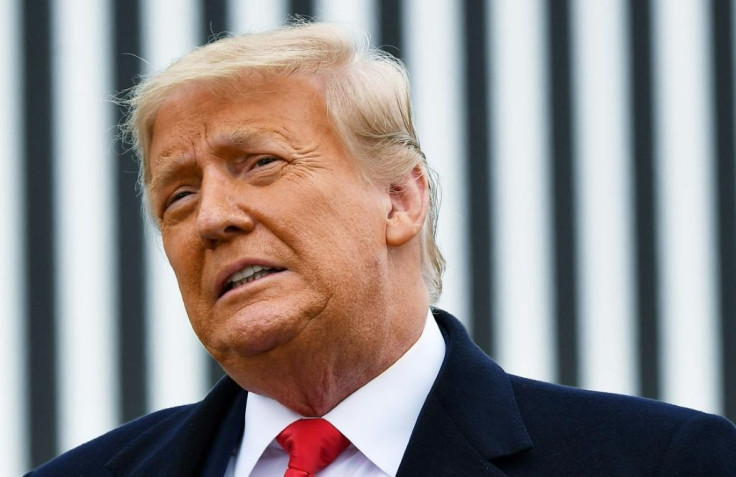
The musician insisted the calls are informal rather than advisory. 'I know when to get him, and he's so gracious. He always picks up, or he'll call and check in just to shoot the s–t most of the time,' he said, making clear he is not playing armchair strategist. 'He's not calling me to [ask], 'Hey, what should we do in Iran, Bob?' I don't get those calls.'
Ritchie framed the access as entertainment as much as politics. 'I enjoy the hell out of hanging out with him and talking with him and just having a front row seat to the greatest s–t show on Earth,' he told Murray, admitting at one point that the administration itself had been a 's–tshow'. It was a rare moment where a loyalist both defended Trump and acknowledged the chaos that surrounded his presidency.
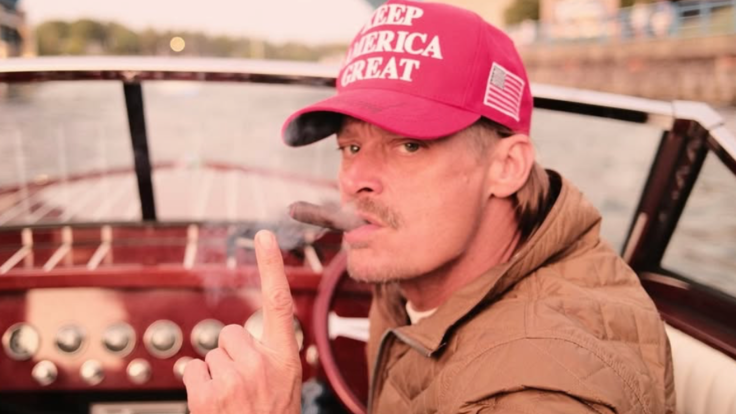
Donald Trump, MAGA Spectacle And Kid Rock's Loyalty
Ritchie's association with Trump stretches beyond phone chats and golf rounds. He has repeatedly turned up at pro-Trump spectacles, often leaning into the culture-war aesthetic that defines much of the MAGA movement.
Earlier this year, he performed at what organisers billed as a rival Super Bowl halftime show, staged by conservative youth group Turning Point USA. Marketed as a patriotic alternative to the NFL's official, record-breaking and widely praised show headlined by Bad Bunny, the MAGA production was pre-taped, lightly watched and accused of lip-syncing by critics. If it was meant to demonstrate a parallel pop culture universe for Trump supporters, it did little to shake off the 'faux' label.

Ritchie has also ventured into political theatrics in more pointed ways. On Memorial Day, he delivered what has been described as a bizarre Pentagon message, accompanied by stunts involving AH-64 Apache helicopters that drew condemnation from some quarters. The details of those stunts were not expanded on in the Sky News segment, but they form part of a pattern: using military symbolism and bombast to project a certain idea of patriotism.
His proximity to policy has, at times, been more formal. In April last year, he was present in the Oval Office as Trump signed an executive order aimed at reforming live entertainment ticket prices, a topic that directly affects his own industry. And earlier this year he joined Robert F. Kennedy Jr. in a 'Make America Healthy Again' campaign, an odd-couple venture that blended wellness rhetoric with political branding.
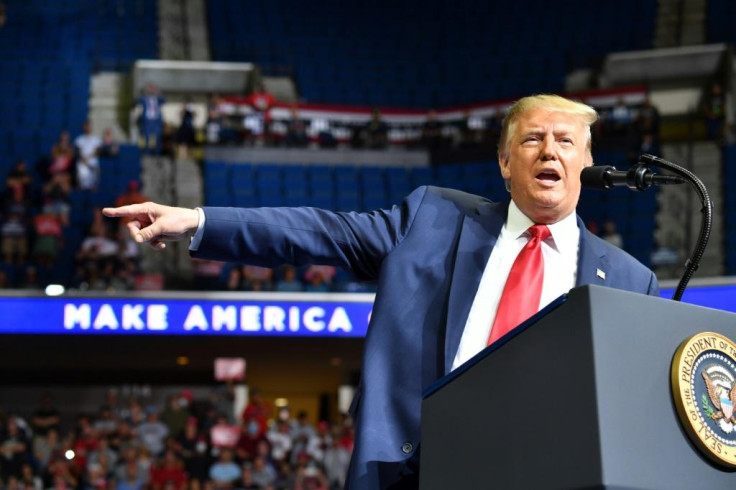
Defending Donald Trump's Motives
Ritchie is not merely name-dropping. He repeatedly stepped in to defend Trump's character and priorities, casting him as a leader whose motives are consistently misunderstood.
Responding to criticism of Trump's approach and rhetoric, Ritchie told Sky News he trusted the President's intentions. 'I know his heart and soul, his concern is for this country period. This country first. And I think every leader in any country should be that for their country,' he said.
It is not a nuanced policy argument, but it is the kind of personal endorsement Trump prizes from loyal entertainers: a claim to know the 'real' man behind the headlines, vouching for his patriotism even while conceding his tenure was messy. There was no attempt in the interview to reconcile that support with the more controversial elements of Trump's record, nor any serious challenge to Ritchie's assertions. The programme instead treated his anecdotes as a window into Trump's world, however partial and boozy that view might be.
None of Ritchie's descriptions of the late-night phone calls have been independently corroborated, and there is no official record of how frequently they happen, so his account should be taken with a grain of salt. What his interview does confirm, though, is that the Trump orbit still thrives on celebrity validation, off-the-cuff access and a kind of manufactured chaos that can turn something as mundane as a midnight phone check-in into part of the political show.
© Copyright IBTimes 2026. All rights reserved.