

Leaked Trump White House Memos Expose Stephen Miller Led Bid to Dismantle Constitutional Right to Habeas Corpus
Confidential memos show Stephen Miller's push to dismantle detainees' rights, sparking internal White House controversy
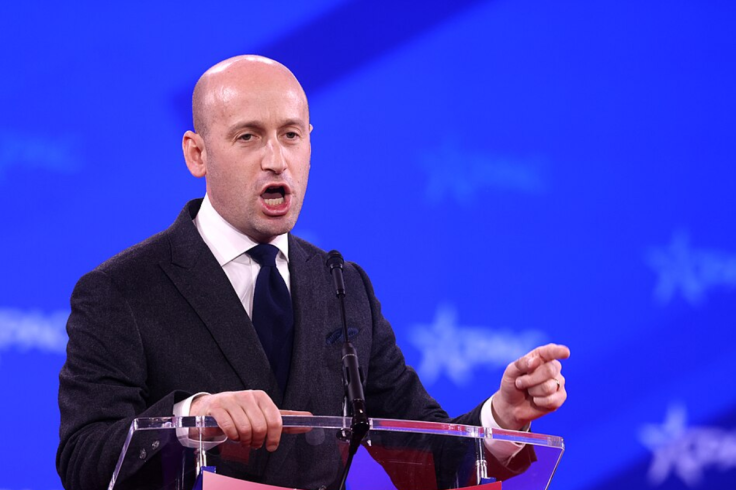
Confidential memos leaked from inside Donald Trump's White House reveal that Stephen Miller, the administration's deputy chief of staff for policy, was the central driving force behind a push to dismantle one of the most fundamental constitutional rights in American law — the right of detainees to challenge their imprisonment in court.
The disclosures, drawn from the forthcoming book 'Regime Change: Inside the Imperial Presidency of Donald Trump' by New York Times correspondents Maggie Haberman and Jonathan Swan, show that Trump was intrigued by Miller's proposals for effectively suspending the constitutional right of migrants to appeal their detention and quizzed aides about Abraham Lincoln's use of the power during the Civil War, while Miller ordered Justice Department lawyers to study the legal precedent.
Leaked memos reveal that the White House seriously debated suspending Habeas Corpus much more than originally reported.
— Headquarters (@HQNewsNow) June 15, 2026
The suggestion to end the Constitutional right was led by Stephen Miller. pic.twitter.com/45xLWWU7If
Colleagues Called the Plan 'Insane'
White House staff secretary Will Scharf, a Harvard-trained lawyer, addressed the proposals in a confidential memo dated 29 April 2025 sent to chief of staff Susie Wiles, warning that the move would likely trigger a major constitutional battle.
Scharf's case was unambiguous. 'Denial of habeas corpus rights was a key grievance underlying the American Revolution,' he wrote, adding that all three branches of government had historically been reluctant to interfere with the right 'only in the direst of circumstances.' The memo also noted that habeas corpus had been formally suspended only four times in US history, all during wartime.
Some officials called the idea 'insane,' while White House counsel David Warrington told colleagues he doubted Miller's grasp of the limits on executive power.
Miller's Public Defence
Miller had already made his position clear in public. Standing outside the West Wing in May 2025, he told reporters that 'the Constitution is clear — and that of course is the supreme law of the land — that the privilege of the writ of habeas corpus can be suspended in a time of invasion. So, it's an option we're actively looking at. A lot of it depends on whether the courts do the right thing or not.'
Legal scholars were swift to push back. Steve Vladeck, a constitutional law professor at Georgetown University, described Miller's statement as 'factually and legally nuts' and called it the 'most remarkable — and remarkably scary — comments about federal courts that I think we've ever heard from a senior White House official.'
Marc Elias, an attorney for the Democratic Party, was equally direct. 'Congress has the authority to suspend habeas corpus — not Stephen Miller, not the president,' he said.
The point cannot be made enough that Stephen Miller, one of the most powerful people in the White House, would happily shred the Constitution into little pieces if he could.
— Aaron Reichlin-Melnick (@ReichlinMelnick) June 15, 2026
Here, however, even he wasn’t powerful enough to do it. https://t.co/gpiZ7TPyep
What the Memos Reveal
Scharf's memo laid out a detailed legal history of habeas corpus, describing it as a foundational safeguard, and wrote that 'the writ of habeas corpus prevents, in effect, governmental actors from detaining, imprisoning, or executing individuals arbitrarily.'
After Trump appeared to step back from the habeas corpus push, the administration reportedly began weighing another measure — invoking the Insurrection Act. Scharf again intervened with a further confidential memo, warning the step would almost certainly be challenged in the courts, 'potentially obviating any advantage to be gained in terms of the flexibility that it would provide to the president.'
The leaked memos represent one of the most significant windows yet into how far Trump's inner circle was willing to go in sidelining the courts during its immigration crackdown. Aaron Reichlin-Melnick, senior fellow at the American Immigration Council, said the reporting showed Miller 'would happily shred the Constitution into little pieces if he could.' That the plan was ultimately blocked — not by courts or political opponents, but by Trump's own lawyers — makes the revelation all the more striking.
© Copyright IBTimes 2026. All rights reserved.
- Recommended For You


